
Before her song “I Will Always Love You” became a Whitney Houston hit, Dolly Parton was a young girl from Pittman Center, Tennessee. She was born to a farmer, “Lee,” who sharecropped land before later acquiring his own small plot, all while working handyman jobs in construction to make ends meet. The family home, a one-room cabin, was located along the Little Pigeon River, which slithered northward from its origin in the Smoky Mountains east of Gatlinburg. Dolly was the fourth of twelve children, her parents attendees of the House of Prayer, where her maternal grandfather preached.
The House of Prayer church, owing to its Pentecostal and Holiness roots, was known for its emotional worship. Young Dolly started her singing career, like many (including Elvis), by singing worship songs in a small congregation. The church had rigid moral standards, from which Dolly later diverged. But despite her misgivings about a Christian moral ethic, she would claim at the release of her forty-second studio album that “a belief in God is essential. You have to believe in something bigger than yourself. We grew up believing that through God all things are possible.”
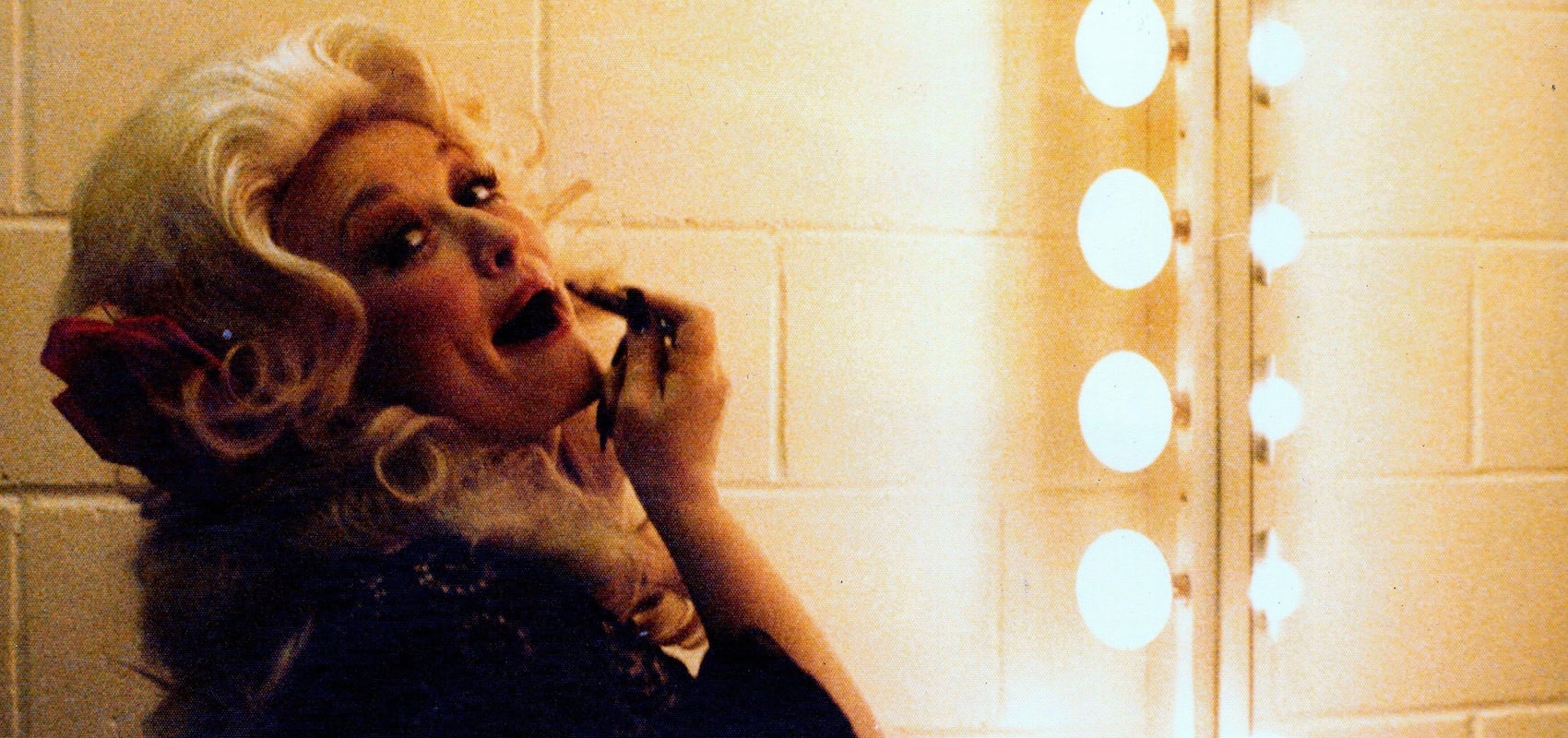
Many tributes have been written in the wake of her death, which seems to have united both liberals and conservatives in mourning. But Dolly is more than just a world-class singer, actress, philanthropist (my children receive books from her organization, Imagination Library, every month to encourage reading), and more. She is and always has been a story of the triumph and tragedy of capitalism. Capitalism offered her a way to move beyond her humble origins, to be, as she would later express, more than “just . . . a farmer’s daughter.” But by becoming more, she became what mass appeal wanted her to be. Her characteristic blond hair, her surgically enhanced features, and her presentation of Southern class always seemed an exaggeration of reality, but this was exactly the point. She became a persona—the persona of Southern life.
Parton recaptured the postbellum “hillbilly” stereotype. Instead of viewing the “white trash” or “hillbilly” label as an insult, she embraced it. Barbara Walters, in a 1977 interview with Parton, asked her: “Where I come from, would I have called you a hillbilly?” Dolly responded that “I would have probably kicked your shins . . . we were very proud people, people with a lot of class. It was country class, but it was a great deal of class.” This Southern class, at odds with public sentiment after the Civil War and Reconstruction, took some time to reclaim. Dolly, by leaning into the clichés, offered one way of counteracting the negative label.
While she was stepping into a world that frowned on Southern class, the America of her early fame was also touched by civic and cultural clashes and war overseas. Her first album, Hello, I’m Dolly, was released in September 1967. Just the day before release, The Doors appeared on The Ed Sullivan Show and, despite being asked not to sing the line “Girl, we couldn’t get much higher” on air, Jim Morrison did so anyway. This was a perfect snapshot of the cultural divide. Wholesome American family life was fast being captured by the trends of the free-loving hippie movement. During this time, racial tensions were at a breaking point as well. The end of the “long, hot summer” saw unrest around America—while overseas in the jungles of Vietnam, young American men were dying by the hundreds in places most could not pronounce.
Dolly, the singer from the Smoky Mountains, arrived on this scene. She gave Southern Americans an outlet of expression. Her dress and excessive outward appearance were a mimetic overdose—feeding the desires of women seeking to escape the traditional wifehood they started to view as less of a blessing and more of a trap. Housewives saw Parton as evidence that they could move out into the world as well. This fell in line with 1960s second-wave feminism. Parton lived out the words of feminist writer Betty Friedan, who wrote that “the only way for a woman, as for a man, to find herself, to know herself as a person, is by creative work of her own.” Parton’s creative work—her songwriting specifically—enabled her to rise above the clichés and traditions of her day. In many ways, Parton became emblematic of the female rags-to-riches musical story. And many of her musical children are around today: Kacey Musgraves, Maren Morris, and Cam—all of whom frequently sing against the “traditional” view of femininity and press into feminist themes of liberation.
Despite being a feminist icon, Parton was living a bit at odds with herself. Her support for the transgender movement, for instance, clashed with her desire to help and promote the cause of women. Parton, in response to a bill passed in North Carolina ensuring that women were protected in bathrooms, stated that “I think everybody should be treated with respect . . . I hope that everybody gets a chance to be who and what they are.” Parton also became a champion of the gay community and other philanthropic ventures, many of which were entirely out of touch with her hillbilly upbringing.
French theorist Jean Baudrillard, in Simulacra and Simulation, describes an image passing through stages until it finally “bears no relation to any reality whatsoever; it is its own pure simulacrum.” Parton’s public self was following the same trajectory. The hillbilly country girl, once a costume worn over a genuine upbringing, was slowly becoming the only version of her that most people would ever encounter. In line with this, Parton opened Dollywood in 1986, a theme park built to sell visitors a curated “authentic” version of Appalachian mountain life. Writing on Disneyland, Baudrillard argued it was “presented as imaginary in order to make us believe that the rest is real, whereas all of Los Angeles and the America that surrounds it are no longer real, but belong to the hyperreal order and to the order of simulation.” Dollywood works in much the same manner. It offers visitors a polished, easily consumed “real Southern life,” so convincing that it makes the actual, harder economic reality around it—a county now dependent on low-wage tourism jobs where coal and textile mills once stood—feel like the less “authentic” version by comparison.
So what do we make of Dolly? Classics like “Jolene” and “The Last Thing on My Mind” offer a glimpse of the enduring legacy of country music. America’s heartland resonated with the twang and homespun songs that conveyed that Dolly was one of the people—a singer, not from Hollywood or an urban center, but someone who came from the American dirt. Slowly, she became less of a story of American success and more of an icon for feminism and the attempted toppling of traditional standards. Her parasocial relationship with her audience shifted her further and further away from her roots. As Baudrillard writes in America, “all societies end up wearing masks.” In this case, Dolly’s mask was that of Southern class without Southern values or morality. Her music will continue to impact listeners—I thoroughly enjoy her songs, but especially her early songs prior to the mid-1970s. It is in these earlier albums (Just Because I’m a Woman, Coat of Many Colors, Jolene) that we find Parton still singing from a place of reality—the farmer’s daughter who became America’s icon, the poster child of the rags-to-riches story.
Image by Media Punch via Alamy.

YOU MIGHT ALSO LIKE
SlutCon’s Emotional Void
The tech-rationalist phenomenon “SlutCon” caused quite a stir online, perhaps predictably. SlutCon was a multi-day retreat and…
The Boys on the Brink
In the latest installment of the ongoing interview series with contributing editor Mark Bauerlein, Leonard Sax joins…
Serial Liar, Serial Comma
How would you write a public letter that you know will become front-page news? Would you write…
