
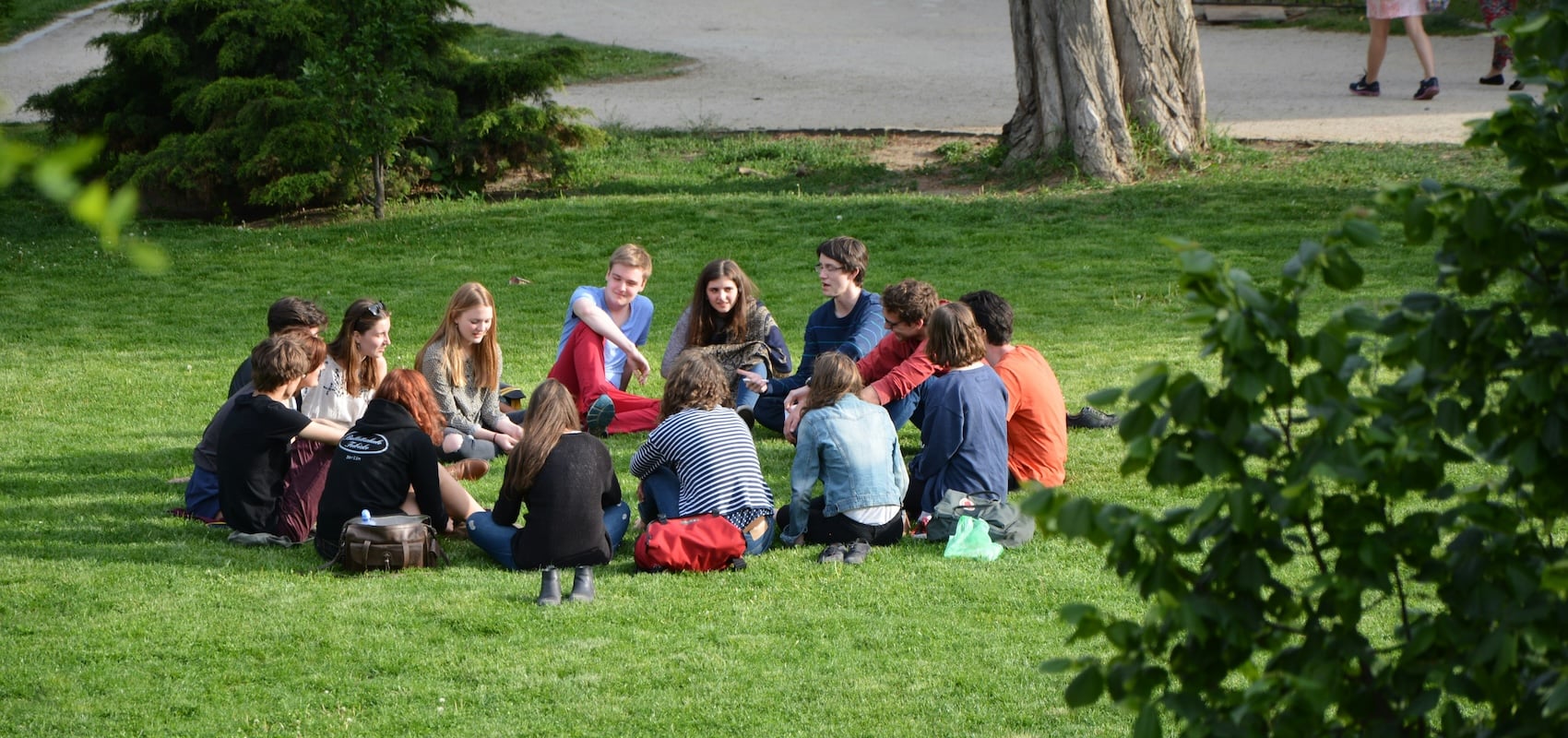
A 2007 Lifeway study found that 70 percent of young American adults who regularly attended a Protestant church in high school stopped attending upon reaching college age. Unhappy with the trend, Trace Hamiter founded The Oaks Collaborative in 2012, an interdenominational nonprofit that helps college students build faith communities through retreats. When Lifeway repeated the study in 2017, it found similar results, but participant testimonies and The Oaks’ growing footprint—reaching nearly 15,000 freshmen and 7,000 student leaders—suggest that the 2027 findings could be more encouraging.
The Oaks Collaborative invites incoming college students, upperclassmen leaders, and local churches and campus ministries to a three-day retreat before the school year begins. Students participate in activities, hear sermons by local pastors, debrief in small groups led by upperclassmen, and connect with campus and community ministries. Since its founding at Auburn University, it has expanded to more than twenty college campuses nationwide, with each retreat bearing a distinct name shaped by a local and biblical vision.
After learning about the Oaks Retreat during her Auburn tour, Caitlyn Holmes decided to attend the Arch Retreat as a freshman at the University of Georgia. During her sophomore year, she signed up to be a counselor and saw the retreat double in size. “Our prayer is that it would be impossible for freshmen to not know about it,” Holmes said.
Signing up to be a counselor extends beyond a three-day commitment. Counselors are expected to follow up with their small group members throughout the following semester: remembering birthdays, helping with move-in, offering rides to church. This summer will mark Holmes’s third year of involvement.
“I am involved in Greek life, and honestly, had I not at first really gotten plugged into ministry, I wouldn’t be surprised if that would have been my biggest commitment,” Holmes said. “I don’t think I would have the same level of ministry involvement that I do without it. Yes, I believe I’m at college to get a degree, but . . . how can I grow my faith and how can I minister to those around me? I really think that’s my primary purpose.”
This past year, about 17 percent of Auburn’s six-thousand-person freshman class attended the retreat. When the Hills Retreat began at Clemson University, one local church had no college ministry; today, it reaches a few hundred students. At the University of Georgia, a ministry that once drew thirty to forty students now regularly reaches three to four hundred.
“I do want to be clear that I would never take credit for that. Those churches are also doing an amazing job,” Hamiter said. “We’re trying to blow some wind into the sails of the churches and ministries that are already on campus, and we’re trying to create a situation where we close the back door to the church.”
According to Hamiter, the reason students fall away from faith in college is less about the Big Bad Atheist professor who tells his students that God is dead than social dynamics. “They say yes to things they never thought they’d say yes to in those first couple weeks, and that leads them down a path they never thought they’d go down,” Hamiter said.
Research suggests that the first few weeks of college are especially consequential to a student’s adjustment, relationship building, and habit formation; Brandon Clark attended The Oaks Retreat at Auburn in 2019 and saw this work out decisively. “Before I even got a chance to live what people think is a great college experience of partying and everything, [the retreat] allowed me to meet and surround myself with people who encouraged and developed me, not only as a Christian, but as a man, which I think has greatly impacted what I do for work and how I interact with people,” Clark said.
The Oaks Collaborative helps students see that following Christ is not something to postpone until after college, but a path worth pursuing during a student’s most formative years. “One of the things that I say [to students] is that you can trust him, not only with eternity, but also with the next four years of your life,” Hamiter said. “Living the life of Christ in college is actually more abundant than anything the world has to offer.”

YOU MIGHT ALSO LIKE
SlutCon’s Emotional Void
The tech-rationalist phenomenon “SlutCon” caused quite a stir online, perhaps predictably. SlutCon was a multi-day retreat and…
The Boys on the Brink
In the latest installment of the ongoing interview series with contributing editor Mark Bauerlein, Leonard Sax joins…
Serial Liar, Serial Comma
How would you write a public letter that you know will become front-page news? Would you write…
