
The Boundless Deep:
Young Tennyson, Science and the Crisis of Belief
by richard holmes
william collins, 448 pages, $35.50
Richard Holmes’s new biography, The Boundless Deep, depicts how Alfred Lord Tennyson absorbed the scientific discoveries of his era, paying special attention to revelations from geology and astronomy about “deep time” and “deep space.” These revelations shook Victorian society since they undermined the biblicist account of creation’s age. Tennyson also assimilated early theories of evolution, slightly prior to Darwin’s discoveries, and incorporated them into his poetry. In his greatest work, In Memoriam, these discomfiting notions merge with Tennyson’s personal grief over the death of his best friend, Arthur Henry Hallam, to create an atmosphere of doubt and despair that at times threatens to overwhelm. The poet presses through this bleak milieu, however, and finds his way back to faith.
Holmes is a capable biographer, having written esteemed accounts of the lives of Shelley and Coleridge, along with 2009’s award-winning The Age of Wonder, which details the English Romantic poets’ encounter with scientific discoveries. But there are notable omissions in Holmes’s otherwise highly readable work that demand interrogation.
The “crisis of belief” of the book’s subtitle arose from the conflict between discoveries in the physical sciences and religious belief; we thus need to understand both sides of that clash and how they played out within Tennyson. He clearly thought deeply about religious questions, but Holmes’s narrative focuses almost entirely on his engagement with scientific literature. Yet the mystical, the paranormal, and the uncanny are integral to his biography.
For instance, Tennyson had the capacity to self-induce a state of trance by repeating his own name until, in his own words, “out of the intensity of the consciousness of individuality, the individuality itself seemed to dissolve and fade away into boundless being, and this not a confused state, but the clearest of the clearest, the surest of the surest, the weirdest of the weirdest, utterly beyond words, where death was an almost laughable impossibility, the loss of personality (if so it were) seeming no extinction but the only true life.”
Holmes briefly mentions that Tennyson experienced trances or “weird seizures” in youth, but has nothing to say about their significance. These stray facts about Tennyson’s life don’t fit into the standard secular model of the cosmos or into neat narratives of scientific progress. Holmes even implies that Tennyson only grafted a more forceful expression of Christianity onto the prologue of In Memoriam to assuage his future wife, Emily Sellwood, about his religious doubts so she would agree to marry him. I don’t believe this.
If we read Tennyson’s son’s memoir of his father, we find that Tennyson was occupied throughout his life with theological and mystical questions. This wasn’t a matter of going soft in old age under the aegis of the laureateship. He regularly discussed universalism, assessed creedal differences, and mused on the indispensability of faith. But Holmes treats Christianity, insofar as he treats it at all, monolithically. It is a sheer, uniform wall of belief, at which science begins to rapidly chip away after the Enlightenment.
Part of the problem is that Holmes is overly dependent on external events and sources to illuminate his subject’s personality and the writing it produced. He thus fails to recreate his subject imaginatively from the inside out, to show what it was actually like to be Tennyson. Holmes’s failure is due in large part to his refusal to engage with the religious side of Tennyson’s inner crisis in any detail. One must sympathize with another’s belief and doubt to dramatize his consciousness effectively.
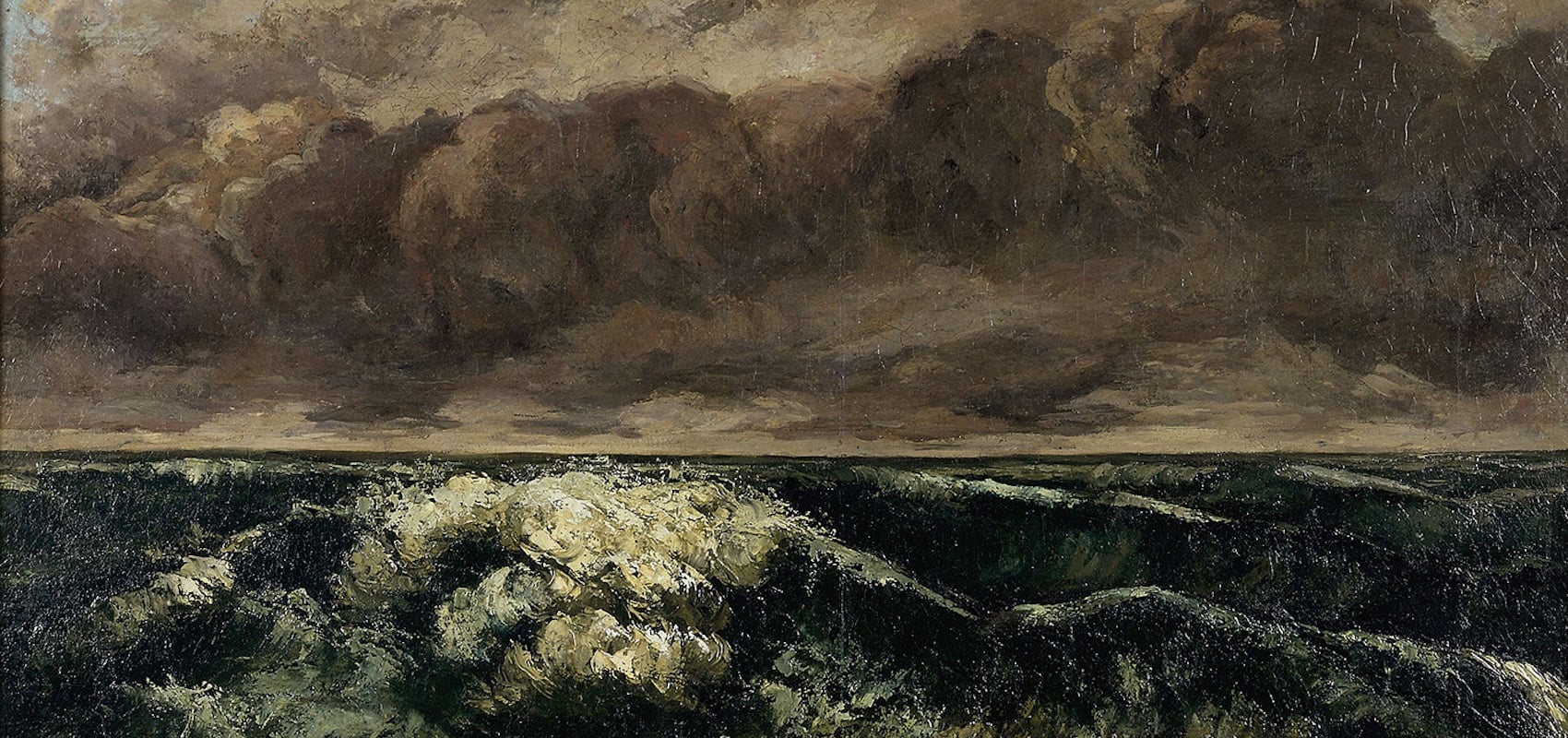
To give an example of the biographer’s bias: Holmes at one point quotes from section 122 of In Memoriam, giving an example of Tennyson’s scientific doubts in verses where the poet hears, “an ever-breaking shore / That tumbled in the Godless deep.” But he omits the following verses, in which Tennyson regathers his faith and imagines the divine acting through and within nature:
No, like a child in doubt and fear:
But that blind clamour made me wise;
Then was I as a child that cries,
But crying, knows his father near;And what I am beheld again
What is, and no man understands;
And out of darkness came the hands
That reach thro’ nature, moulding men.
Tennyson’s verse matters because it provides us access to our own emotional and intellectual attitudes toward the nature of things. Even though Tennyson’s style might seem old-fashioned to many (despite being so beautifully wrought), his consciousness is rather modern. He absorbed a universe of doubt and yet emerged with his faith intact.
Holmes seems to view any proclamation of faith as an admission of weakness and lack of rigor: We turn away from reason to cuddle up with our cozy God. This is, I should note, politely implied by Holmes rather than aggressively proclaimed. Nonetheless, it is a caricature. Most religious people are familiar with the same vertiginous doubts that nauseated Tennyson. They have dangled over the mind’s “cliffs of fall / frightful, sheer, no-man-fathomed,” to quote Gerard Manley Hopkins.
It often takes mystical experience to pull us back from the brink of these cliffs. Such experiences are surprisingly common and not a trivial part of the human picture. Moreover, they are often intimately tied to poetic inspiration itself, which is why we can ill-afford their elision in a study of Tennyson. Poetry is always allied to the mystical because it is unclear to the poet where his or her poetry comes from. The deep—indeed, in Tennyson’s words, “the boundless deep”—is not a bad answer.
Dear Reader,
Can I be direct with you?
War abroad. Socialists on the rise. AI upending human life. Endless uproar online. The modern attention economy doesn’t want readers — it wants users enslaved to the tyranny of the present.
First Things is the antidote: literary excellence, timeless truths, and a fixed point of reference in a culture that has lost its bearings.
But we can’t do it without readers like you.
Our goal: Raise $150,000 by November 1 to sustain First Things in the year ahead.
Your gift anchors readers in the permanent things.
Make your Fall Campaign gift now using the button below.
If you have any questions or would like more information, please contact Giovanni Del Piero, Director of the Editor’s Circle, at gdelpiero@firstthings.com or 212-627-1985.

YOU MIGHT ALSO LIKE
Foucault’s Idol of Nothingness
Today marks the 100th anniversary of the birth of Michel Foucault. He was influential in his lifetime,…
Forget Odysseus. Aeneas Is the True American Hero.
Who is our Odysseus? Or more precisely, who is the most Odyssean hero of American film? Matt…
The Last Statesmen?
In the latest installment of the ongoing interview series with contributing editor Mark Bauerlein, Steven B. Smith…
