
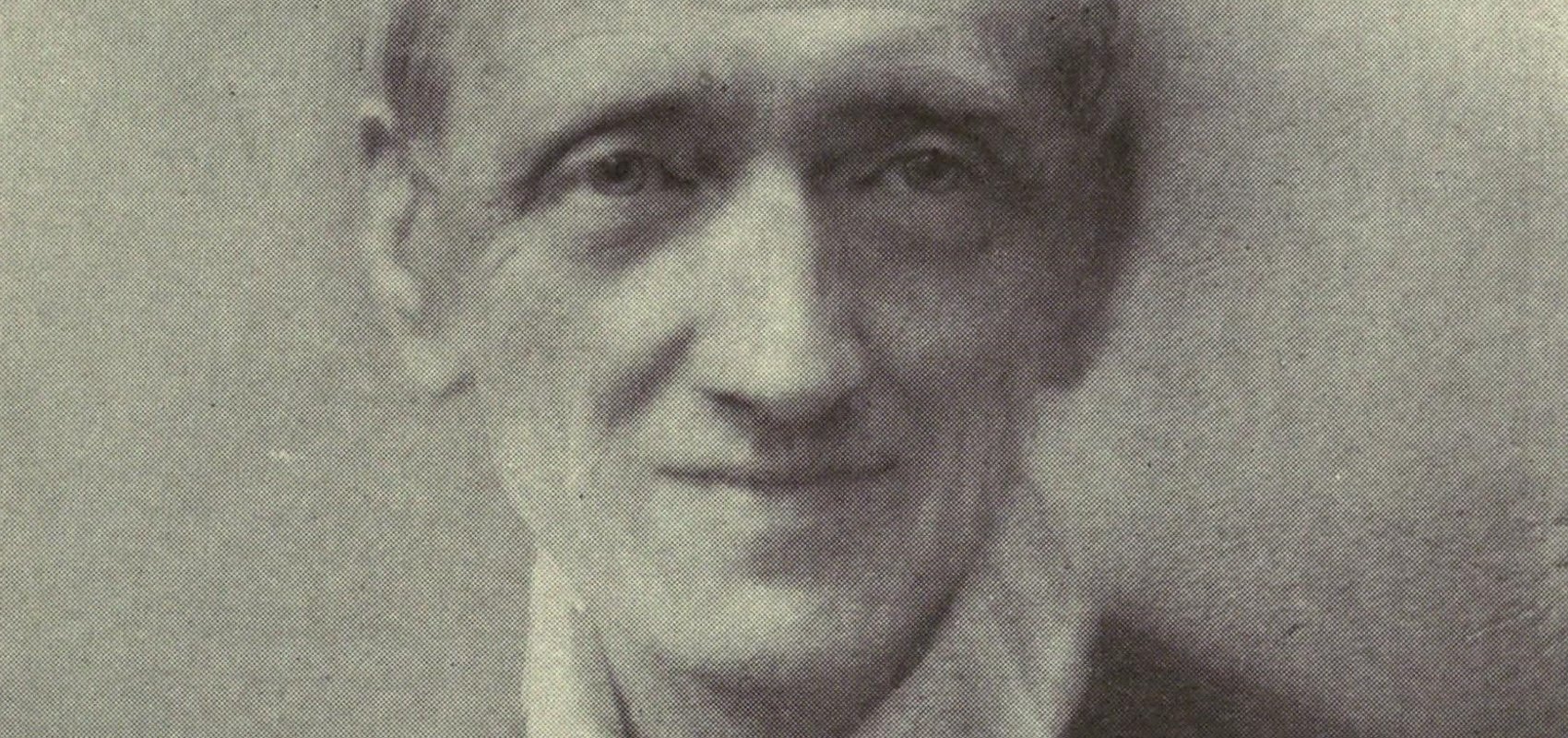
On November 1, St. John Henry Newman will be declared a Doctor of the Church—an announcement that might seem badly timed. It’s often said that Gen Z are looking for “full-fat Christianity,” an uncompromising faith that offers a genuine alternative to contemporary society. Newman, by contrast, is often presented as the primary forerunner of the world-affirming and accommodating sentiments of Vatican II—the “invisible peritus.” In a speech given on the eve of Newman’s canonization in 2019, the then-Prince Charles praised Newman’s role in restoring the place of Catholics in British life, thus showing that the U.K. could be a “community of communities.” Newman’s achievement was to show the path toward a kind of multiculturalism. Is that portrait accurate?
I first encountered Newman over two decades ago in my early twenties, as a recent convert to Christianity. I had been baptized at one of the Anglo-Catholic shrine churches of London—a neo-Gothic building with sumptuously patterned brickwork, a richly colored neo-Byzantine interior, and the ever-present lingering smell of incense. Anglo-Catholic architecture meant more to me, at the time, than Anglo-Catholic theology; yet I was enlivened by the early Newman’s presentation of the Church of England as an ancient variant of the universal Catholic faith, native to these isles. In Tract 12, Newman argued the Church of England should be called the Church in England, the form of the universal Church appropriate to the English people. For him, the ecclesiology of Anglicanism was the treading of a mediating path, the via media, between the excesses and errors of the Catholicism of Rome and the Protestantism of Geneva. This ecclesiology, I learned from Newman’s early Anglican writings, mirrored the “calmness and caution” of the English mind, its dislike of fanaticism and extremes, and the measured tranquility of English courtesy and manners.
Yet Newman was not someone an Anglican could read straightforwardly. As historian Frank M. Turner points out, his conversion to Rome in 1845 was as much an act of “cultural apostasy” as it was religious apostasy. Newman always had the slight whiff of being a traitor, a sign to be rejected. The distinctive tenor of Newman’s later Roman religiosity was as alienating to me as the Tractarian Newman had felt affectionately familiar: the ostentatiously neo-classical Birmingham Oratory, the biretta-wearing Oratorians mumbling away in Latin at a distant high altar, the effusive and wince-inducing prayers to Mary. It all felt a bit like what Roger Scruton said German philosophy feels like to an Englishman: too drastic, too severe.
Having myself swum the Tiber years later, I revisited Newman’s works. Then I could understand his account of his conversion as a definitive repenting of the notion of compromise in religion, of the merit of any via media in relation to God. I read with goose-pimples Newman’s account of how he saw himself in the struggles of the fourth–century Church. There were three parties at play in the run-up to the Council of Constantinople in 381. First, the Arians, still challenging the creed laid down at Nicaea in 325 and arguing that the Son was not fully divine. Second, the orthodox party, Rome, holding fast to the teaching that the Son was God. Third, the “semi-Arians,” who had been gaining strength and sought to tread a mediating path between the other two extremes—claiming, in an ancient “reduced-fat” version of the faith, that the Son was almost God but not quite. As an Anglican, Newman’s blood ran cold on seeing himself belong to the latter-day equivalents to the semi-Arians. His conversion was then inevitable.
This is one reason why Newman speaks powerfully to today’s situation—and not only to Catholics. He reminds us that compromise in the fundamental truths of religion is just irreligion. When Jesus calls the disciples by saying “follow me,” the only possible answers are “yes” or “no”—with nothing in between. The semi-Arians were no less heretical than their purely Arian forebears. The basic truths of the Christian faith are as binary as truths of number, truths in kind and not truths of degree. To say that 2+2=6 is no more correct than to say 2+2=8, notwithstanding that the number 6 is the via media between 4 and 8.
Before becoming the pope who beatified Newman, Joseph Ratzinger wrote on the semi-Arians as the masters of political accommodation. They sought to water down the audacity of the Christian claim by subsuming it awkwardly under the ruling mode of thought, the Greek philosophy that dictated that a fully divine Son could never proceed from God. Today’s “full-fat” converts are not seeking a faith accommodated to the secular status quo. They sense Newman’s insight that expedience and faith are very different things.
Even before his conversion to Catholicism, Newman had rebuked the Anglican Bishop Warburton for saying “public utility and truth coincide.” He decried the faith of the civil magistrate “whose very mission it is to soften the violence of polemics” and to “accommodate difference.” The new archbishop of Canterbury, Sarah Mullally, has a prior professional career in healthcare management, a field that ticks all the same boxes as Newman’s civil magistrate. She seems to have concluded that permitting abortion and same-sex marriages is so politically expedient that their public utility can redefine what is true.
Today people increasingly see through this ruse, realizing there is no longer a middle path between genuine Christianity and (as one secular journalist has put it) the “triviality and banality of secular society.” Young people are no longer inoculated, as if by a homeopathic microdose, by the watered-down versions of the faith that still survived in the culture at large until recently. For them, Newman’s conversion should be celebrated—not merely for showing the U.K. could be a “community of communities,” but for reminding us of the gains won by being a unified community founded on common Christian worship; and for the message that Newman, as a young man, absorbed from Thomas Scott and never forgot: “Holiness before peace.”

YOU MIGHT ALSO LIKE
Vatican II Didn’t Kneel to Modernity
In his weekly catecheses on Vatican II, Pope Leo is now discussing Gaudium et Spes, one of…
Two Spectacles, Two Frances
The Stade de France, the country’s largest soccer stadium, holds about 80,000 fans. On Friday, September 25,…
America’s Empty Confessionals
In the latest installment of the ongoing interview series with contributing editor Mark Bauerlein, James M. O’Toole…
