
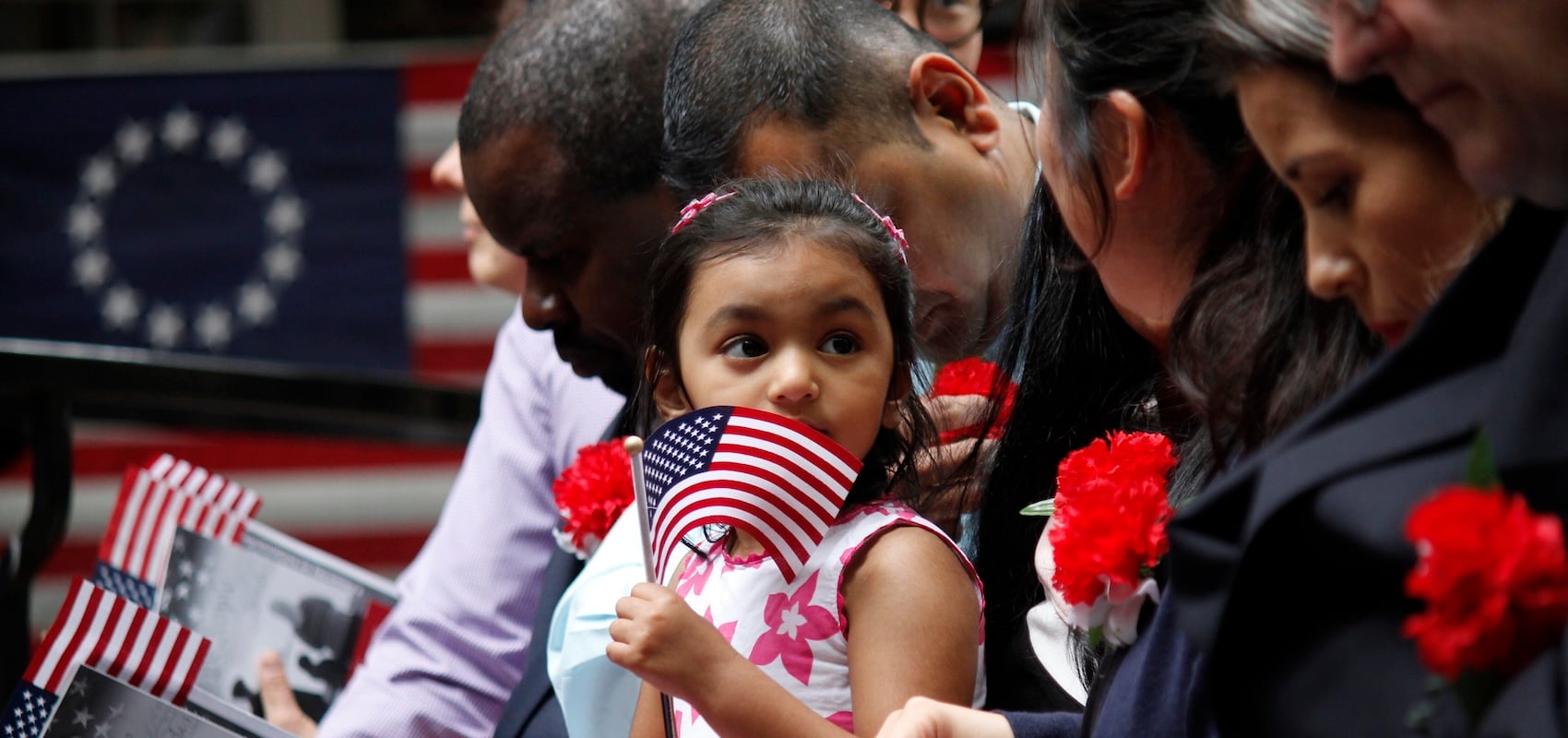
On Tuesday, in a decision that will rank among the most consequential—and misguided—of the modern era, the Supreme Court entrenched an expansive vision of birthright citizenship in Trump v. Barbara, fundamentally reshaping the boundaries of the American political community.
In a 5–4 opinion by Chief Justice John Roberts, joined by Justice Amy Coney Barrett and the Court’s three liberals, the majority ruled that children born in the United States to parents unlawfully present or temporarily visiting are “subject to the jurisdiction” of the United States. In plain language: Any child born on American soil—to parents of any citizenship or legal status, here for any length of time—receives automatic citizenship, complete with constitutional protections, welfare eligibility, in-state tuition, and the right to run for president of the United States.
The Court declined the narrower path offered by Justice Brett Kavanaugh, who would have invalidated the president’s executive order on birthright citizenship on statutory grounds alone. Instead, the majority constitutionalized birthright citizenship for illegal aliens, transforming what was contested policy into untouchable Fourteenth Amendment dogma. In a judicial two-step, the opinion overturned the original public meaning of the Constitution’s Citizenship Clause and then stripped the ability of the people, through their Congress, to restore that meaning.
Justice Clarence Thomas, in his dissenting opinion, wrote that the Court’s decision “devalues” American citizenship. His fellow dissenter Justice Samuel Alito called it “one of the most important decisions in the history of the Court” and “a serious mistake.”
They are not overstating things. By throwing wide the boundaries of political community to all comers and removing the people’s agency to assert for itself the shape of that polity, the Court has done far more than merely interpret the Fourteenth Amendment. Rather, the majority has constitutionalized a policy that incentivizes illegal entry, rewards birth tourism, and erodes the meaning of citizenship for generations to come—all while stripping from the people the right to meaningfully make changes, should the tradeoffs become too great. In a sense, it is another Roe v. Wade—freezing a foundational question of self-government into judicial amber, out of reach of the American people and their elected representatives.
Fortunately, the conservative legal movement is far better equipped today than the pro-life cause was in 1973. The model that dismantled Roe, which included decades of activism, thought leadership, strategic litigation, and judicial appointments, should now be aimed at Tuesday’s decision. Trump v. Barbara must act as a litmus test for every future conservative nominee: Only nominees prepared to reconsider expansive readings of the Citizenship Clause—and who understand that a nation is more than simply a collection of individuals in the same geographic location—deserve elevation. As evidenced by Tuesday’s ruling, whether or not a nominee believes in the project of nationhood has never been a threshold question for conservative nominees; it must be now.
Moreover, while the Court has, for now, removed the ability of Congress to enforce the bounds of birthright citizenship, the elected branch can and must have an immediate response: mass interior enforcement and deportations, ironclad border security, curbs on chain migration and exploitable visa programs, a halt to H-1Bs, and stiff penalties for sanctuary jurisdictions that flout federal law and give welfare benefits to illegal aliens. Tuesday’s decision poured rocket fuel onto the incentives for illegal immigration and mass migration generally—the enforcement response must be swift, comprehensive, and unrelenting.
It is worth some reflection, however, on how the conservative movement arrived in this place. The decision exposes a glaring weakness in the movement’s relative failure to develop deep, sustained legal architecture challenging the modern scope of birthright citizenship.
For decades this practice has cheapened American citizenship to the point of allowing companies engaging in “maternity tourism” to cater to Chinese and Russian clients: all-inclusive deals including visas, luxury housing, medical care, and transportation to secure U.S. citizen children for future chain migration and benefits. That’s to say nothing of the third-world migrants who cross the border long enough to give birth at the most expensive hospital in the area, on the dime of the U.S. taxpayer, and then return home with a child possessing the privileges and immunities of U.S. citizenship. As the dissenters point out, the framers of the Citizenship Clause never intended it to apply in these cases.
But despite the historical evidence, questioning the broadest interpretations of the Clause has been something of a third rail. Scholars like John Eastman and Ilan Wurman developed carefully crafted originalist arguments against the Court’s position, but their warnings went unheeded. President Trump’s solicitor general D. John Sauer should be commended for making the best of limited legal scaffolding and winning a victory on nationwide injunctions along the way.
Contrast this with the years of symposia, amicus briefs, tailored judicial selection, and the well-funded doctrinal innovation that toppled Roe—and delivered more recent victories against the administrative state—and the deficit becomes clear. Decades of work went into resetting conventional wisdom on cases like Chevron, Citizens United, and Humphrey’s Executor, all to recent resounding success at the Court. The same must now be done to rectify Trump v. Barbara. The path paved by Eastman, Wurman, Edward Erler, as well as the dissents from Justices Thomas and Alito, points the way.
Sovereignty is not merely represented by the dirt underfoot, and a nation is not merely a geographic space or a collection of individuals born on its soil. At its core, a nation is a distinct political community bound by shared history, culture, collective memory, and allegiance to its survival. Tuesday’s decision cracks the very foundation of who and what America will be. It cannot be allowed to stand. Congress must respond with urgency and resolve, and the formidable resources of the conservative legal movement—from its theorists to its jurists—must be trained on sending Trump v. Barbara to the ash heap of judicial excess.

YOU MIGHT ALSO LIKE
Who Killed the Clancy Children?
After a Massachusetts jury failed to convict Lindsay Clancy of strangling her three small children to death…
Roger Scruton’s Eternal Youth
In this episode, First Things senior editor Dan Hitchens joins R. R. Reno on The Editor’s Desk…
The Left Is Right About the Bible
“Texas Public School Students Will Be Required to Read the Bible,” warned a headline in the New…
