
As a cultural touchstone, Saturday Night Live has been irrelevant for at least a decade now, or whenever the formerly iconic program chose to trade in comedy for Democrat Party–approved progressive punchlines. But sometimes the long-running show still hits a nerve. A while back, SNL featured a short fake ad that revealed a profound truth about the way we now live.
As the ad kicks off, a few of its youngest actors—plus the episode’s guest host, comedian Dan Levy—glare suggestively at the camera, removing jackets and inhibitions as smooth background music sets a frisky tone.
“Are you bored?” asks one actor. “Looking for something to spice up your life?” coos another. “You used to want sex,” a third declares, twirling on his unmade bed, “but you’re in your late thirties now . . .” “And sex isn’t really doing it for me anymore,” says another. “You need something new.” “Something exciting!” “I need a new fantasy.”
And that new fantasy, it is soon revealed, is Zillow. The smooth music grows smoother as the actors scroll through America’s most popular real estate website, excitedly muttering sweet nothings, like “an updated colonial with mature landscaping,” as if they are looking at pornography.
Because, in truth, they were: The joke worked because Zillow—which, according to some statistics, enjoys a mind-boggling 227 million monthly users—has become the place many Americans go these days to escape into sordid daydreams of different lives and instant gratifications. And daydreams they mostly are. Although the website was started to help people rent, buy, or sell homes, data suggests that 83 percent of all of Zillow’s users surf the site with no intention of engaging in any transaction whatsoever. All they want to do is gawk at that ranch-style house on 1.3 acres in a good school district with a finished basement and a nice backyard and imagine that maybe they, too, could one day wake up in a place as nice as that.
What does this real estate obsession mean? Sure, it’s the rare human who wouldn’t gladly trade a small and plain abode for a roomier, prettier one. But spending minutes—or hours—every day thumbing through hundreds of photos of homes you could never afford in towns you would never call home is a curious new phenomenon, one suggesting that the fault isn’t in our studio apartments but in ourselves. We ogle houses because what we want is a home, which is much less about price per square foot and much more about a life worth living.
Just ask Scott Harris. One of New York City’s most celebrated real estate brokers, he spent more than two decades selling high-end property, the collective value of which surpasses the GDP of some nations. His interactions with Manhattanites desperate for more living space helped him forge an unorthodox—and sorely needed—understanding of what we really talk about when we talk about real estate.
He collected his insights in a new and deeply moving book, The Pursuit of Home. It’s one part guide for anyone desiring to achieve the American dream of home ownership and one part spiritual meditation on our collective real estate obsession, why we so frequently let it cloud our judgment, and how we can learn and grow not only our square footage, but, more importantly, our souls.
Real estate is the most concrete (no pun intended) of all industries. It deals with a finite number of units and buildings, not financial products or digital applications or other valuable objects whose earthly presence is more ephemeral. Harris acknowledges, of course, that the industry has its fair share of real-world problems that have little to do with how we feel or think about our homes. Nearly a third of the largest properties in America, he reminds us, are owned (and, alas, underutilized) by empty nesters, while growing families with children compete for fewer and fewer suitable units. Institutional investors, too, are playing their part to turn real estate into a blood sport. They currently own 10 percentof all apartments in America and were snatching up one in four single-family homes in 2023 alone, transforming us from a nation of homeowners rooted in their communities to a gaggle of renters living at the whims of a corporation.
Rather than tackle these very real issues, however, Harris dives into constraints that are harder to spot in statistics but are much more ruinous when it comes to helping Americans settle into the homes of their dreams. Call it the Zillow mindset. “Just as technology has empowered us,” he writes,
it has further loosened the physical ties that bind us. We work remotely. We resign in droves and fan out across the country, trying out tiny houses or migrating from one short-term rental to the next. It is an odd juxtaposition. We spend more time in virtual fascination with real estate, even as every societal pillar that would support community-building—that is, the same conditions that support neighborhoods and real estate in general—moves in the opposite direction.
And that, Harris regrettably declares, is our own darn fault. The internet, he observes, has done to home ownership what pornography has done to human sexuality: take a magical, intricate, and layered pursuit built on trust and presence and long-term relationships and turn it into a frantic and futile search for fast, facile gratification that severely damages our ability to live rewarding lives in the real world.
Which is why the job of the real estate agent—at least, that is, a good one—has changed dramatically in the last twenty years. Circa 2000, “real estate agent” was the land shark prowling your neighborhood in search of properties about to go on the market, the go-getter who lived or died by being first to the deal. These days, to hear Harris tell it, the real estate agent is something much closer to a rabbi or a priest, first listening to the buyers’ or renters’ confessions and then helping them work through a thicket of sinful distractions until they find the home they truly want rather than the one they may simply—and erroneously—desire.
Harris’s book is filled with joyous, almost spiritual conversions: stories of clients who walked into his office asking for one thing only to realize, many conversations and open houses later, that their initial request was the result of some profound personal misalignment, from struggling marriages to crippling competition with professional peers. With each passing year, the people who walked in through his door wanted what Zillow taught them they should want: bigger, newer, and better priced. Harris learned that it was up to him to remind them that the real estate they were about to buy isn’t just a collection of metrics—price per square foot and so forth, the sort that data algorithms so excel at processing and prioritizing. It will be their home, the basecamp of their lives, the place where they would be best served as they strive to love and heal and support each other and their loved ones. The perfect home has to suit not only their budgets but their beliefs. It turns out that in a Zillow-saturated world, this is a big and eye-opening realization for most people.
But educating Americans to become, quite literally, home-makers—people who think about what they truly value and then invest in homes that reflect these virtues—doesn’t just make for happier consumers. (Only half of all Americans, Harris reminds us, are currently satisfied with the homes they have bought; the rest have regrets about their dealings.) Home-making, as opposed to real estate dealing, makes for a happier nation, one made up of citizens who feel empowered, engaged, and tethered to the land and to each other. It makes the nation as a whole into our shared and precious home—not some ephemeral idea we can compare online to other options as we pine for a quick fix to all of our yearnings, but a messy, grounded, beloved, and utterly irreplaceable corner of the world that belongs to us.
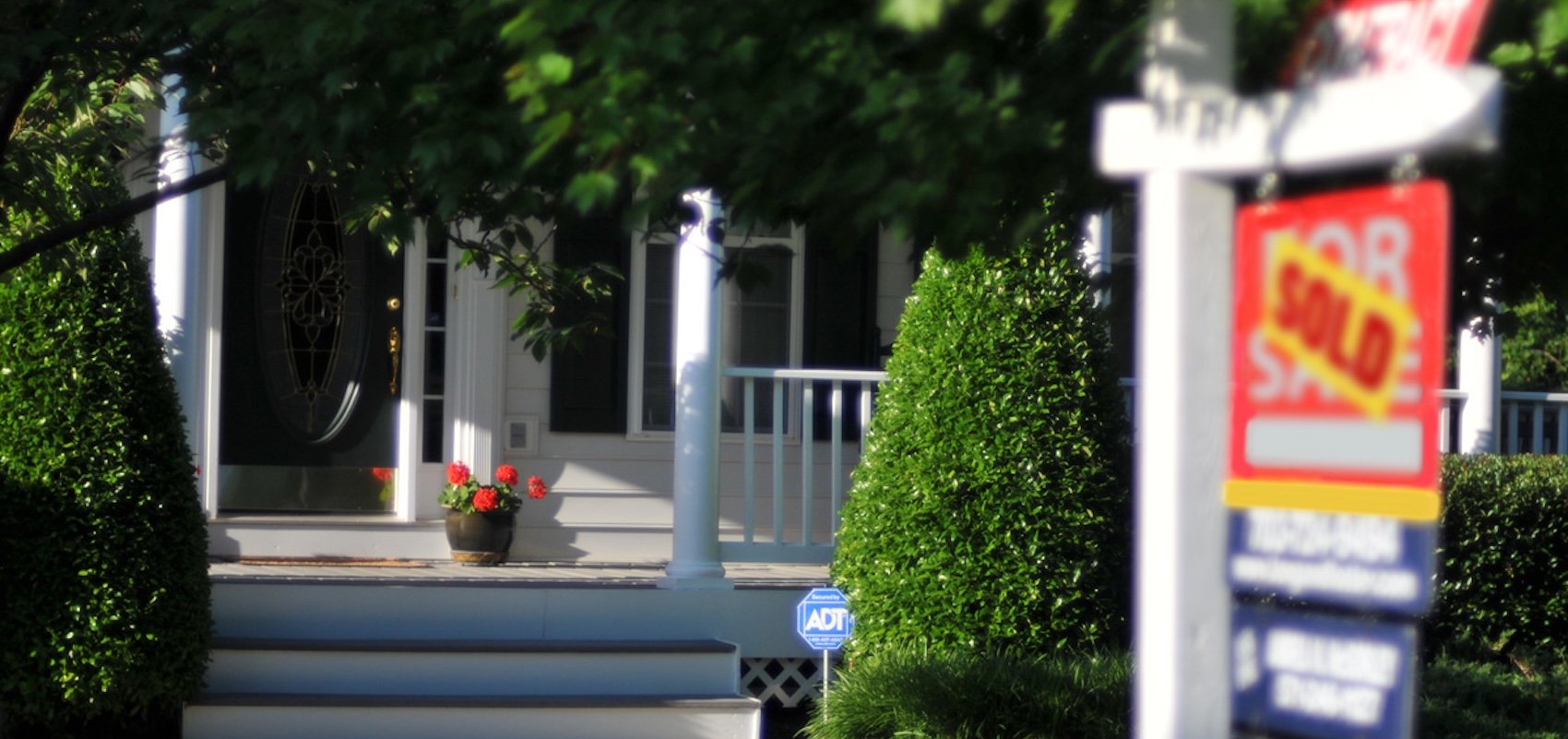
I commend to you Harris’s book. It should be required reading, not only for folks on the market, but for all of us who want to make America great again, one “sold” sign at a time.
Image by Guy Kilroy, licensed via Creative Commons. Image cropped.


YOU MIGHT ALSO LIKE
Witch Hunt
In the musical Wicked, the familiar story of The Wizard of Oz is retold from the perspective…
Beware the “Orthobro”
On a late September morning, I approached the registration table outside the entrance to a small Greek…
John Allen, Nonpareil Vaticanista
Early Sunday morning, July 28, 2002, things were looking grim for the closing papal Mass of World…
