
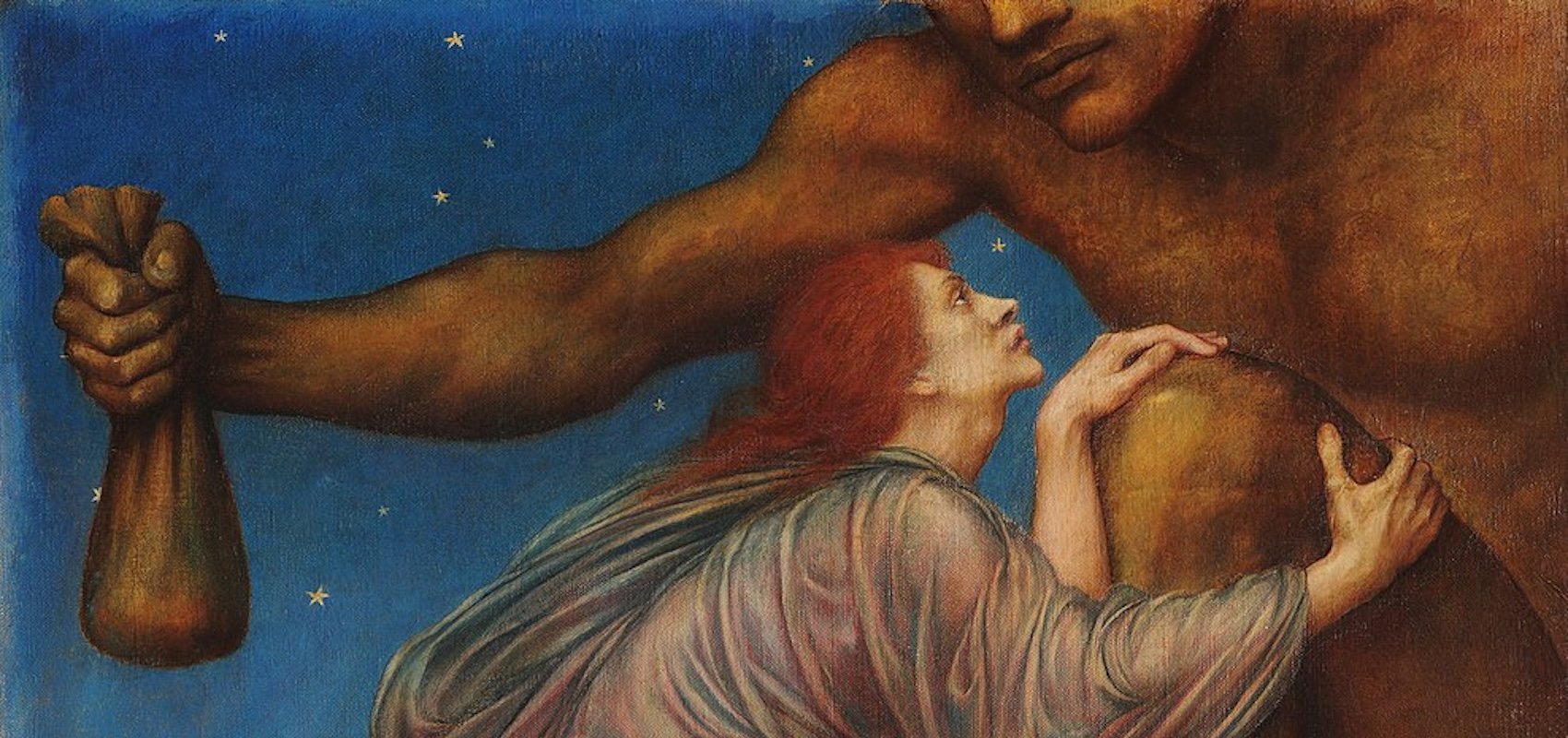
Jesus labeling money “Mammon” is most curious, seeing as the Aramaic term māmōnā means “faithful,” “reliable,” “true,” “genuine,” “you can take that to the bank.” Jesus’s point in Luke 16 is the very opposite: Money is anything but faithful or trustworthy; you cannot take it to the bank. He suggests, therefore, that we get rid of it by giving it away. Only then is money faithful to you. Only then does it reflect its māmōnā claim. As a sales pitch for First Things, this translates as follows: If you give us your money, we promise not to hoard it, but to faithfully steward it.
Gift-giving is God’s own nature. He is extravagance itself. The Greek fathers spoke of God as philanthrōpos (lover of mankind)—so much so that he became what he was not. Medieval Christians described God as bonum diffusivum sui (self-diffusive goodness)—God sharing himself with us in creation and salvation. When you give it away, Mammon becomes true to its name, and you end up sharing in the extravagance that is God.
God is the true Māmōnā, the faithful one. In the same place where he discusses the idolatry of Māmōnā—the allegedly faithful one—Jesus exhorts us to faithfulness: “He who is faithful in a very little is faithful also in much” (Luke 16:10). Gift-giving makes you more like God, sharing in the faithfulness that is God.
Gift-giving is good investment strategy. Jesus uses three images for the reward we get—“eternal habitations” (16:9), “true riches” (16:11), and “that which is your own” (16:12). Do you make friends by giving money to the poor and needy? They will be the ones welcoming you in heaven. Do you give in genuine philanthrōpia? You will get true heavenly riches. Are you faithful with someone else’s goods (all of it belonging to God, not you)? God will give himself to you as your possession—your own. Gift-giving is what makes you rich. You end up sharing in the riches that are God.
There are many ways to give generously. Why not make your extravagant contribution to First Things today? For our part, as faithful stewards, we strive to give back fivefold, tenfold, in what we publish, the events we host, the conversations we start, and the community we build. That’s what your year-end gift to First Things can accomplish.
It’s a great investment. You can take that to the bank.


YOU MIGHT ALSO LIKE
The Donatist Comeback
My Lenten reading has included an interesting, if somewhat odd, book about the greatest of the Latin…
Gen Zeal
Everyone assures us that we enjoy the blessings of progress: Capitalism has produced great material wealth, modern…
Lessons from the Eternal City
Regular First Things readers will know that one of my preoccupations is the dehumanization that grips our…
