
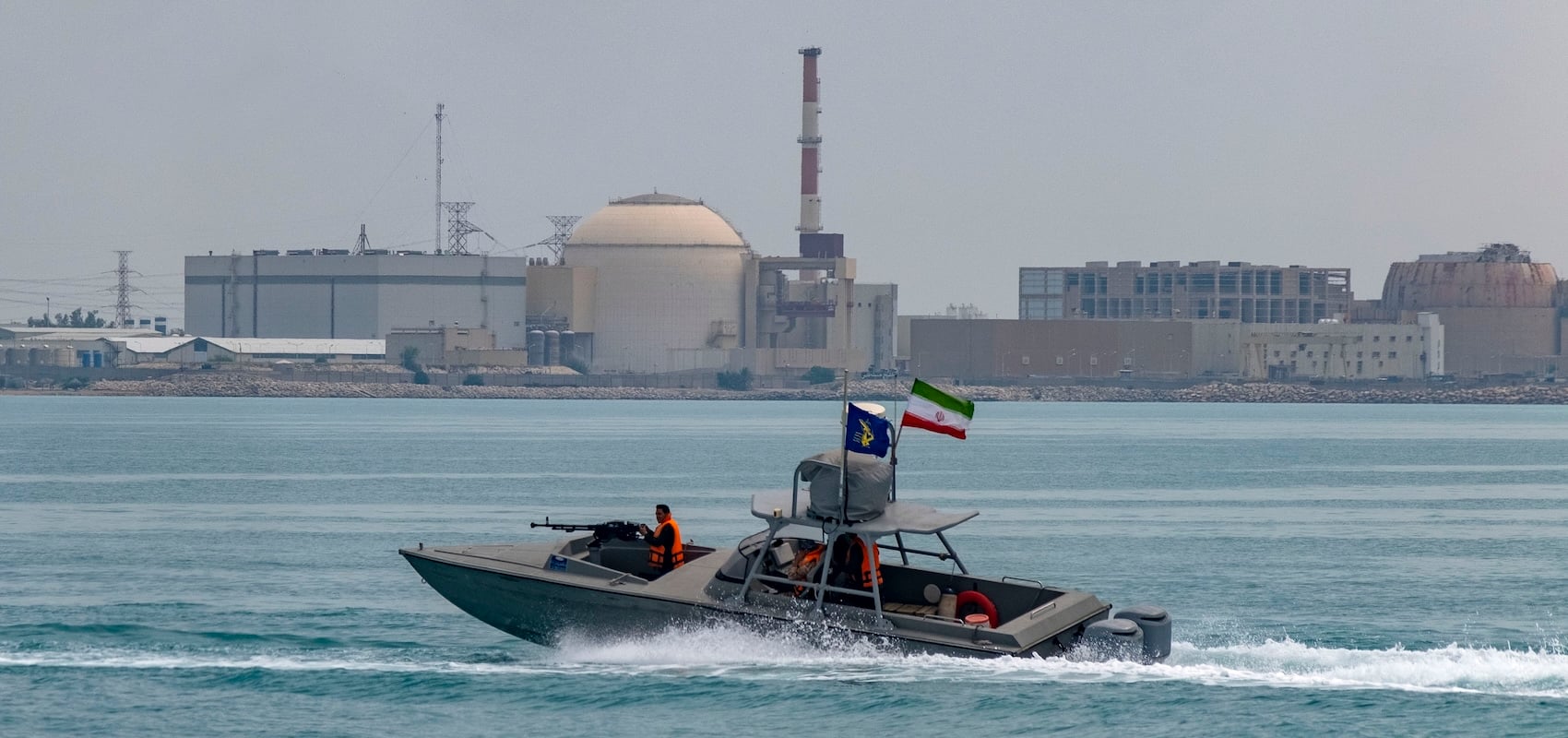
War-making is a dynamic enterprise. Military successes and failures change the circumstances of conflict. That’s certainly the case for the war with Iran. The hoped-for domestic uprising against the Iranian theocracy has not transpired. The Revolutionary Guard has shown itself to be resilient, capable of striking targets throughout the Middle East and interdicting oil shipments through the Strait of Hormuz. As terrain shifts, our moral judgments must be tested and adjusted.
One criterion of just war is probability of success. Launching futile wars brings the evils of collective violence without the hope of attaining legitimate goals. Even if the cause is just, leaders must weigh the prospects of success carefully. This moral constraint on war-making marks the point at which just war theory dovetails with hard-nosed realism. No cogent conception of national interest warrants military forays that are likely to fail.
The criterion of probability of success concerns more than starting a war; it should guide decisions about the conduct of war and its aims. The last few weeks have vindicated the American and Israeli claim that Iran poses a grave threat. Tehran fired two missiles at the U.S./U.K. Diego Garcia military base in the Indian Ocean. One failed in flight; the other was destroyed by missile defenses. Note well: Diego Garcia is roughly 2,500 miles from Tehran; Rome is the same distance. In early March, Iran’s foreign minister assured an interviewer that his country intentionally limited missile production to a range of less than 1,250 miles “because we don’t want to be felt as a threat by anybody else in the world.” The same assurances have been given by Iranian officials about their nuclear program.
But the dangers posed by the Iranian regime do not settle the question of where to go from here. Many commentators have observed that the Trump administration and the Israeli government underestimated Iranian resolve and overestimated their capacity to secure a decisive victory. As war continues, there’s a risk that the high-tech defensive missiles necessary to defend allies will be depleted. Apparently, war planners did not anticipate that Iran could (or would) shut off oil shipments and expand the war by attacking the United Arab Emirates and other targets. The global economy is imperiled.
If Iran cannot be subdued, and the harms caused by ongoing hostilities are grave, moral reason dictates negotiations. Perhaps they are underway, as Trump has suggested and Iran has denied. Each day brings new reports of attacks threatened by Trump—then postponed. Iran continues to launch drone and missile attacks. Washington and Tehran seem to be playing a game of chicken, each side angling for advantage in a future settlement.
The present moment is perilous. Unlike the encounter in June 2025, Iran has escalated, gambling that the United States is unable to commit the troops necessary to open the Strait of Hormuz and defend regional allies. It’s a bet that Trump has started something that he can’t finish.
The Iranian gamble is not foolish. Revolutionary Guard commanders are aware that domestic sentiment in the United States limits the options for Trump. The American people are unlikely to endorse “boots on the ground.” Tehran is also gambling that American allies in Europe and Asia, buffeted by high oil prices, will pressure the White House to end hostilities. They think the same about the Gulf states. The war has damaged their image as a safe haven for global capital. The Iranian bet is that the rich world will remain true to form, preferring its soft comforts to the sacrifices necessary to prosecute a decisive war.
I don’t envy those counseling the president. The situation is complicated by Iran’s role in a global triangle, with Russia and China providing Tehran with support. The conflict in the Middle East is a skirmish in a larger, ongoing contest that has many layers.
The United States needs to be careful. World War II casts a distorting light on our moral (and strategic) imaginations. The memory of great victories nurtures illusions of unlimited power. The image of Hitler as the incarnation of evil tempts us to adopt a Manichean view. If we believe that Iran is a “death cult,” as some say, and its leaders are bent on domination and destruction at any cost, then the conflict becomes world-historical, demanding escalation and total victory. We are tempted to follow Franklin Roosevelt’s requirement of unconditional surrender, a condition that in most circumstances is impossible to square with just war doctrine. I hope that Trump is wise enough (or historically illiterate enough) to set aside this way of thinking, for it warrants total war.
In all likelihood, those who warn that a negotiated settlement with Iran will embolden the Revolutionary Guard commanders are correct. Aided by China and Russia, Tehran will rearm, pursue nuclear weapons, and develop intercontinental ballistic missiles. But that will not be the only outcome of a settlement. European and Asian nations now know that their economies are at the mercy of whoever controls the Strait of Hormuz, and the Europeans are aware that their cities may soon be within the range of Iranian missiles. Arab oil states have learned that Iran is willing to break the gentleman’s agreement that exempts them from attack. Minds have been sobered; a new resolve may make itself felt in the Middle East and across the globe.
As I noted, just war doctrine and political realism intersect in the criterion of probability of success. It is neither moral nor cunning to make war toward ends that events, resources, and public sentiment reveal to be unattainable. Justice and prudence sometimes dictate compromise and concession. In the pursuit of justice, there are times when the most important virtue is patience. Time is on the side of those who use it wisely.
Photo by Morteza Nikoubazl/NurPhoto via AP


YOU MIGHT ALSO LIKE
The Art of Arguing Well
Mastering the Four Arguments:The Classical Art of Persuasive Writingby gregory roperencounter books, 192 pages, $29.99 A major…
The Slow Death of Publishing (ft. Justin Lee)
In the latest installment of the ongoing interview series with contributing editor Mark Bauerlein, First Things Associate…
The Women Joining the New Right
According to “The Women Leaving the New Right,” a viral piece by Sam Adler-Bell in New York…
