
Hey you, I’m into Jesus,” I sang, driving to school in my 1988 Buick Park Avenue, the windows rolled down, wind whipping through my hair, the bass rattling the cheap speakers that blasted DC Talk’s “Into Jesus.” As always, the dial was fixed to my local Christian radio station. I was seventeen years old.
I graduated high school in 1999, having spent a decade immersed in the evangelical subculture. It was a period marked by an astounding amount of culture-making. Yes, a great deal of the music and art was kitschy or derivative. But the subculture was formative. For many of us who grew up in evangelical homes, it wasn’t a “subculture” at all. It was simply our culture, the songs and stories and images that populated our world.
There was a fruitful tension in those years. Some students felt the impulse to distinguish themselves from the world by consuming only Christian music. And yet, the Christian music of the time often seemed driven by a desire to show how Christians can be just as “cool” as the world. The paradox of what theologian Lesslie Newbigin called the “missionary encounter” lurked behind the debates of those years: The salt must not stay in the saltshaker, but its engagement with the world must be missionary, retaining its saltiness.
Parental concern played a big role in creating demand for Christian versions of popular cultural idioms. The mists of nostalgia can obscure how far the envelope was pushed in the nineties when it came to vulgarity and sexuality in music and movies targeting young people. Tipper Gore, the wife of the Democratic Party’s vice president, led the charge for warning labels on albums with objectionable content. Pornography escaped the bounds of dirty magazines and became available on screens in every home with AOL dial-up. Raunch filled the big screen: Seven of the top twenty movies in 1999 were rated R, including lewd teen comedies and salacious blockbusters. American Beauty, a film about a middle-aged man who fantasizes about his daughter’s cheerleader friend, won Best Picture at the Academy Awards. The nihilism in rock music, the sensuality in pop, the promiscuity normalized in Friends, one of the decade’s biggest TV shows, the excesses of a hedonistic culture—Christian parents had good reason to look for “safe” alternatives for their children. Evangelical culture-makers stepped into the gap, providing music, media, books, and even outlets for activism.
Contemporary Christian Music played a central role in the evangelical subculture of my youth. CCM provided the soundtrack for my adolescent life. And I’m not alone.
Contemporary Christian music flowed from the Jesus People movement that flourished along the West Coast in the late 1960s and early 1970s. At first a largely church-based phenomenon, with performances in small and medium-sized venues, by the 1980s, the industry saw songs and artists selling so successfully they broke into mainstream consciousness. Amy Grant epitomized crossover success. She had two #1 Billboard Hot 100 singles and multiple hits that dominated the adult contemporary charts. As CCM matured, it became an industry genre of its own.
2025 marks the thirtieth anniversary of two albums that transformed the landscape of Christian music. 1995 was the year the Christian rap and rock trio DC Talk released Jesus Freak. It was also the year Jars of Clay, an alternative rock band, released their self-titled debut album. Both albums produced multiple hit singles and became ever-present fixtures in youth groups across the country.
DC Talk formed in 1987 at Liberty University: Toby McKeehan was the rapper, Michael Tait the soulful crooner, and Kevin Max contributed a quirky vibrato to the lyrics. Their 1992 rap and hip-hop album Free at Last blasted a counter-cultural narrative: Christian teaching is serious—and cool. “Luv is a Verb” sought to rescue the word “love” from meaning “sex.” “Socially Acceptable” lacerated American culture, warning against “justifying” sin and “synchronizing to society’s ways.”
In 1995, DC Talk reinvented themselves with Jesus Freak, which blended rock and rap (“So Help Me God,” “Like It, Love It, Need It”), pop (“Between You and Me”), and even folk (“In the Light” and “What If I Stumble?”). The mix somehow gelled—an “in-your-face” combination of rock and rap, raging guitars and soaring harmonies hellbent on keeping young people from hell. The album’s title track was a deliberate throwback to the origins of CCM, the California revival in the 1970s, but “Jesus Freak” (clearly influenced by Nirvana’s “Smells Like Teen Spirit”) had a compelling, power-chord driven enthusiasm impossible to ignore. Thousands of teenagers embraced this anthem, proudly proclaiming the freakiness of their faith in the eyes of the secular world.
In contrast to DC Talk, Jars of Clay’s first album was more brooding—the lyrics more ambiguous, the music more acoustic, employing a wide range of instruments and strings in a folk-rock collection that explored grace and love, sin and sadness. There were songs you could jam to (“Flood,” which played over the credits of the film Hard Rain with Morgan Freeman), but the majority were simple, reflective expressions of faith (“Like a Child” and “Love Song for a Savior”). At the time, youth group kids typically identified with either DC Talk or Jars of Clay, each band’s style reflecting different teenage personalities. I was more of a Jars guy, enthralled by the musical arrangements, always mulling over the meaning of the lyrics, drawn to the introspection of songs like “Worlds Apart” as opposed to the guitar bluster of DC Talk, though plenty of young people enjoyed both bands (as did I).
The output of CCM in the late 1990s was astonishing. There was inspirational pop from groups like 4Him, Point of Grace, Avalon, and singers like Jaci Velasquez and Michael W. Smith. There was rock from Audio Adrenaline, the Newsboys, MxPx, the Supertones, and Switchfoot. Even in predominantly white churches, Christian teens knew Kirk Franklin’s “Stomp”, danced along to Out of Eden, or marveled at the vocal prowess of CeCe Winans.
The arrival of the folk-rock band Caedmon’s Call signaled the rise of the gospel-centered movement soon to be called the “Young, Restless, and Reformed.” Caedmon’s Call extolled God’s grace, described human depravity, and emphasized God’s sovereign purpose in making all things new. I remember a discussion with a friend’s father who took issue with Caedmon’s Call’s “Shifting Sand,” claiming the lyrics were a false portrayal of the Christian life:
My faith is like shifting sand,
Changed by every wave,
My faith is like shifting sand,
so I stand on grace.
I defended the song, saying it’s the rock of grace that matters most, not the size or sincerity of our faith. Whoever was right in that argument, the fact that evangelicals were debating the lyrics of Christian pop songs is telling. Not all the culture-making of the decade can be dismissed as theologically shallow.
CCM created a distinct and thick atmosphere. The whole industry served as an answer to the question Larry Norman posed in one of his most famous songs from the late 1960s, “Why Should the Devil Have All the Good Music?” An Augustinian current ran through these attempts to “plunder the Egyptians” and repurpose musical forms from the world for eternal purposes. Before the industry shifted almost exclusively toward worship music, it manifested a Kuyperian mentality that mined all areas of life for signs of God’s glory and goodness.
The catalog of singer-songwriter Steven Curtis Chapman is a case in point. The man (we called him “SCC” or “S-C-squared” or just Steven Curtis) could sing about the grace of God or the hectic life of a parent or the struggles of knowing how best to love his wife. Chapman gave musical expression to the truths about God’s love and grace that I learned in my local church, shaping my young missionary heart through songs like “For the Sake of the Call” and “Whatever,” a favorite in the year before I moved overseas for mission work.
When artists and bands achieved mainstream success—Sixpence None the Richer’s pop song “Kiss Me” hovered near the top of the Billboard Hot 100 the month I graduated from high school—we took it as a badge of honor. Such success underscored the perennial question faced by musicians: Am I a “Christian artist” called to create for the “Christian” niche, or am I an artist who happens to be Christian and therefore am free to write about anything through the lens of redemption, without regard to labels?
By the early 2000s, the Christian music scene was undergoing radical change. Napster and other online file-sharing platforms had transformed the music industry. Christian radio shifted toward songs that could be featured in Sunday morning worship. The “special music” before the sermon, once a mainstay in the evangelical “order of worship,” where someone, often a teenager, would sing a popular Christian song backed by a track, lost its appeal. Worship songs and anthems began to dominate.
Many of the criticisms of CCM today (theologically anemic, chasing secular trends, forgettably safe) were already being voiced in that era. Charlie Peacock’s 1999 book, At the Crossroads: An Insider’s Look at the Past, Present, and Future of Contemporary Christian Music, criticized the industry’s promotion of a “conformity” that “produces legalism, performance-based acceptability, and stunted, uninspired imaginations” and thus fails to offer artists “a sufficient theological or ideological foundation from which to create music, ministry, and industry.” Peacock’s call for artistic excellence was influenced by Francis and Edith Schaeffer, the apologists whose influential ministry at L’Abri in Switzerland took art seriously, especially its power to express goodness and truth. Years later, when I joined a writers’ group in Nashville that included Charlie’s wife, Andi, I saw that commitment to artistry—the desire to create something not merely popular but good, a gift of truth and beauty. But back in the nineties, most parents were just happy their kids were listening to music with lyrics that were, if not theologically substantive, at least not morally inappropriate.
Radio dramas and family-oriented shows also emerged to shape evangelical households. Focus on the Family, led at the time by James Dobson, published manuals and books on marriage and family life, mixing secular psychology and biblical principles, all with an eye to strengthening the nuclear family in an age marked by moral indifference. There were magazines for young men and women (Breakaway and Brio).
But Focus on the Family’s audio show Adventures in Odyssey had the biggest cultural impact. It debuted in 1987 on the radio and became a fixture in evangelical households by the mid-1990s, available through cassette tape collections. The series was set in the fictional town of Odyssey and centered on John Avery Whittaker, the owner of an ice-cream and discovery emporium called Whit’s End.
It’s difficult to categorize Adventures in Odyssey. Some episodes were serialized drama and suspense. Others followed the story structure of a family sitcom. Still others used the invention of the “Imagination Station” to transport kids back in time to famous moments in history or into important Bible stories. It wasn’t just a show; it was a world, with memorable characters, running gags, and moral lessons—all designed to reinforce a broadly Christian, family-friendly, patriotic framework for life. The engaging scripts, the talent of the voice actors, and the amazing sound effects turned Adventures in Odyssey into the cultural wallpaper for evangelical homes. When I babysat my younger siblings, I’d pop in an Odyssey tape for my brother at bedtime as I turned off the bedside lamp. Countless families slid cassette after cassette into car stereos on long road trips, the episodes blending with the hum of tires on asphalt and sibling squabbles in the back seat.
Adventures in Odyssey drew its share of detractors. Some complained it prioritized moral lessons over clear gospel teaching, avoiding theological specifics beyond the basic evangelical consensus. Others criticized it for resolving difficult issues (an eating disorder, for example) in the time frame of a typical situation comedy and for prioritizing the homogenous social cohesion of a Midwestern Mayberry-type neighborhood at the expense of uncomfortable topics among white evangelicals, such as racial injustice or intergenerational poverty. Some of these critiques were valid, yet it’s hard to find a better example of influential culture-making in the evangelical world. Its fans are right to celebrate Adventures in Odyssey for standing head and shoulders above any audio drama coming out of the secular world, while critics are also right to chuckle at the fact that at the end of the twentieth century it was radio where evangelicals made their creative stand.
If Adventures in Odyssey didn’t engage an evangelical family, other entertainment options were available. The age of the VCR and DVD player made it possible to bypass the cinema and broadcast TV, delivering faith-friendly options directly to consumers. McGee and Me! was a popular series about an adolescent boy, Nicholas, and his cartoon friend, McGee, who learn moral lessons or face ethical dilemmas together. Christian videos and cartoons (such as Bibleman) appealed to evangelical parents who wanted to offer their children something “safe” yet contemporary, an option better than reruns of family-friendly shows from the 1950s and 1960s.
But it was VeggieTales that took the evangelical world by storm with success that spilled into the mainstream. Created by Phil Vischer, with early episodes featuring writing from Eric Metaxas, VeggieTales was launched in 1993. It featured memorable songs, zany storylines, funny characters, and a conclusion that sought to impart a Bible verse or moral lesson to the kids watching. I say kids, but as teens we loved them, too. Crowded into the sticky seats of a youth-group church van, stinking of sunscreen and sweat, we’d shout-sing VeggieTales songs over the rattle of windows that wouldn’t quite roll all the way up or down.
The enduring impact of VeggieTales was so profound that, recently, when President Trump reposted an AI-generated image of a monolithic gold statue of himself in the Gaza Strip, many middle-aged evangelicals instantly recalled the most creative of the early VeggieTales episodes. “Rack, Shack, and Benny” retold the story of Shadrach, Meshach, and Abednego in the fiery furnace, with a magnificent chocolate Bunny as the monstrosity the vegetables are commanded to worship. The shared experiences within the evangelical subculture of the nineties were so strong that, thirty years later, a stray social media image caused Christian Gen Xers and millennials to start humming along to “The Bunny Song.”
VeggieTales had its critics. The secular world resisted the intrusion of biblical morals into kids’ entertainment. Conservative Christians feared that the fantastical reinterpretations of Bible stories might lead kids to think of the Bible as just a bunch of fairy tales or a book of moral lessons, not all that different from what you’d find on PBS Kids. In 2008, Russell Moore pointed out the impossibility of telling the story of Jesus’s crucifixion: A splattered tomato wouldn’t fit the show’s style. A few evangelicals were scandalized when a baby carrot portrayed Jesus in a Christmas episode (which mercifully ended before Herod’s massacre). But these criticisms didn’t carry the day. Most Christian parents were just happy to see family-friendly entertainment with creativity and production values as good as anything you could find in “the world.”
Historian David Bebbington’s well-known description of evangelicals identifies four traits: biblicism, crucicentrism, conversionism, and activism. The last of these informed the evangelical ethos of the nineties in important ways. There was often a political current running through the culture-making of the time. Focus on the Family lobbied Congress; pastor and university president Jerry Falwell sent out videos peppered with Republican talking points (and, on occasion, conspiracy theories); Southern Baptists boycotted Disney because of the company’s leftist agenda; men gathered in Washington for Promise Keepers; and the sins of Bill Clinton made headlines. Fighting for the soul of the country was championed as a demonstration of faithfulness. Churches were asleep, and Christians apathetic. It was time to wake up! Carman, a CCM star, captured the urgency in his 1993 song “America Again”:
If you wanna see kids live right
stop handing out condoms
and start handing out the Word of God in schools.
But not all the activism was political. Christian performers often paused their concerts to share opportunities for compassion ministry: feeding the hungry, building wells, or providing financial assistance to children in far-flung places of poverty. Teenagers went on mission trips—if not overseas, then to other states, where we did puppet shows, tutored kids, fixed roofs, or helped repair homes for families putting their lives back together after a natural disaster.
The most culturally influential example of evangelical activism was a direct opposition to the sexual libertinism of the time. True Love Waits was a campaign initiated by Southern Baptists. It quickly outgrew its denominational origins and became a national phenomenon. All sorts of practices and cultural artifacts grew up around the pledges teenagers made to remain sexually abstinent until marriage—purity rings, a special ball to celebrate virginity. Christian singers wrote songs and gave testimony about saving sex for marriage: Jaci Velasquez, “I Promise”; Rebecca St. James, “Wait for Me.” The Jonas Brothers wore purity rings for a time, as did Miley Cyrus. Some rejected dating altogether, advocating for a culture of demur courtship. Joshua Harris’s best-selling I Kissed Dating Goodbye became the quintessential example of what would later be called “purity culture.”
The larger society was influenced in some measure by the spread of purity culture. Between 1995 and 2002, sexual activity declined significantly among teenage girls and boys. The rate of teen pregnancies fell. The percentage of teenagers who had sexual intercourse dropped for both boys and girls, from 43 and 38 percent to 31 and 30 percent. And while some studies show that teens who pledged themselves to purity did not behave all that differently from teens who did not, it’s hard to deny a shift in cultural norms about teenage sexuality, even if True Love Waits can’t be considered the single cause for that shift.
Years later, many of us would re-evaluate the promises and pressures that purity culture placed on our generation. At times, virginity was equated with godliness in ways that exceeded biblical teaching. There were unequal expectations for young women as compared to young men, and the sloppy rhetoric of some youth pastors could imply a teenager’s worth was tied to keeping the pledge. A sexualized prosperity gospel took hold: If you wait for sex until marriage, you’ll be blessed with a great sex life and a better marriage later. One of the earliest sermon clips to go viral in the era of social media featured pastor Matt Chandler’s story of a church minister who, in making a case for sexual abstinence, passed a rose around the room, only at the end to hold up the bruised, battered flower with petals barely hanging on, and say, “Who would want this?” Chandler said everything in his soul cried out in response: Jesus wants the rose! That’s the point of the gospel!
While the excesses of purity culture deserve pushback, a sober assessment of that era should still appreciate the aims of our parents and grandparents who encouraged us to cultivate a holy aspiration to present our bodies as living sacrifices.
I Kissed Dating Goodbye wasn’t the only book that made a mark in the nineties. Christian fiction was prominent. By the early 1990s, evangelical books and merchandise was a $3 billion business. In Reading Evangelicals: How Christian Fiction Shaped a Culture and a Faith (2021), journalist Daniel Silliman describes the evangelical bookstore as “a mechanism that forms a group as a group, bringing people into a conversation. . . . Imagination happens in a bookstore.”
Christian bookstores stocked their shelves with colorful trinkets, toys, books, and alphabetized rows of cassettes and CDs. Evangelical moms and grandmas browsed the latest addition to Janette Oke’s Love Comes Softly series, historical fiction with heartfelt storytelling, gentle romance, and an emphasis on Christian values. Visitors stepping into a Christian bookstore were enveloped by instrumental praise music quietly playing overhead, creating an atmosphere that felt unmistakably safe and family-friendly.
But “safe” wasn’t the whole story. By the late 1980s, author Frank Peretti was writing novels that placed religious concepts within the horror genre. His books shied away from bad language and anything too gory, but there was plenty of cataclysm. His view of a world engulfed in spiritual warfare seized the imaginations of evangelicals across the country. This Present Darkness became a major success for the burgeoning publisher Crossway, selling more than two million copies in ten years. Once known primarily for publishing Francis Schaeffer’s work, Crossway’s editors sensed that Peretti’s novels fit well with the latter part of Schaeffer’s career—a heightened sense of the culture-war showdown, transposed into a charismatic key that aligned well with the growing Pentecostal and nondenominational movement of the time. Readers were invited into a world of the powers and principalities at war above and around us, with our prayers making all the difference.
Peretti’s novels appeared during the Satanic panic of the late 1980s. Rumors spread throughout the country of ritualistic, occult activity underlying abuse, especially of children. Understandably, ten years later, many evangelical parents were initially wary of J. K. Rowling’s Harry Potter books, the first of which appeared in 1997. Long before Rowling was a darling of evangelicals for standing courageously against transgender ideology, the world of witchcraft and wizardry she’d created made her suspect. As my friend Shane Morris once quipped, “A lost time traveler in the early twenty-first century could just about pinpoint the year by asking who hates J. K. Rowling and for what.” By the time the final Harry Potter book arrived, many evangelicals had begun to recognize the Christian imagery in the series, and eventually Hogwarts found a place on the bookshelves in evangelical homes, next to C. S. Lewis’s Chronicles of Narnia and J. R. R. Tolkien’s Middle-Earth.
But it wasn’t fantasy that captured the imagination of most evangelicals by the end of the nineties: It was eschatology. The first book in Jerry Jenkins and Tim LaHaye’s Left Behind series appeared in 1995. Based on a quasi-dispensational view of the end times, Left Behind imagined a rapture of the Church at the start of a seven-year tribulation marked by the rise of the Antichrist and the race to Armageddon. The series was wildly successful, selling more than eighty million copies. Ironically, the Left Behind series that popularized the dispensational view of a pre-tribulation rapture was partly responsible for the rapid diminishment of this perspective as a respectable interpretation of the Bible’s prophetic literature in the evangelical academy. The new generation of pastors and seminary students opted for interpretations of the end times that had historical pedigrees.
The rise of the internet marked a wholesale transformation of the evangelical subculture. By the time dial-up gave way to Wi-Fi in every home, the resistance to Harry Potter had largely melted away, the vibrant Christian music industry of my youth had blended into worship music, and the evangelical energy shifted from building a separate culture to figuring out how to survive in an increasingly hostile secular monoculture. The idea of a protected evangelical enclave was plausible in the nineties. It grew steadily less tenable as the new century marched on. The Great Dechurching began in the late 1990s and only recently has appeared to taper off, in part because there are fewer churchgoers around who might leave. Although evangelical churches fared better than Roman Catholics and mainline Protestants in holding on to their own, no one can overlook the steady stream of people drifting away from faith. Rather than plundering the Egyptians, evangelicals felt more like they were being led into Babylonian exile.
The evangelical subculture has had its share of headline-making scandals, with artists, authors, and pastors often disappointing fans and followers who once esteemed them. Josh Harris, the author of I Kissed Dating Goodbye, renounced his books and his faith. Two of the three DC Talk members are notable for public falls from grace—Kevin Max now claims to be an “exvangelical” who follows the Universal Christ, and Michael Tait has acknowledged a double life that involved abusing drugs and sexually assaulting young men over the course of two decades. Any assessment of the legacy of evangelical culture-making in the nineties must grapple with the glaring failures—sin, injustice, and compromise. But a full reckoning of the remarkable cultural outpouring that shaped me as a young Christian must also note the quiet victories. That world shaped a resilient faith among young believers in a secular age, and many of us have benefited greatly.
Though we may roll our eyes at its kitsch, its copy-cat tendencies, its “Jesus is my boyfriend” songs, we need to remember how much of secular entertainment from those years is equally forgettable. Christians don’t have a corner on cringe. The evangelical pop culture of the 1990s was far from perfect, but it helped to remind my generation of the basics of life and faith.
Picture the interlocking elements of how this subculture worked. A fifteen-year-old kid wakes up in the morning and reads a Bible passage in a student study Bible recommended by his favorite Christian band. On the way to school, Adventures in Odyssey is playing—an episode about responding with generosity to someone who insults you. He arrives at school early in the morning chill, where he joins a tight circle of believers around the cold metal flagpole, hands clasped and prayers whispered into misty air, a demonstration of his desire to be salt and light. During study hall, he finds time to read a few pages of the Christian fiction novel he bought at the bookstore the week before. After school, he heads home, listening to Christian radio on the way. The songs warn against sin, champion Christ’s redemption, and speak about standing out as a believer in the world. It’s Wednesday, so there’s church that evening, and CCM is pumping through the stereo system when he arrives for worship, friendship, and Bible teaching. These are his people, the ones who tell him he’s not alone, that others are seeking the Lord and living the great adventure of faith. After church, there’s a hangout for the youth group at a friend’s house. Teens cluster around the TV; a familiar circle of friends are laughing at VeggieTales as pizza grease stains paper plates. Others discuss their plans to attend a Christian concert next weekend. Before bed, he slides off his faded WWJD bracelet, tossing it onto his bedside table beside his battered Bible, whispering a prayer beneath posters of his favorite Christian bands taped to the bedroom wall. Another day over. A new one ready to begin.
This thick world of culture-making in the nineties forged our identities as young believers. Today, the evangelical world is splintered and fractured, and the monoculture has disintegrated not only for evangelicals but for Americans as a whole. Yet within evangelicalism, we can see flashes of various subcultures re-emerging: the popularity of conferences that draw thousands of young men, or women, or pastors; songs by Forrest Frank or Brandon Lake that become mainstays at youth camps and revival meetings; the rise of YouTube personalities and apologists; the resurgence of old and new hymns; the success of Andrew Peterson’s Wingfeather Saga; books on spiritual formation that cross denominational lines. What’s often missing for young people in church is what’s missing for young people in the world—hospitable homes that make face-to-face interactions and spontaneous hangouts possible, places where the omnipresent smartphone isn’t a debilitating distraction.
Looking back to my adolescence, I feel profound gratitude—not merely nostalgia—for an evangelical subculture that earnestly sought to offer my generation a vision of faithfulness amidst cultural upheaval. I want the same for my kids and for future generations. The culture-makers of the nineties weren’t content to curse the darkness; they lit candles instead. I want to keep the candle burning.
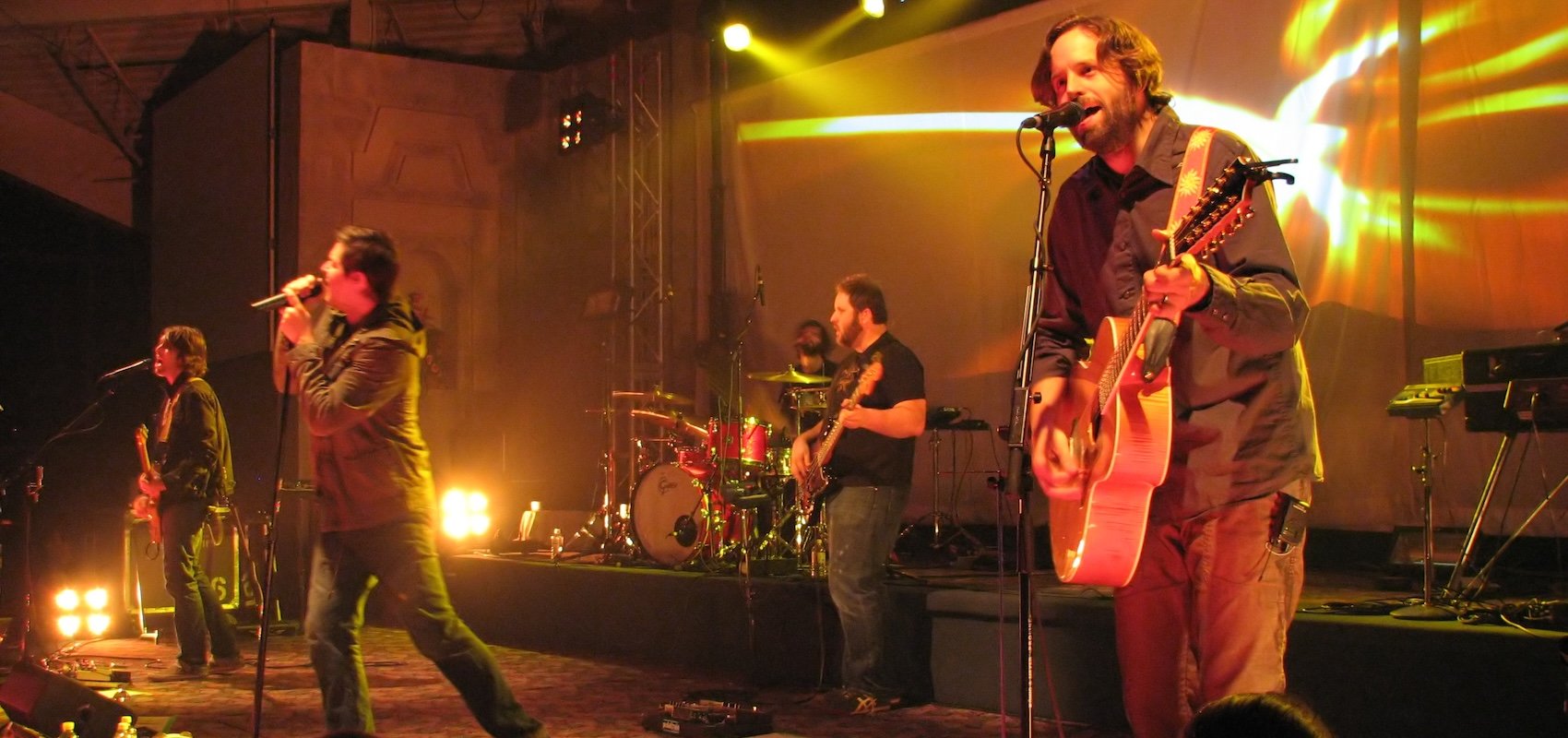
Image by Ian Muttoo, licensed via Creative Commons. Image cropped.


YOU MIGHT ALSO LIKE
Mainlining Nostalgia
Ryan Burge is unignorable. A political scientist known for his “graphs about religion,” Burge is required reading…
When the Bells Stop Ringing
Some years ago, I was a resident at Conemaugh Memorial Medical Center in Johnstown, a small postindustrial…
James Talarico’s Backward Christianity
James Talarico wants to “reclaim Christianity for the left.” That’s the title of the New York Times…
