
I just came across a 3×5 card (yes, I still routinely use that primitive technology) on which I had jotted down some titles that were scheduled to be published late in 2022. And here we are now, nearing the end of the fall books season for 2025 (which, depending on the context, may extend into the next year; publishers often include titles scheduled for January or February in their fall catalogues).
My take on “The Books of 2025” will be in two installments. In this column, I’ll highlight a few titles that (in my estimation) are likely to get lost in the shuffle. Then, in the second installment, I’ll list my favorites from the year.
Even if, like me, you somewhat fanatically follow the lists of new releases (some of which are sure to end up in your possession), it’s impossible to keep up with all of them. Perfect for this moment is a little book from Paul Dry, one of my favorite publishers, Gabriel Zaid’s So Many Books: Reading and Publishing in an Age of Abundance. First published in Spanish in 1996 and in Natasha Wimmer’s English translation in 2003 (also from Paul Dry), it arrives now in a new edition with an introduction by Robin Sloan, a perfect size to slip into a Christmas stocking. Of course, as you will have guessed, by Zaid’s reckoning (mine too) we don’t really have too many books, though we have plenty we could do without.
Also just published and eminently suited for gift-giving is Water of the Sky: A Dictionary of 2,000 Japanese Rain Words (MIT Press), by Miya Ando with Joan Halifax. (Hollis Goodall supplied an introduction.) Ando is an artist, and each gorgeous page features a drawing by her accompanying the name for a particular rain in Japanese and in English translation; for example, on page 65, “Rira no Ame (Rain that Falls on Lilac Flowers in a Cold Region Near the Sea).” I would suggest ordering two copies today (one for you and one to give).
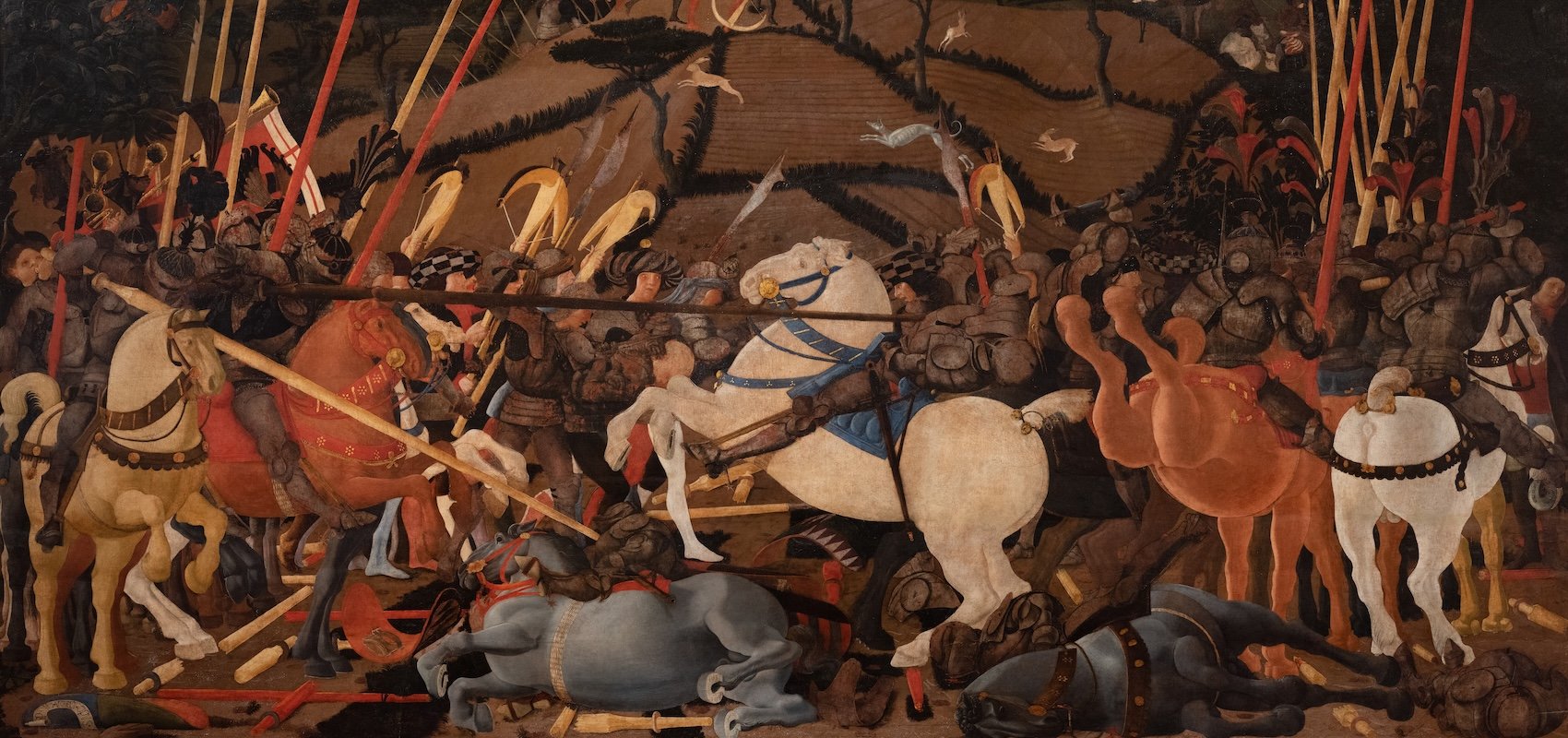
Unlike my dear wife, Wendy, who loved horses as a small girl and who learned to ride at the first opportunity, I was very much a “non-rider” even as I was growing up at a time when—in books I read, not to mention TV and movies—horses figured mightily, above all in the then-ubiquitous “Westerns.” Nevertheless, I loved the Latvian scholar Anastasija Ropa’s The Medieval Horse, a volume in the splendid Medieval Lives series from Reaktion Books. Ropa’s chronicle is a delightful ragbag of a book, loaded with illustrations. My favorite part (which appears in Chapter 3) is the tale of Sts. Pyotr and Fevronia of Murom in Rus’. Their story is at once saintly and deeply romantic. Some of you, I feel sure, would be as touched by it as I was.
After reading a great deal of theology over a long period going back to the 1980s, continuing and indeed increasing in the years when I was editing Books & Culture, and extending a bit beyond that, I found myself (without any conscious intent) reading much less in that vein, though by no means abandoning it entirely. I suspect (though I don’t know for sure!) that this happens with many old people. There is a sense of “unknowing” that by no means (in my case and in many others, I think) entails “loss of faith” or even “doubt.” One of the theologians I continue to read with profit is Fred Sanders, who teaches in the Torrey Honors College at Biola University. Sanders is an extraordinarily lucid writer, admirably concise, whose careful scholarship is combined with deep faith. I am reading his new book, Union with Christ and the Life of Faith, even though the subject of “union with Christ” is not one that has regularly absorbed me; I’ve found it hard to get a purchase on many of the claims made in the literature. Hence I am absorbed in this precisely because it is Fred Sanders’s take, and even so I often find myself struggling—but not regretting the time thus spent. If you want to get a sense of the project, I suggest that you take a look at the longish last paragraph of the main text, on page 141, followed by a “Doxological Postlude,” Charles Wesley’s “Thou Hidden Source.”
“Soteriological union,” medieval horses, Japanese rain words, the plethora of books across the board: these are tokens of the inexhaustible reality we share. Despite all that distracts and bedevils us, let us rejoice in that abundance.

YOU MIGHT ALSO LIKE
Why Can’t Conservatives Create Art?
Modern conservatives recognize their duty to reverse the devastation wrought by nearly a century of progressive cultural…
Announcing Portico: A New Literary Quarterly
First Things is pleased to announce the publication of its new print literary quarterly, Portico, starting in…
Antoni Gaudí’s Icon of the Universe
This year marks the hundredth anniversary of the death of Antoni Gaudí, the great medievalist-modernist architect from…
