
Last week, the Vatican Dicastery for the Doctrine of the Faith released a synodal study group’s final report on “The Participation of Women in the Life and Leadership of the Church.” As a historian who has been examining the diverse roles that women have played in the Church in more distant centuries, I was looking forward to the document’s engagement with Catholicism’s past as a source of wisdom for today—something its table of contents promised would be there in abundance.
I was all the more disappointed, therefore, to discover that the report lacked basic historical grounding.
The document’s main section, its “Detailed Synthesis of the Themes Emerging from the Synodal Deepening,” opens with the words, “The entry of women into public life—which developed and consolidated during the twentieth century and was not limited to Western countries alone—is a phenomenon that continues to affect both civil society and the Church.”
Surely the well-educated churchmen and laypersons behind such documents know that numerous women were active in various ways in what we can describe (at the risk of some anachronism) as “public life” for many centuries prior to the twentieth, even if they were not—as most men were not most of that time, either—voting for candidates for, or serving in, democratically elected offices?
But then again, perhaps they do not know this. The document’s second appendix, “Important Women in the History of the Church,” suggests a dim awareness at best. Featuring an array of holy mystics, religious foundresses, and women active in social charitable work, it includes only two women whom we might describe as “public”—or “political”—from Catholicism’s deeper past: St. Joan of Arc, who was burned at the stake by Catholic authorities before she was twenty, and St. Helena, who was given the rank of empress and some powers of the imperial purse by her son, Constantine the Great.
By contrast, the lengthy appendix does not include a single truly politically and ecclesially powerful woman from Catholicism’s long and rich history, even though that history is replete with such figures.
Here is my own preliminary, working list of women from the Church’s history who were left out of the report but who seem rather relevant to conversations about women’s leadership roles vis-à-vis those that are open to the clergy (the latter of whose all-male character I accept and even cherish with complete fidelity):
- Empress Irene of Athens, who chose the layman Tarasios to become ecumenical patriarch of Constantinople and, with him, convoked the Second Council of Nicaea
- St. Adelaide of Italy, the first papally anointed Holy Roman Empress and a major patroness of the great Cluniac monastic reform
- St. Adela of Normandy, the regent of Blois and mother of King Stephen of England, who patronized monastic institutions and fostered ecclesial reforms and lay-clerical cooperation
- Queen Mélisende of Jerusalem, the first of five female rulers of the Crusader Kingdom of Jerusalem, who helped launch the Second Crusade
- Matilda of Canossa, the Margravine of Tuscany, who helped bring the German emperor Henry IV to heel for Pope Gregory VII
- Blanche of Castile, who served as queen regent of France while her son St. Louis IX was off on Crusade
- St. Jadwiga of Poland, the medieval sovereign of Poland who was even called “king” at times
- Queen Margaret I of Denmark, Norway, and Sweden, who was behind the canonization of Bridget of Sweden
- Holy Roman Empress Barbara of Cilli, who was present at the opening of, and who helped her husband Emperor Sigismund to host, the Council of Constance—a council in which laymen voted alongside bishops, removing one legitimate pope and two anti-popes in order to end the Great Western Schism
- Margaret of Austria, the governor of the Habsburg Netherlands, who fought Protestantism in her domains and helped train her nephew, the future Emperor Charles V, to rule
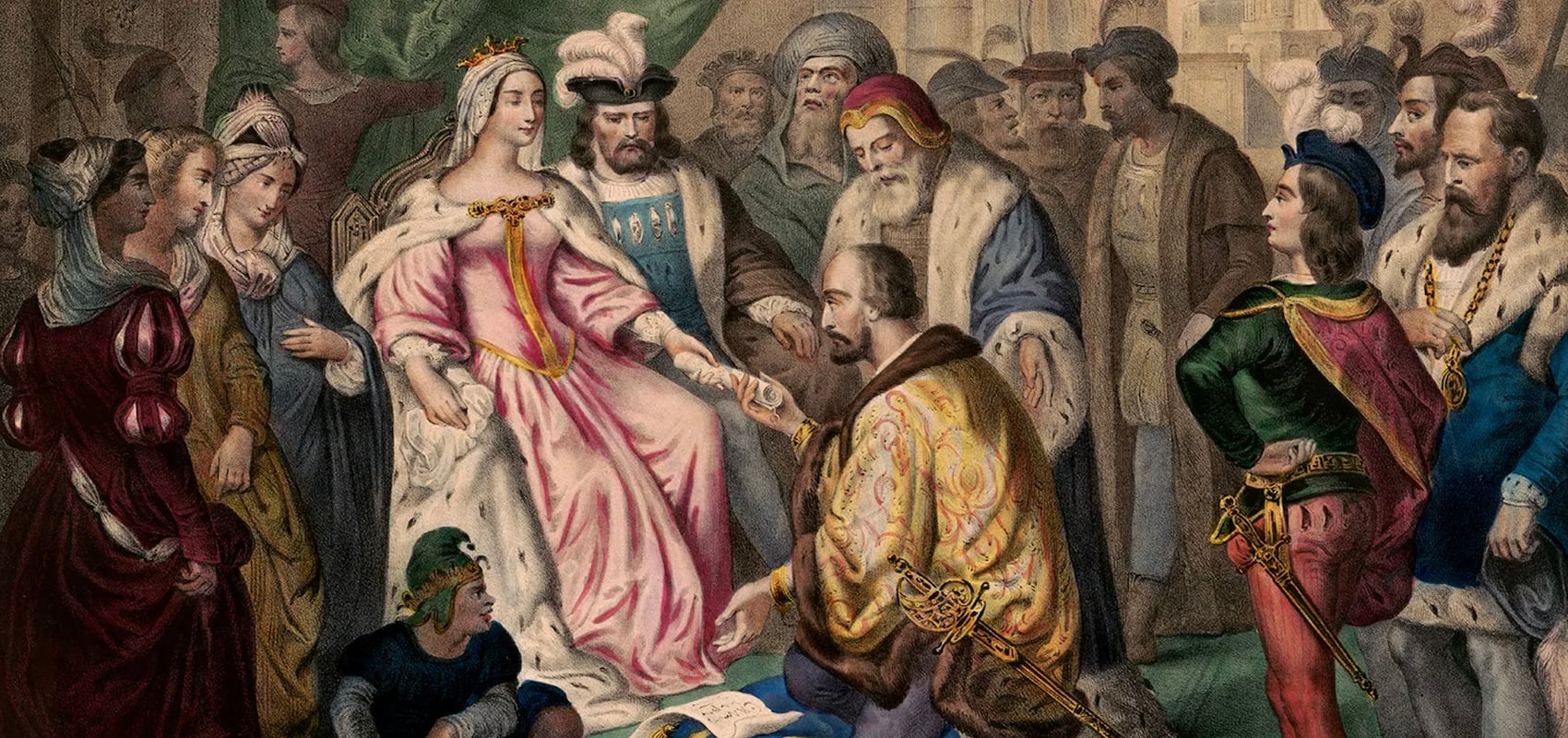
- Queen Isabella of Castile, who was granted vast powers by three popes to choose the bishops of her realms and who spearheaded important reforms in the Church in Spain
- Queen Mary I of England, who tried her best to reverse her father Henry VIII’s (and, it is often forgotten, various weak-kneed English Catholic churchmens’) break with Rome
- Queen Marguerite of Navarre, who attempted to reconcile Protestants and Catholics in her realm with her clerical appointments
- Juana of Austria, the regent of Spain for her brother King Philip II and a great protectress of the new Jesuit order
- Archduchess Isabella Clara Eugenia, the co-sovereign of the Spanish Netherlands who helped institute the Council of Trent’s reforms there, and who also chose bishops for her realms
- Empress Maria Theresa of Austria, arguably the most powerful Roman Catholic in the world in the eighteenth century
- Queen Isabella II of Spain, one of Europe’s most prominent Catholic sovereigns to lose a throne to anti-clerical liberals on the eve of Vatican I
- Queen Maria II of Portugal, who also served her country as its reigning monarch in the era of Queen Victoria of England while raising a large brood of children
There are numerous other women in the history of the Church, from the earliest days of Christianity through the nineteenth century, who may also be said to have been active in various ways in public life or other highly visible leadership roles within and for the Church. (I have written about only a handful of them, such as Marie de Vignerot, the duchess of Aiguillon and the niece and heiress of Cardinal Richelieu, in my historical work.) But their legacies—and the wisdom their examples may hold for today’s Church, respecting not just the role of women but even more so the role of the laity in ecclesial affairs—seem elided by the synodal working group’s final report.
Perhaps, even though we are more than sixty years past Vatican II, we are still not ready in the Catholic world to truly leave behind the “clericalism” that the report condemns. This would, after all, require us to confront the possibility that a truly serious, historically grounded discussion of women’s participation in high levels of ecclesial decision-making might not have all that much to do, after all, with the suitability (or not) of women for diaconal ordination. Nor may it have all that much to do, either, with appointments of specific women—made always by popes and other high-ranking clergymen these days—to positions in the Vatican or in bishops’ chanceries.
Instead, it may have more centrally to do with the far more extensive history of the laity’s participation in high-level ecclesial governance and discipline—beginning, say with that of St. Helena’s son Constantine, who convoked the First Council of Nicaea, which gave us our Creed, before he was even baptized.
Historical contextualization, complexities, and nuances seem to make many Catholics nervous today. This is both an effect and continued cause of the fact that historical grounding is in short supply generally in many Catholic institutions and programs of instruction today. History as such often gets frozen out of the room in self-consciously Catholic milieux as if it is the annoying little stepcousin of theology, philosophy, and peace and justice studies.
For this reason, I applaud the final report’s writers for at least acknowledging, in a sincere and partially informed way, that Catholic women actually have a history that involves some leadership roles within and for the Church. It is just not a history that began in earnest only in the twentieth century, or only after both feminists and Vatican II-era popes and bishops began describing it to us in their preferred, canonical terms.
