
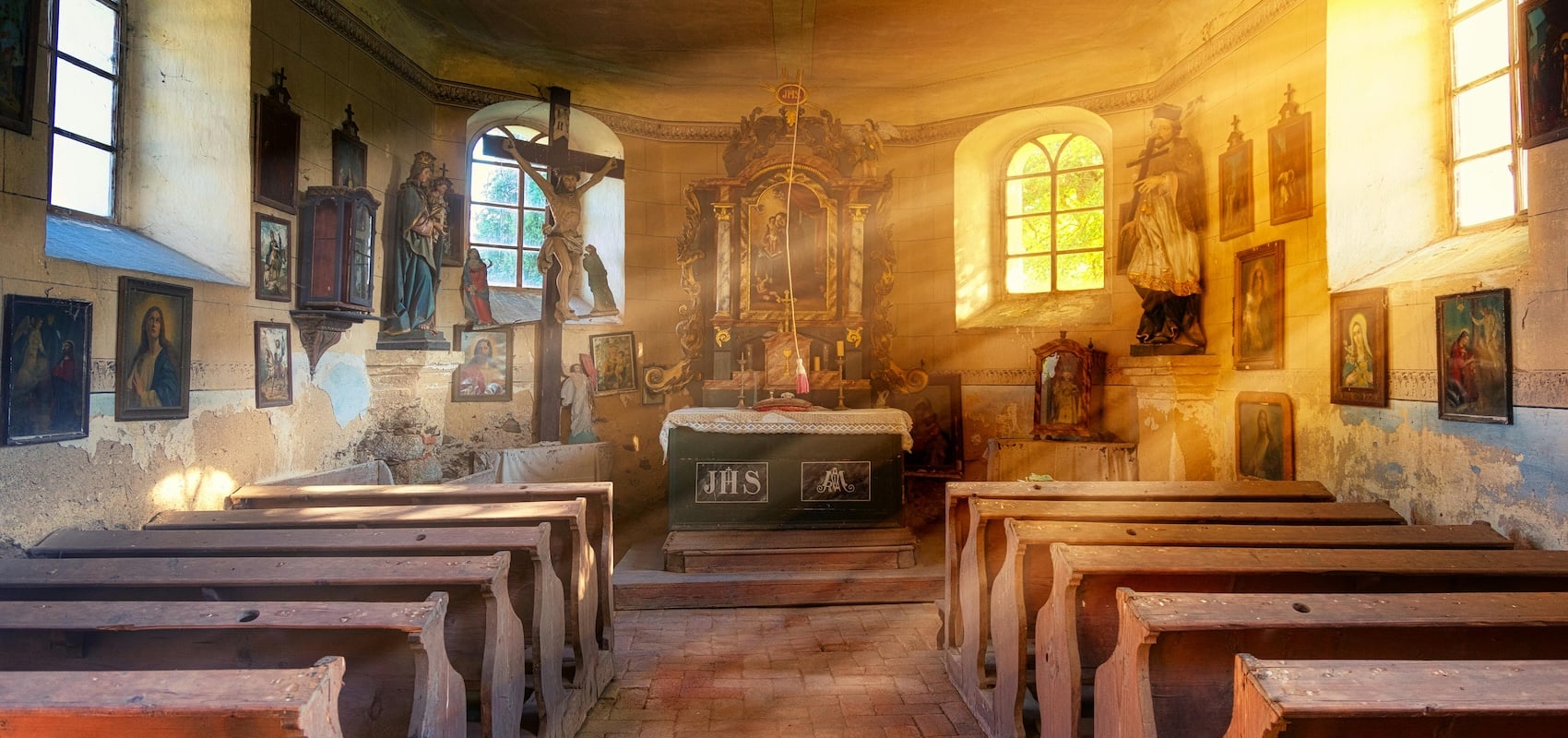
Across the Western world, especially in France, Britain, and the United States, we are seeing a remarkable surge of adult conversions to Christianity, particularly to the Catholic and Orthodox Churches. Young people, and especially young men, are leading the way.
In France, the Catholic bishops’ conference announced record numbers for Easter 2026: Over 13,200 adults were baptized (a 27 percent increase from 2025), with about 42 percent aged eighteen to twenty-five. In the U.K., the diocese of Westminster received nearly 800 adults into the Church this Easter, a 60 percent increase from last year. In the United States, Catholic statistics for recent years show about 34,500 adult baptisms and 55,000 receptions from other Christian traditions, the highest figures in nearly two decades. The Orthodox Church in America is also experiencing a clear surge, especially among young men; one nationwide survey found a 78 percent increase in conversions in 2022 compared to 2019.
The churches and the political establishment have been caught by surprise and often seem unprepared. Yet many commentators, intellectuals, and clergy now recognize that these conversions may signal the beginning of something much larger: not a post-Christian era, but the dawn of a post-secular age that is once again pre-Christian.
It was precisely this surprising development, along with the widespread feeling that something profound is shifting in the West, that inspired the conference titled “Christian Revival: Our Post-Liberal Hope?” It took place on March 11–12 at Oxford’s historic Pusey House, in partnership with the Danube Institute in Budapest.
Among political observers and thinkers, there is a growing feeling that the postwar liberal order that shaped our societies after the Second World War is losing its grip. In its place we’re left with a deep emptiness, fragmented values, and politicians who seem to lack any clear vision of the good. That is why the question hanging over the two-day conference felt so urgent: Could a fresh Christian revival be the answer to this cultural and spiritual crisis?
British writer Mary Harrington opened the conference with a sharp diagnosis. We are living through what she called the “Great Weirding.” Digital media and short-form content have reshaped how we think, feel, and believe. Long, careful reflection is giving way to emotion, tribal intensity, and quick reactions. At the same time, many people today feel a genuine hunger for something more meaningful, a kind of re-enchantment of the world. But Harrington gave an important warning: The re-enchantment some long for is not the tame, polite version where everyone simply goes to church on Sunday. It can be messier, more tribal, even unsettling. Christianity, she suggested, needs to provide a solid foundation through prayer, liturgy, and real community if it is to stand firm.
Psychiatrist and philosopher Iain McGilchrist went even deeper. He described reductive materialism as “morally bankrupt and intellectually simplistic.” Our crisis, he argued, is first and foremost spiritual. An individual, purely personal spiritual approach would not be enough to meet this crisis, he warned. “If this civilization is to be saved, and we all know how urgent that need is, there must be more: nothing less than a return to the place of the Christian tradition at the core of life, daily life.” The Church, he said, offers a “treasure house of embodied meaning that our souls can turn to for sustenance.”
The program also devoted time to the relationship between church and state. Former BBC journalist David Campanale spoke about Britain’s historic bond between the two. The United Kingdom once understood itself in covenantal terms shaped by Scripture. When the people turn away from God, the blessings of that covenant fade; when they return in repentance, new life can spring up. The starting point, he emphasized, must be repentance and prayer, both personal and collective.
A fresh opinion poll presented by Andrew Hawkins of Whitestone Insight added encouraging perspective. More than seven in ten Britons feel that the country’s institutions are weakened or that we no longer share common values. About half say Britain used to be a Christian nation but isn’t anymore. Yet six in ten still believe Christianity has something positive to offer, morally and practically, and a majority worry that drifting further from our Christian roots will harm future generations.
Other voices added further important perspectives. American writer Rod Dreher spoke about the growing appeal of the occult among young people and how only a strong Church can truly protect and strengthen them. Raymond Ibrahim, a historian of Christianity and Islam, pointed out that the presence of Islam in the West is a symptom of a weakened Christianity. He warned that a soft, “doormat Christianity” will not be able to stand against a confident traditional worldview. Several speakers, including myself, took this observation further. Instead of focusing on remigration as the main political response, we argued that the better and more Christian path is to actively share the gospel with Muslims so they too can become part of the renewal. This is not just a theoretical idea. In the Middle East, a significant number of Muslims are already turning to Christ. If we truly long for a Christian revival in the West, we must also work to extend that same invitation here.
There was broad agreement that true renewal will not be manufactured in conference halls or parliaments. It will come through the Holy Spirit working in repentant hearts and a culture waking up to its own emptiness.
