
The Shaker name looms large in America’s material history. The Metropolitan Museum of Art hosts an entire Shaker Retiring Room, replete with objects crafted by the early community of Mount Lebanon. We can recognize Shaker chairs or bureaus, without having had to visit a museum, because they’ve become such a staple of our design vernacular. As Thomas Merton put it, “The peculiar grace of a Shaker chair is due to the fact that it was made by someone capable of believing that an angel might come and sit on it.” Before the chairs, there was the United Society of Believers in Christ’s Second Appearing led by Ann Lee.
Recent scholarship has been able to piece together some points to anchor the story of the Lees from their early days in Manchester. We know, for instance, that Ann and her father were fined for interrupting Anglican church services to evangelize for their new faith—and it is easy to imagine that the Shakers had heard that many of the churches seen as Dissenters in England had found fertile ground in the colonies, leading to their departure in 1774. In 1816, decades after Ann Lee’s death, the Shakers would publish the Testimonies of the Life, Character, Revelations and Doctrines of Our Ever Blessed Mother Ann Lee, and the Elders with Her. It collects aphorisms and anecdotes, serving almost as a credal document. The attribution of the contents to Ann Lee and her fellow Elders is ambiguous, but it illustrates Shaker belief and practice in the early generation.
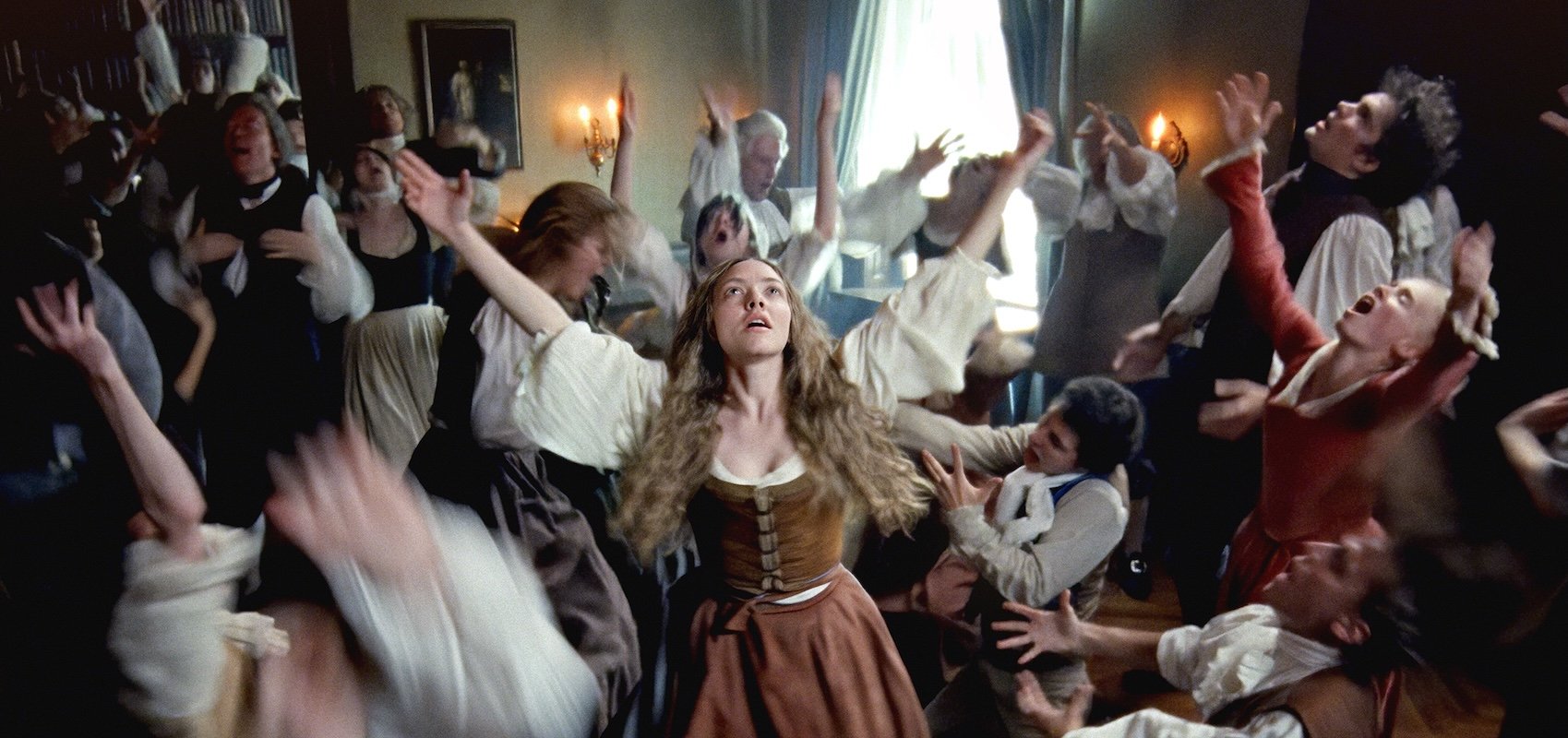
In The Testament of Ann Lee, writer-director Mona Fastvold embraces this ambiguity, painting a portrait of the eponymous charismatic leader through the recollections of one of her close friends and followers, Mary Partington (Thomasin McKenzie). Accuracy falls on the narrator, and this frees the storytelling to take a thematic approach. Most striking is that Fastvold takes Ann Lee (Amanda Seyfried) and her followers seriously as believers. Ann is not made up into a generic secularized revolutionary against present circumstances, as a lesser film would have presented, but as someone with her own convictions.
We are introduced to Shaker practices through the ecstatic communal dances that lent them their popular nickname. These sequences are marked by incredible camera movement and sound design, which seem to pull the viewer gravitationally from the periphery of the prayer-hall into the center. Few of us share the Shakers’ religious commitments (there are two remaining members, though a third may have joined last year), but the experience itself is relatable. Crowds of people, enlivened with purpose and movement, achieve an elevated state, even in settings like concerts and stadiums. It’s a reality of human nature, though more channeled and directed in orthodox religions, such as the hadra of Sufi orders or the night vigils of Eastern Churches, due to the pitfalls that can accompany ecstatic experience without guardrails. The dances provide contrast and context for the austerity and simplicity of Shaker life as seen elsewhere. Their renunciation of worldly pleasures, including simple communal living and lay celibacy, tie directly into an appreciation of the greater pleasures found in communing with God. They are not merely renouncing, but exchanging.
At the same time, the film doesn’t shy away from the harsher aspects of Shakerism. At one point, a broken-hearted Ann Lee banishes her niece (Viola Prettejohn) from the community due to her desire to marry and procreate. She loves her niece, but truly believes her call for celibacy is revelation. It is through this range of dimensions that the religious community in the film feels grounded. Seyfried shifts between vulnerability, authority, and maternal care, with each of these aspects feeling core to the character.
While America provided a space to worship and proselytize away from the Established Church, it brought its own challenges. The pacifism of the Shakers (also known as Shaking Quakers) led to arrests of Shakers, including Ann Lee, for not joining in the Revolutionary War. In peacetime, the Shaker community was able to grow, drawing converts across the Northeast, but the same fertile ground for religious expression that America provided meant jealous competition. At times the Shakers found themselves violently cast out, whether by local authorities or competing denominations, which Fastvold illustrates with a vivid and disturbing scene. The Shakers’ remarkable carpentry and inventive craft is not absent from the film, but it’s situated within their commitment to simple living and using hands at work to direct hearts to God.
Cinematographer William Rexer and production designer Sam Bader explain that, throughout the production, Fastvold sought to keep everyone together. Rather than the shooting location only playing host to the cast and crew directly involved in the shots, the choreographer (Celia Rowlson-Hall), composer (Daniel Blumberg), costume designer (Małgorzata Karpiuk), and others would also be present, to cultivate a sense of communal collaboration. Blumberg, who pulled from Shaker hymns in developing the score, would play music to get the cast and crew in the mood for each scene before shooting. And from the outset, they decided to shoot on 35mm film, for its visual richness and tangible link to the past. These efforts helped the film look lavish on a small budget, comprised of many smaller grants. Through meticulous planning, Fastvold and Rexer were able to compose shots that were entirely period accurate in spots where modern trappings were just out of frame.
Fastvold’s choice to place Shakerism at the center of the story comes with surprisingly little precedent. Until a landmark history by Stephen J. Stein in 1992, even academic treatments of the Shakers focused on their material culture and craft. Mildred Barker, who led the Shakers of Sabbathday Lake, quipped, “I almost expect to be remembered as a chair.” Barker feared that the “things” had obscured that there’s “something special behind” them. Fastvold seems to have been keen to look behind and see the force that animated the craft. And through her own traditional methods, careful planning, and efficient use of resources, she serendipitously echoed the meticulousness of the Shakers themselves.
