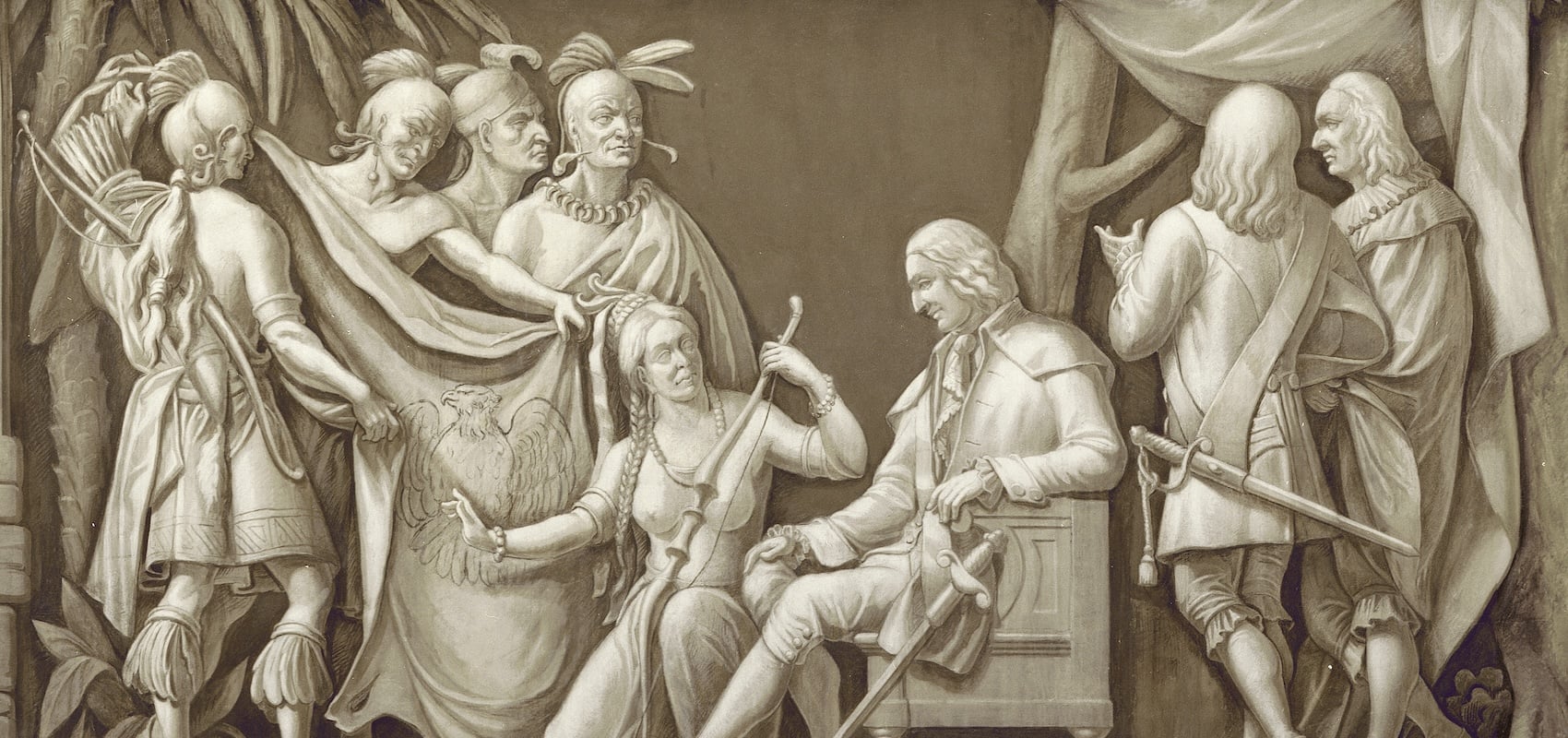
In 1716, a remarkable commoner by the name of James Oglethorpe took a leave of absence from Corpus Christi College, Oxford. His most notable accomplishment to date—admittedly, he was only eighteen—was a poem in tolerable Latin Sapphics, “Quisquis Amissam,” in honor of Queen Anne’s passing and the coronation of George I. He was seeking adventure. On the recommendation of the Duke of Marlborough, he entered the service of Prince Eugene of Savoy. Prince Eugene, an estateless child of a Savoyard aristocrat, had earned a reputation as the hammer of the Turks, a Charles Martel redivivus. At the outset of his career, the Ottomans governed the largest empire in the world, and the largest political entity on European soil, stretching from the Gulf of Aden to the gates of Vienna. Prince Eugene fought at the Siege of Vienna, commanded a regiment at the conquest of Budapest, and engineered the driving of the Turks from Hungary, culminating at the Battle of Zenta. In his declining years, Eugene set his sights on Belgrade. And he took James Oglethorpe, the dashing Latin poet from Oxford, to be his aide-de-camp.
The site of Belgrade, a defensible hill at the confluence of the Danube and Sava rivers, has been occupied for seven thousand years. War has been its perennial lot. It was most recently attacked in 1999, when NATO forces under Bill Clinton bombed it into submission. In the Middle Ages it earned its current name (“White Fortress”) for its great castle, which still stands. Eugene’s 60,000-man army pounded it with artillery for a month, but its walls stood, and the 30,000-man Turkish garrison responded with cannon fire of its own. Eugene had tolerably high hopes for the siege, however. Until, that is, the morning of July 28, 1717, when the advance guard of a Turkish relieving army, 200,000 strong, took up positions on the nearby hills.
Prince Eugene refused to lift the siege (“Either I will take Belgrade, or the Turks will take me!”), and the arriving Turkish army entrenched itself and set up its own artillery. Word was sent out that Eugene and his Habsburg army were trapped, but no help came. Outnumbered almost four to one, the besiegers became the besieged. With his knowledge of human behavior, the prince waited for his enemy to get sloppy. On the afternoon of August 15, he determined that the time was ripe. He instructed his officers—including Oglethorpe, now commanding a squadron—to prepare to attack that night. Night assaults favor more disciplined armies and multiply the force of surprise. After midnight, 50,000 troops of the Holy Roman Empire crossed the trenches and marched for the Turkish lines. They were assisted by a thick fog. A horrible battle of muskets and sabers and bayonets followed, until Prince Eugene personally led a detachment that captured the enemy artillery. He turned the Turks’ guns on their own position, and the battle became a rout. The garrison surrendered a week later, after Prince Eugene had granted safe conduct to all inhabitants in exchange for the city. Belgrade was his. He had a “Te Deum” sung in the tent of the Turkish general.
Stories of Prince Eugene and the Austro-Turkish war became part of young James Oglethorpe’s stock of tales. “Even from my childhood,” he said, “I made it my business to see all the great men of my time, from Lewis the 14th and Victor Amadeus, two kings [of France and Savoy], and the truly great Prince Eugene down to the poor spirited, covetous Duke of Marlborough, and good King John of Portigal.” Oglethorpe’s swipe at the Duke of Marlborough—the greatest of the British generals, the ancestor of Churchill, the kingmaker who betrayed the Stuarts and misered his way to one of the great fortunes of Europe—is indicative, for the young man looked with scorn on greed and temporizing, no matter how successful. Back in England, he finished his studies at Oxford and was returned as a member of the House of Commons at age twenty-six. The gallant young Member from Haslemere proved warm with his words and quick with his rapier. One Mr. Sharpe, a secretary of the Bishop of London, was the recipient one day of Oglethorpe’s barbed commentary, whereupon the aptly named Sharpe drew his sword and demanded satisfaction. These were the days of the great duels—Louis XIV had only recently died—and the motto on the Oglethorpe arms was Nescit cedere, “He knoweth not how to yield.” Oglethorpe drew. Accounts of the event differ after this, but all agree that Oglethorpe wounded two men without being wounded himself. He was not charged with any crime. Less than a month later, however, Oglethorpe was in a second duel and killed a man, whereupon he was arrested and spent the next five months in prison awaiting trial, where he was acquitted. He took his seat in Parliament days later.
Restless and discontented, impetuous in causes he believed righteous, he would become a reformer in Parliament, a general in the army, and a friend to the arts. He became the close companion of Oliver Goldsmith, Alexander Pope, Joshua Reynolds (who painted his portrait), Samuel Johnson, and James Boswell. Joining some forty different committees soon after being seated in government, he penned a tract against naval impressment and lamented British complicity in slavery, which he called “a horrid crime” and “against the Gospel as well as the fundamental law of England.” Slaveholders of centuries past are sometimes justified as “men of their times”; idealists like Oglethorpe stand sub specie aeternitatis. His moral clarity, considered petulant and controversial in his day, today reads like solid common sense: “We should occasion the misery of thousands in Africa, by setting men upon using arts to buy and bring into perpetual slavery the poor people who now live free there.” He personally redeemed and freed an enslaved African. He became a general. He vanished from history for several years—it is thought that perhaps he entered the service of Frederick the Great, but no one knows. Samuel Johnson considered writing his biography, but unfortunately never did. “I know of no man,” he said to Boswell, “whose life would be more interesting.” Boswell himself started gathering materials to write on Oglethorpe, but he got sidetracked by his Life of Johnson.
Oglethorpe’s greatest legacy, however, would be far from England. On November 16, 1732, he sailed from Henry VIII’s old docks at Deptford with a group of 114 men and women of various trades and stations in life. They were beginning what history has called “the Georgia Experiment.” To Parliament, Oglethorpe had proposed a new colony to serve as a military buffer state between wealthy Carolina and Spanish Florida. To subscribers, he spoke of planting a colony on the principle of philanthropy, led by “a noble Tenderness for the Miseries of others.” Oglethorpe had led an unsuccessful penal reform effort in England, after a close friend of his, a publisher whose books had failed to sell, was thrown in debtor’s prison. It is said that, while visiting the jails, Oglethorpe saw his fellow Englishmen, “chained neck to neck and hand to hand,” being led off to servitude in the American colonies. Scholars estimate that more than half of the white immigration to the American colonies before independence—270,000 out of 500,000—occurred in the form of indentured servitude. Oglethorpe decided he would lead England to a better way. There would be no slavery in Georgia. There would be no aristocratic class either, and to prevent its arising, no amassing or sale of property: All shareholders would hold equal-sized plots of land, which they were powerless to alienate. They would bring seed plants for a whole new economy based on the warm climate: wine, mulberries (for silk), olives, citrus.
On February 1, 1733, Oglethorpe sailed through a gap in the barrier islands just south of Charleston. He found a large bluff not far upstream from the Atlantic, some forty feet above the waterline. That would be the place. He laid out the city himself, according to his specifications, and called it Savannah. Its unique design is to this day called “the Oglethorpe Plan.” His contributions to the colony were so determinative that we may conclude that if the Siege of Belgrade had turned out differently, there would be no Georgia, and the famous squares of Savannah would never have been.
By 1733, Europeans had almost 250 years of experience attempting to colonize the Americas. Oglethorpe managed to make many of the same mistakes anyway. He saw colonization as an opportunity to share the bounty of the earth with the portionless. He heard of a group of Lutherans expelled from the diocese of Salzburg, and he invited them to come to Georgia (some did). Though he banned Catholics—Oglethorpe was a Freemason—he allowed a group of Jews to settle in Savannah, where they have remained since. He even hoped that the founding of Georgia might reduce the suicide rate: “How frequent mention is there in the Prints of those, who, to avoid Want, fall Self-murder’d? How generous and Christian an Action would it be, to preserve such Multitudes? . . . These Trustees [of Georgia] then intend to save these wretched People, and give them once again an Opportunity of using their Industry.”
Problems began upon arrival. Oglethorpe was determined that slavery would be kept from Georgia. British colonists had found ways to subsist in America by starting small farms based on livestock: cows, chickens, pigs. But they needed also some kind of cash crop to trade for imported goods, which encompassed all manner of things from clothing to nails to Bibles. All of the South’s cash crops—rice, indigo, tobacco, cotton—were labor-intensive, and were produced more cheaply using slaves. Free Georgia labor could not compete with the Carolina rice plantations. The vast shoals of fish and oil-bearing whales that enriched New England were absent from Georgia waters. The interior had abundant lumber, but roads and improved navigation were needed to get it out. Trading with Native Americans could bring in pelts, but the main currency of the trading post was rum. Oglethorpe, aghast at the social effects of alcohol among both the London poor and the Native Americans, and convinced that “strong liquors” caused fevers, enacted prohibition laws in Georgia. He even intercepted Carolina traders bearing rum in their canoes. Oglethorpe had a plan for Georgia’s economy, and in it there was no room for exploiting the misery of others.
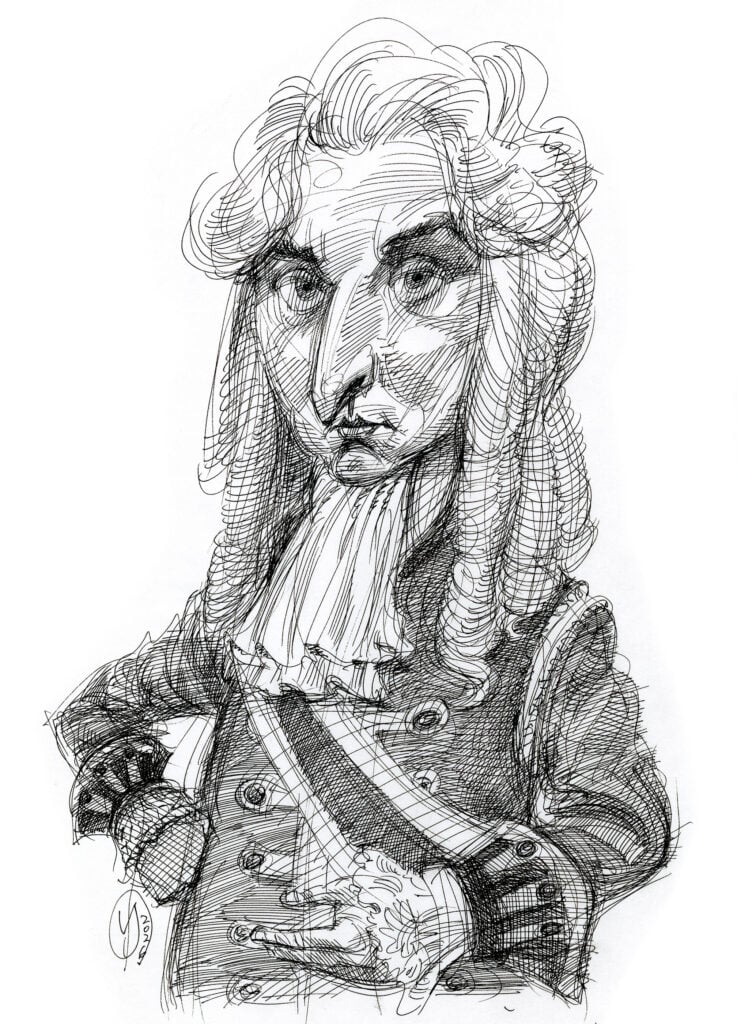
He started a town plant nursery to stock the colony’s farms. But the olives and grapes were not suited to the climate and never throve. (Jefferson, another idealist bent on replicating others’ mistakes, would try these crops fifty years later at Monticello.) Silkworms needed mature mulberry trees, which were far off. Georgia did end up being an exporter of silk, but not profitably. The orange trees also took time to mature, and would prove a disappointment: They survived in Georgia but could not reliably bear crops due to the frosts. The colony could continue to buy supplies from Charleston and Philadelphia, but more and more it was Oglethorpe expending his personal fortune to keep his settlers solvent. He endured the colony’s hardships personally: He lived in a tent while helping other settlers to build houses. (Oglethorpe rails against luxury in one of his recorded conversations with Johnson.)
No one doubted his integrity, but the leader of the Georgia colony was also getting a reputation for autocracy. He assigned properties rather than let colonists choose. Oglethorpe had divided up the nearby region into square farms and given the farms to colonists on equal terms, without regard for the fact that soils and water resources are not all equal. The bans on alcohol and slavery were wildly unpopular. He had prohibited lawyers as part of his utopian scheme—and he did in fact truly hate lawyers—but their absence meant that there was no one knowledgeable in the law who could appeal Oglethorpe’s decrees. The welcome he extended to Jews disregarded local resistance and official advice from London. His dictatorial bent might have been acceptable if his people had prospered. But no one but Oglethorpe had any money. The colonists were wracked by strange fevers and died by the dozens. There was only one doctor (one of the Jews). By 1739, the colonists’ plight had reached the ears of Ben Franklin, who records their troubles in his Autobiography:
The settlement of that province had lately been begun; but, instead of being made with hardy, industrious husbandmen, accustomed to labour, the only people fit for such an enterprise, it was with families of broken shopkeepers and other insolvent debtors; many of indolent and idle habits, taken out of the jails, who, being set down in the woods, unqualified for clearing land, and unable to endure the hardships of a new settlement, perished in numbers, leaving many helpless children unprovided for.
Franklin took a dim view of the Georgia Experiment. His criticisms were of course well founded. Oglethorpe had brought with him a plan for the agricultural economy of an entire colony, when he had never so much as run a farmstand. He had brought families to live year-round—through winter frosts and Atlantic hurricanes—in what was little more than a campground in a howling wilderness. Confident in his own civilized benevolence, he had trusted that nature herself would bow before his virtue with abundant harvests. Yet Oglethorpe and his project were not without virtues, none of which Franklin mentions.
Franklin’s criticisms were very nearly inevitable. His personality was at odds with Oglethorpe’s. They were the two most remarkable men then active in British North America. Franklin worshiped hard work, industry, success, virtue; Oglethorpe wished for kindness, benevolence, philanthropy, redemption. Oglethorpe was a soldier, Franklin a burgher. Franklin was cunning, practical, and conscientious; he counseled great leaders but never quite counted as one himself. Oglethorpe was idealistic, impulsive, given to the grand gesture; he attained positions of leadership again and again, and men followed him.
Franklin’s prudence might have made the Georgia Experiment a success. Franklin’s thought began with the task, and considered which means might help him achieve it; Oglethorpe started with people, and sought for them a purpose. Franklin observed the world in order to discern where a profit might be had; Oglethorpe sought a wrong to redress. Both believed in progress: Franklin pursued it by rewarding success, Oglethorpe by salvaging failure. Franklin adapted to the times; Oglethorpe clung to ideals. Franklin believed that actions could be assessed in dollars and that seeking financial gain was the wisest course most of the time. He did not personally approve of slavery, but he bought, owned, sold, and employed slaves, since doing so was legal and profitable. He could suspend moral judgments, which made his occasional moralistic interventions in American history—for independence and against slavery—all the more effective. (Pennsylvania prohibited the importation of slaves in 1780, and Franklin became the president of its Abolition Society.) Oglethorpe did not know how to yield. Nor did he know how to follow the dollar for an hour, and await a better season for his ideals. So began an embittering journey to his final end.
A group of Georgia settlers—“the clamorous malcontents”—began loudly complaining about Oglethorpe’s administration of the colony. The British were getting rich in Charleston and Richmond on slave labor. Georgia still had no functional economy. Colonists wanted the ability to sell or exchange property to find places that suited their talents or amass large holdings to scale their operations. They wanted rum, and they wanted slaves. They wanted out of the paternalistic utopia of their visionary founder. “Thus have you protected us from ourselves,” they wrote to the Trustees back in England, “by keeping all earthly Comforts from us. You have afforded us the Opportunity of arriving at the Integrity of the Primitive Times, by entailing a more than Primitive Poverty on us.” The colony was in trouble, and Oglethorpe in particular.
Then came war. The War of Jenkins’ Ear pitted Spain against Great Britain starting in 1739. Georgia became a front, and Oglethorpe’s presence was supremely opportune. He barely visited Savannah, where the malcontents prevailed, and instead lived mostly at Fort Frederica, a now abandoned frontier fort. For three years he crisscrossed the coastline, capturing Spanish outposts and fortifying Georgian ones. His excellent relations with the Creek confederacy secured them as allies for the English. Oglethorpe twice led an army against St. Augustine, but failed to take the great stone fort there. He proved his worth, however, at the Battle of the Bloody Marsh, where the Georgians massacred nearly to a man a small Spanish detachment, inflicting ten casualties for every one they suffered.
Oglethorpe’s victory meant the end of Spanish power on the Atlantic seaboard—and his own as well. With the American front quieted, there was no reason to keep a general like Oglethorpe in Georgia, especially since he had proven unpopular. The malcontents secured a date in court in England to prefer charges against him. Parliament had consented to the ban on slavery in part because it made military sense. Slaves were a military liability in a border country. The end of the Spanish threat left only the moral argument. Oglethorpe remonstrated. “If we allow slaves,” he wrote, “we act against the very principles by which we associated together, which was to relieve the distressed.” This was not enough for the Whigs of Whitehall, who had started the Bank of England and were out to make business the business of Britain. The Crown had other uses for a general like Oglethorpe, anyway. (He would soon attempt, with insufficient ruthlessness, to put down the Jacobite Rebellion.) As he was preparing to leave Savannah for the last time in July 1743, Georgians were already bringing in slaves. The town nursery was abandoned, the vines and olives and orange trees almost all dead. Oglethorpe would be cleared of all charges in England, but the Georgia Experiment had failed. Slavery was legalized by an act of Parliament. Humans would be bought and sold in Savannah’s market until December 1864, when, in search of a Christmas present for Abraham Lincoln, another general took possession of Savannah: William Tecumseh Sherman.
Practical men are no greater than their successes; idealists, however, may leave behind treasures for future generations, however contemporaries undervalue them. Georgia would have to recover Oglethorpe’s moral wisdom about slavery later and at great cost. Oglethorpe left another legacy, written into the very landscape of Savannah: its urban plan. Simple yet surprisingly subtle, it has in this age of mass tourism and urban preservation made Savannah one of the most visited and beloved places in America. Three decades ago, the town attracted five million visitors a year; that number has tripled since. Forrest Gump rode the beauty of Georgia, and Savannah in particular, to the Oscars. John Berendt turned Savannah’s unique blend of Southern culture into Midnight in the Garden of Good and Evil, a nonfiction work that reads like a novel. The book became a publishing sensation for a quinquennium and remains the best introduction to the city. Aging Boomers flocked to the Georgia coast. But the main allure is the Oglethorpe Plan itself.
At first sight, the squares of Savannah do not seem much different from Gramercy Park in New York City, or St. James’s Square in London—an oasis of green in the urban landscape. What astonishes is that there are so many of them. The original design of Savannah’s downtown historic district had, within six-tenths of a square mile, twenty-four squares (of which twenty-two survive). In order to match that kind of density, Manhattan would have to make room for more than nine hundred squares. Across the five boroughs, New York City would need 12,000.
But the real genius of Oglethorpe emerges when you take to your feet. For every forty-four lots he made a square, so that as you walk north to south, you arrive in a square every four blocks. The effect is magical. It is as if you were in the city when suddenly your path diverges in a wood, and now you must go right or left under a canopy of trees. Live oaks fill the sky; hints of buildings glint through the boughs. The squares are a repeating element in the grid, but they function as a counter to its normal effects. In places like Oklahoma City or Omaha, grid lines lead monotonously off into the distance. In Savannah, you leave leafy Chippewa Square and walk four blocks north past houses, churches, apartments, and shops to Wright Square, where you exit the streets and enter a park. You may turn right or left or keep straight, as at any grid intersection, but you may also go diagonally, or sit under a tree, or lie on the grass. If you are driving a car, you have to take a detour around the square. The square interrupts the grid’s monotony without compromising its geometry.
The basic unit of Oglethorpe’s plan is the ward, a twelve-acre unit of forty-four lots gathered around a central square. Broader “perimeter streets” surround the ward, attracting commercial development to its edges. Occupying two sides of the square are four larger “trustee lots,” properties specifically reserved by the governors of the colony for public uses: courts, churches, schools, and so forth. Interior streets come in lanes (twenty-two-and-a-half feet wide) and streets (thirty-seven-and-a-half feet), which suggest certain uses without legally requiring them. A more intimate restaurant may set up on a lane, while a bustling cafeteria will look for a boulevard location. Thus, each ward embraces every type of urban use, without the monotony of zoned cityscapes.
Latin has an idiom to describe the best part of something, the valuable part that can be gleaned even if the rest is worthless: the flower of a thing. We find here in the Oglethorpe Plan the flower of Freemasonry. The Freemasons were bigoted—Oglethorpe banned Catholics from settling in Georgia, a prohibition that remained until Independence—but they were creators. And they took building seriously. For Oglethorpe, urban design seems to have had an almost mystical significance. Mysteriously, when clearing trees from the site of Savannah, he left four pine trees standing at the future site of the Anglican Church—and four pine trees standing outside his own tent. His design abounds in half-foot intervals, very unusual for British surveying, in which the foot is usually the minimum unit. The evidence suggests that he used cubits as his unit of measure, as the Bible describes in the Temple of Solomon. In fact, one of the likeliest inspirations for the Oglethorpe Plan is a 1721 architectural fantasy for the Temple of Solomon (of which no known record remains, making it a fertile field for the imagination). Descriptions discovered by the scholar Mark Reinberger closely resemble Oglethorpe’s ward plan, with the temple courtyard represented by the town square.
Oglethorpe approached his task with reverence because there is, in fact, a ghost in urban planning, a spirit expressed by design, that shapes all the life that abides in that place. The town square in urban planning is usually either a hierarchical space—the courtyard of the prince and bishop, the gathering place before the cathedral or city hall—or an aristocratic space, a green bordering fine town houses for the urban wealthy. Oglethorpe, by universalizing the public square in every neighborhood, expressed on the ground his desire for a pantisocracy, a society in which all would be equal. His square is the embodiment of a space that is open to all, a forum in which public and private uses meet, a visible expression of the harmony that underlies all creation, and a sign of the beauty and dignity in which all creatures made in the image of God have a natural share.
The irony of all this is that the squares of Savannah are now very much urban playgrounds for the wealthy, as brick row houses with twenty feet of frontage now go for two or three million dollars apiece. Savannah stopped putting squares in its neighborhoods in 1851. The coming of the streetcar convinced foolish planners that mixed-use zoning was irrelevant: Residences could profitably fill entire neighborhoods, with streetcar access to public and commercial areas. Savannah now fills more than a hundred square miles, and only its most desirable and expensive square mile has squares.
But there are signs that the beauty, dignity, and profitability of the Oglethorpe Plan might be rediscovered, even by architects and urban designers. Savannah recently ratified a master plan allowing the redevelopment of formerly industrial neighborhoods adjacent to its historic district, rebuilding them according to the Oglethorpe ward plan. The more terrain Savannah places in the Oglethorpe ward system, the more profit developers expect to get. Oglethorpe and Franklin meet in the end: The town square turns out to be not just an idealistic intervention shaping society, but a lucrative one. Brunswick, Georgia—a small town, but designed by Oglethorpe with the same layout—has likewise voted to restore its original town plan.
Nor should the plan be confined to Georgia. Any designer aiming to build a new mixed-use development should consider America’s greatest urban plan: central square, public uses on the square, and streets of varying width encouraging differentiated uses. Cities like Detroit or St. Louis or New Orleans, where entire blocks now lie abandoned, could lay out new squares and channel development into Oglethorpian wards. Even universities, which have largely abandoned the Enlightenment geometry that constitutes the main beauty of most campuses, could adopt the Oglethorpe Plan with only minor modifications. We have the plan, we have evidence of its excellence, and we have the space.
As for Oglethorpe, he returned to England, married, and served in various military roles before being voted out of Parliament. In retirement he occupied himself with patronizing his artistic friends and doing what good he could on a personal scale. His discussions of politics, recorded in Boswell’s Life of Samuel Johnson, suggest bitterness, and indeed he may have felt that the world had rather shrugged off all his good intentions and gone its own way. “Government,” he said simply, “is now carried on by corrupt influence.” He lived to see the American Revolution, and history records that he met with John Adams while the latter served as ambassador to Great Britain. In their meeting it is said that Oglethorpe spoke admiringly of the Revolution, suggesting that Parliament was given over to the love of money, and gave his blessing to the new nation. He died shortly afterward. Inscribed on a tablet near his burial site were words we do not find often boasted of: “He was the friend of the oppressed Negro.”
In literature he survives in Alexander Pope’s Imitations of Horace. Pope uses Oglethorpe as an emblem of the discontented desire for goodness, the willingness to sacrifice money and comfort and position, rather than get one’s share and get along with the world.
Why one like Bubb Dodington, with Pay and Scorn content,
Bows and votes on, in Court and Parliament;
One, driv’n by strong Benevolence of Soul,
Shall fly, like Oglethorp, from Pole to Pole:
Is known alone to that Directing Pow’r,
Who forms the Genius in the natal Hour.
Why God makes men like this to fail in this world we cannot know. But we can pick up the pieces of their attempts to reform humanity and use them to make a better world.