
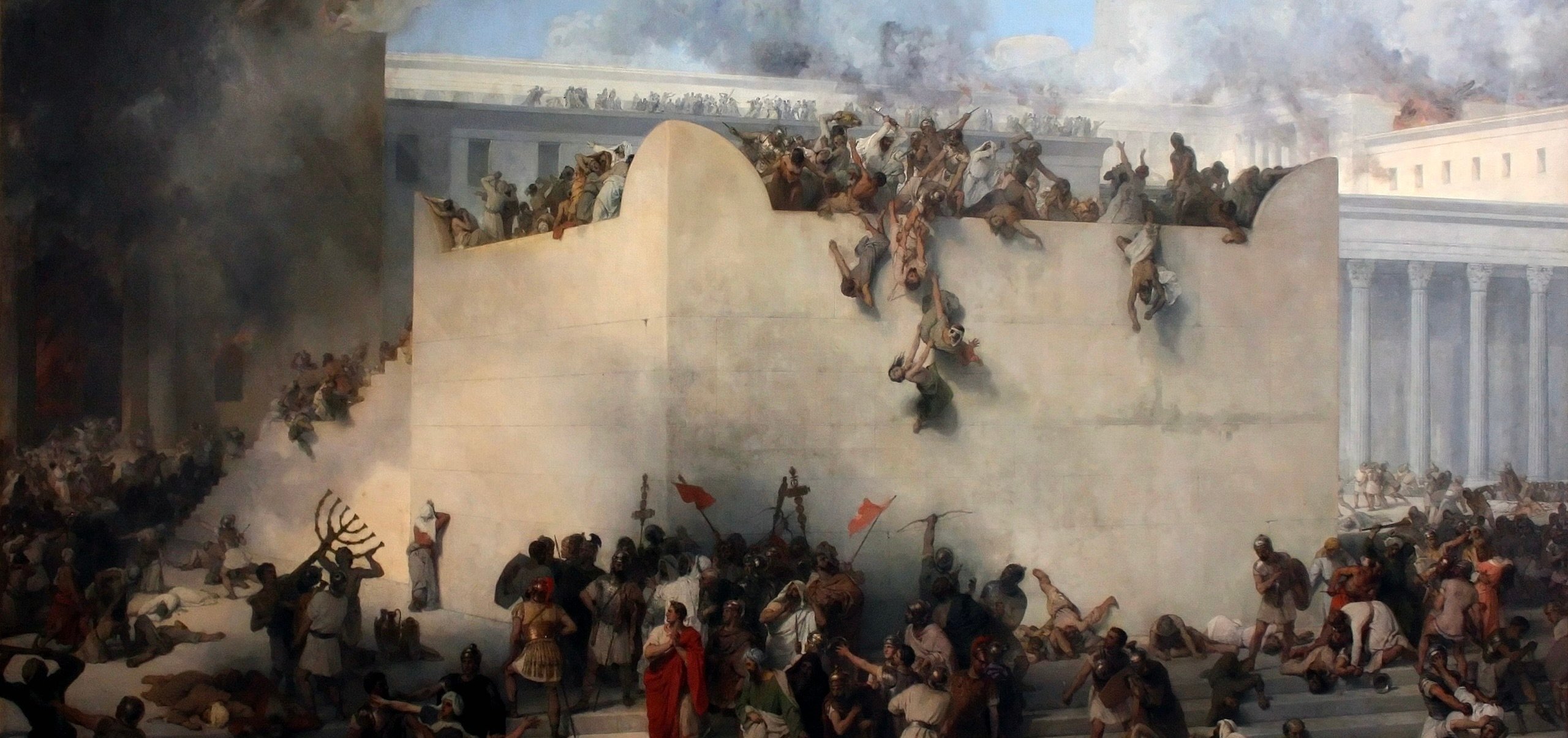
The task of the historian is typically that of spoiler. When someone at a dinner party declares that some recent action or event is “unprecedented,” it is the historian’s cue to don a patronizing smirk and declare, “Well, actually, almost exactly the same thing happened in 1427 in Florence” or some such.
And so it is with the current resurgence of anti-Semitism. There is a sense that we have seen it all before, many times with the same tired clichés reappearing again and again in history. For years, I gave a lecture in my Reformation course on Luther and the Jews. I always began by pointing out that, for all of the controversy surrounding his 1543 tract, On the Jews and Their Lies, it was his 1523 treatise, That Jesus Christ Was Born a Jew, that was the more remarkable in its time. Hatred of Jews among European Christians was a longstanding tradition by the early sixteenth century, and therefore it was not Luther’s anti-Jewish venom that needed explanation but his somewhat more positive—and countercultural—earlier work.
Why did Luther later change his mind? I believe that he was frustrated that the Jews had not converted to the Reformation cause, and that his declining health increased his bitterness toward the world and everything in it. Whether or not On the Jews and Their Lies is truly anti-Semitic is an ongoing debate, given the strong role in the sixteenth century of categories of religion and the relatively inchoate nature of categories of race. But however one answers that question, there is a path from his day to ours, and the myth of the blood libel, the idea that Jews use the blood of Christians in Passover celebrations, plays a part. Luther drew on it in his later tract, and it has today returned to public discourse.
Last week at University College, London, an academic, Dr. Samar Maqusi, repeated the libel as part of a presentation to the UCL branch of Students for Justice in Palestine. Reaction was strong and swift; Maqusi has reportedly been banned from campus. Had her talk focused simply on criticism of Israeli policy toward the Palestinians, it might have been deemed a legitimate contribution to ongoing discussion. Yet it has become clear in the months since October 7, 2023, that the line between concerns about Israel’s conduct of the war and a basic hatred of Jews everywhere because of their ethnicity is one that is too frequently non-existent.
What does this all mean? The current resurgence of anti-Semitism is consonant with the broader cultural disposition to trample on anything held to be sacred by the previous generation. Whether it is a minor cultural sideshow, such as Gig Eva’s quasi-Oedipal rebellion against a previous generation of evangelical fathers, or the more significant mainstream expressions of hatred toward Jews on both the left and the right, iconoclasm, cultural and subcultural, characterizes our time. It seems that today, everybody legitimates themselves by transgressing whatever boundary earlier generations considered impassable. We are defined by breaking established norms—moral, historical, aesthetic. And the result is that we end up repeating some of the most egregious errors of past times. Maqusi is a sign of the times: embarrassing in her historical incompetence, reprehensible in her hatred of what she would no doubt characterize as the Other, and yet oh-so typical in validating herself through violation of established norms.
Is UCL’s decision to ban Maqusi an assault on free speech? There is a sense in which the answer is yes, of course it is. But the more worrying aspect of this whole situation is that it points to deeper changes in our culture. The university has essentially acknowledged that the older ideas—that good speech drives out bad speech, that the truth will triumph over error—are no longer valid on its campus. And why is that? Because university culture has for several generations now promoted critical theoretical, rather than critical realistic, approaches to knowledge. The latter assume that the world has a moral shape—that, yes, while the quest for truth must be modest because of our limitations, the truth does still exist, can be at least apprehended, and is not intrinsically manipulative. The former reconfigure truth in a revolutionary manner. “Truth” has become whatever moves the culture in what its advocates believe is the right direction. To borrow from Marx: These philosophers see their task not as describing the world but as changing it. Therefore, whatever facilitates that change, however historically incompetent or malicious it might be, becomes legitimate. And, as the reappearance of the blood libel and such frauds as The Protocols of the Elders of Zion indicate, there is a sense in which the approaches collectively known as “critical theory” are really no more than conspiracy theories dressed up in specious academic jargon.
If universities had a strong culture of truth—of believing in its existence and therefore in the possibility and necessity of seeking it—then the blood libel would be greeted as what it is: nothing more than a poisonous lie believed only by those whose natural sartorial choices typically involve wearing tinfoil hats. It would not be deemed dangerous so much as ridiculous. But decades of critical theory have left us both incapable of telling truth from falsehood—or even conceptualizing such a distinction—and paralyzed by the idea that power is truth. And as critical theory’s pop reception in the early 2020s indicates, its predilections are not the monopoly of those who actually know the field. It resonates deeply with a culture fueled by an ethos of ressentiment that stretches far beyond the graduate seminar room to the moral tundra of social media.
And yet where has it led us? Far from moving us forward, it has apparently carried us back to the most malicious and ridiculous tropes of the late Middle Ages.

YOU MIGHT ALSO LIKE
John Allen, Nonpareil Vaticanista
Early Sunday morning, July 28, 2002, things were looking grim for the closing papal Mass of World…
Why Can’t Conservatives Create Art?
Modern conservatives recognize their duty to reverse the devastation wrought by nearly a century of progressive cultural…
A Fully Human Approach to Finance
A conservative after action report on the struggle against woke corporations might highlight banks abandoning net zero…
