
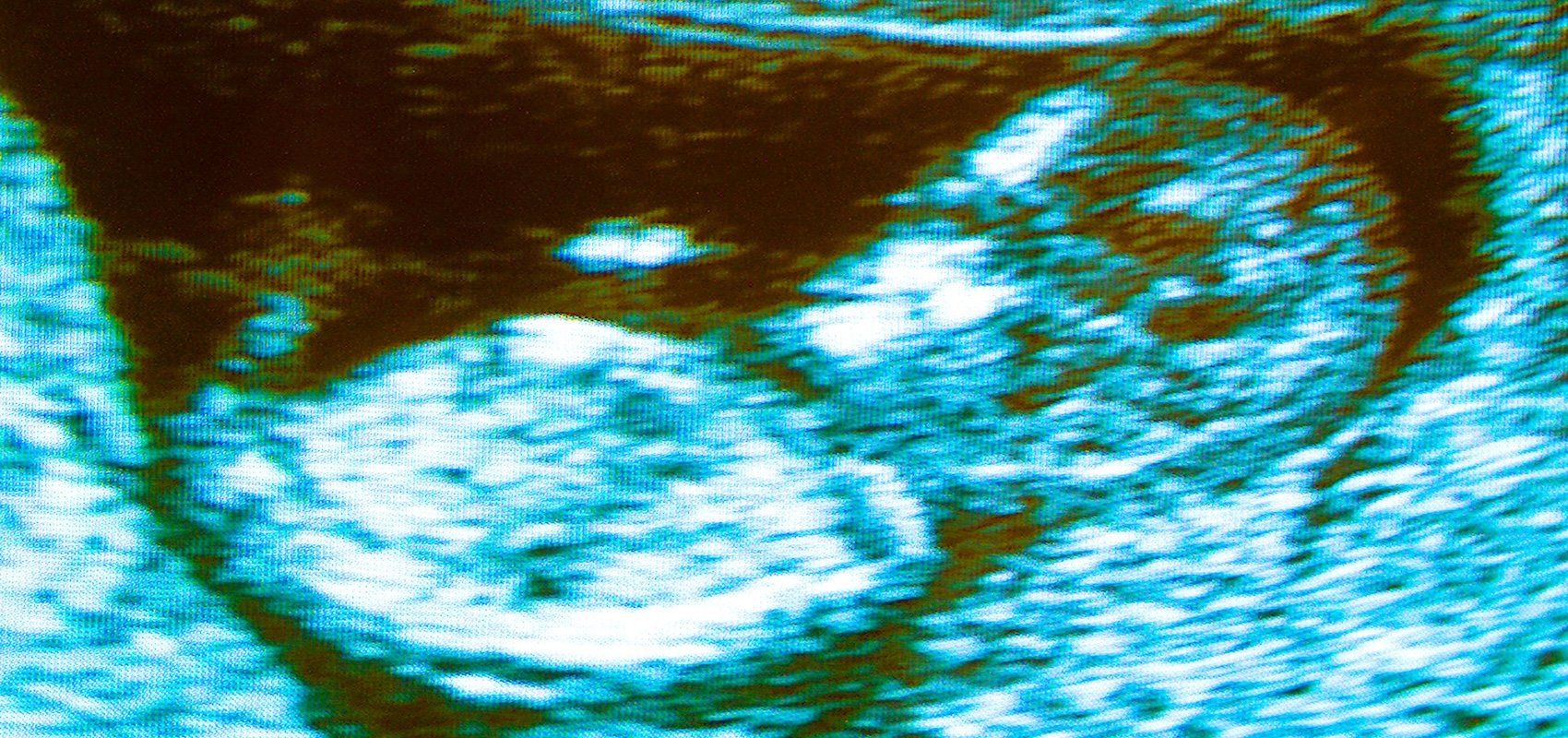
The photo is haunting: A tiny baby boy, his minute legs pulled toward his visibly ribbed chest, one hand resting on his bottom, the other pulled up to his face. He appears to be sucking his thumb, perhaps to console himself. He is dying.
“This is baby Samuel,” wrote South Australian pro-life activist Dr. Joanna Howe in an Instagram caption. “Born alive after an abortion at 16 weeks, he sucked his thumb in the Butterfly Room at a [Queensland] hospital. He lived for over 30 minutes. He was perfectly healthy prior to his abortion. He was left to die. No one picked him up, wrapped him, or gave him any medical care to alleviate his pain and suffering.”
In a sane, moral society, this photograph—despite being slightly blurred and clearly taken on a cell phone—would be for the abortion wars what the photo of the young girl Kim Phúc, fleeing naked and in terror after a 1972 napalm attack, was for Vietnam. Both highlight the suffering of children; both expose the horrific cost behind our polite public defenses of our public policy. These photos stir the conscience.
But we are not a sane or moral society. After Howe published the photo of baby Samuel, which she says was given to her by a whistleblower who took it in the room for grieving parents at Townsville University Hospital in Queensland, the authorities swiftly set to work to suppress it, and the hospital has launched an investigation into how it was shared. The photo went viral in Australia, and then around the world.
The Guardian noted with concern that the “distressing picture of a foetus being called ‘baby Samuel’ is now being used by a broad range of anti-abortion activists,” but did not explore why the photo of the dying child was so distressing—to do so would be to violate the media outlet’s commitment to abortion rights. Instead, the outlet noted that it “is understood Queensland Health, the Queensland government, THHS and others are doing everything they can to get the image removed from social media.”
Even the authorities—from the hospital to the state government—recognize that the photograph of Samuel’s dying moments is too powerful to permit. The soothing lies of the abortion industry can only survive when babies are killed quietly, their suffering muffled by the bodies of their mothers, or left to die alone, uncared for, uncomforted, and most importantly, unseen. For the hospital, the crime was not what was done to the baby boy—it was a “serious breach of confidentiality.” This is the morality of Nazi bureaucracy.
Baby Samuel is like Kim Phúc in that his suffering is representative of legions of others. Howe, a professor of law at the University of Adelaide, emphasized that his fate is “not an isolated case. It happened to 50 Queensland babies in 2022 who survived their abortion and were left to die.” She cited another example in the same hospital. A baby girl was “injected in the heart with poison at 25 weeks. She suffered a cardiac arrest, going into excruciating pain. Her mother was given labour-inducing drugs and baby Amira was born intact.”
The little girl, who weighed 726 grams and was about “the size of a pineapple,” was healthy, as was her mother. She was born dead. There are no baby photos.
Stories like this are not rare, and despite the secrecy of abortion regimes, they leak out like blood under a clinic door. In 2021, a healthcare student in New Zealand witnessed a healthy baby left to die after surviving an abortion; the child was left gasping for breath for two hours. She reported that the practice is common and was traumatized by the experience. “We wouldn’t do that to an animal,” she said. “I was horrified.”
In Canada, where abortion is legal until birth, this has happened hundreds of times; there is also documented evidence of babies being born alive and left to die after abortions in Ireland, the United States, and the U.K. Planned Parenthood has been forced to admit in court that this happens. There are also those fortunate few who survived abortion and lived to tell the tale—one such survivor, Melissa Ohden, runs the Abortion Survivor’s Network, and told me in 2024 that she is in contact with seven hundred survivors worldwide.
There are still a few who possess moral clarity. When Lyle Shelton, an Australian politician and national director of the Family First Party, was asked whether the photo of baby Samuel “would cause distress,” he replied: “Yes, of course. The killing of unborn babies is very distressing.” The journalist asking the question, of course, was more concerned about the “distress” of people seeing the photo of Samuel than about his killing. This reaction is, in a nutshell, a microcosm of our perverse abortion regimes.
Thousands gathered in Brisbane on February 9, rallying “for Baby Samuel” and demanding justice. A few brave politicians added their voices to the cry, calling for change. Samuel’s life was short and ended in horror, but his only baby photo prompted anger from the sane and moral minority. “The world needs to see baby Samuel’s face and hear Amira’s story,” Howe told the Guardian. “When we choose to look away from the victims of genocide, the violence continues.” As pro-life activist Dr. Monica Miller once put it, babies like Samuel do not only have the right not to be killed—they also have the right to be seen, so that they can take their rightful place among us, if only in memory, as members of the human family.
YOU MIGHT ALSO LIKE
Love in a Godless Age
In the latest installment of the ongoing interview series with contributing editor Mark Bauerlein, Ralph C. Hancock…
Icarus Descending
"She’ll never see the boy falling out of the sky,” sings Mumford & Sons in “Icarus.” As…
Berlin and the Contradictions of Identity Politics
On July 25, twenty-one-year-old Abdul Ballout drove a van into a crowd at Berlin’s Pride festival before…
