
This past weekend, Armenia, widely regarded as the “first Christian nation,” held its first national prayer breakfast. Christian leaders from across North America and Europe converged on the capital, Yerevan, for this event, which featured a keynote speech from Armenia’s prime minister, Nikol Pashinyan. As a representative of Christian Solidarity International (CSI), I was glad to attend the event myself.
From one perspective, the prayer breakfast was a welcome development. Over the past five years, the Armenian nation has suffered a series of attacks from its authoritarian Muslim neighbors Azerbaijan and Turkey. Thousands of Armenians have been killed, and the ancient Armenian homeland of Nagorno-Karabakh (Artsakh) has been lost to Azerbaijan—its entire population of 150,000 Armenian Christians forcibly displaced. For Armenians, the similarities between this ethnic cleansing campaign and the Armenian Genocide carried out by the Turkish Ottoman Empire in 1915 are unmistakable.
Armenia has suffered through these traumas mostly alone. But over the past few years, Christian activists in the U.S. have begun waking up to the crisis, and Armenians have found new support from their co-religionists in America. The prayer breakfast was an expression of that support.
But there was a shadow over the event—and it wasn’t just the recent ethnic cleansing, or the knowledge that twenty-three Armenians are still being held hostage by Azerbaijan’s dictatorship. The shadow was the Armenian government’s campaign against Armenia’s own national church.
Since June, the Armenian authorities have jailed two archbishops, one bishop, one priest, and twenty-one other lay supporters of the Armenian church. Some of them have been accused, rather fantastically, and based on dubious or falsified evidence, of trying to overthrow the government—with Russian help, it is darkly suggested (a theme that will be familiar to Americans). Others are jailed on trumped-up minor charges. Armenian human rights groups are raising the alarm over these weaponized prosecutions.
Meanwhile, Pashinyan is demanding the resignation of the Catholicos of the Armenian Apostolic Church—the head of the church for all Orthodox Armenians worldwide. Pashinyan proposes that the new Catholicos be chosen by a committee that he will design. This blatant attack on religious freedom, if successful, would break the church’s ancient tradition of apostolic succession. Of late, Pashinyan has begun attending Masses led by a defrocked priest.
The campaign has only intensified. On October 17, a lawyer for the detained clergy was arrested for a Facebook post. On October 25, an alleged sex tape of an archbishop was anonymously leaked. On November 3, the brother and nephew of the Catholicos were arrested.
No one who studies the history of communist Europe will be surprised by these techniques: encouraging splits within the church, using surveillance power to expose personal failures, threatening family members, lawyers, and supporters, all while feting foreign Christian guests. This is straight out of the old persecution playbook.
At the heart of the conflict between the government and the church is Nagorno-Karabakh. Pashinyan, on whose watch this ancient part of the Armenian homeland was lost, is trying to broker a peace agreement with Azerbaijan. Azerbaijan, in turn, demands that its ethnic cleansing of Nagorno-Karabakh be accepted as a settled matter. Pashinyan is yielding to this demand. Talk of the Karabakh Armenians returning to their homes, Pashinyan said in September, is “dangerous” to the peace process.
The Armenian Apostolic Church’s leadership, on the other hand, has been sharply critical of Pashinyan’s foreign policy, and has vocally supported the right of the Armenians of Nagorno-Karabakh to return to their homeland.
It seems that in order to secure his peace deal and his own rule (parliamentary elections are scheduled for June), Pashinyan has embarked on a campaign to break the church’s influence in Armenian politics and society.
A great deal is at stake here. The Armenian church’s detractors often accuse it of corruption, and they are no doubt right; most Armenian institutions are at least a little corrupt, and so are most churches in the world for that matter. But the church is the second-most trusted institution in Armenia, just after the military, and far ahead of the government.
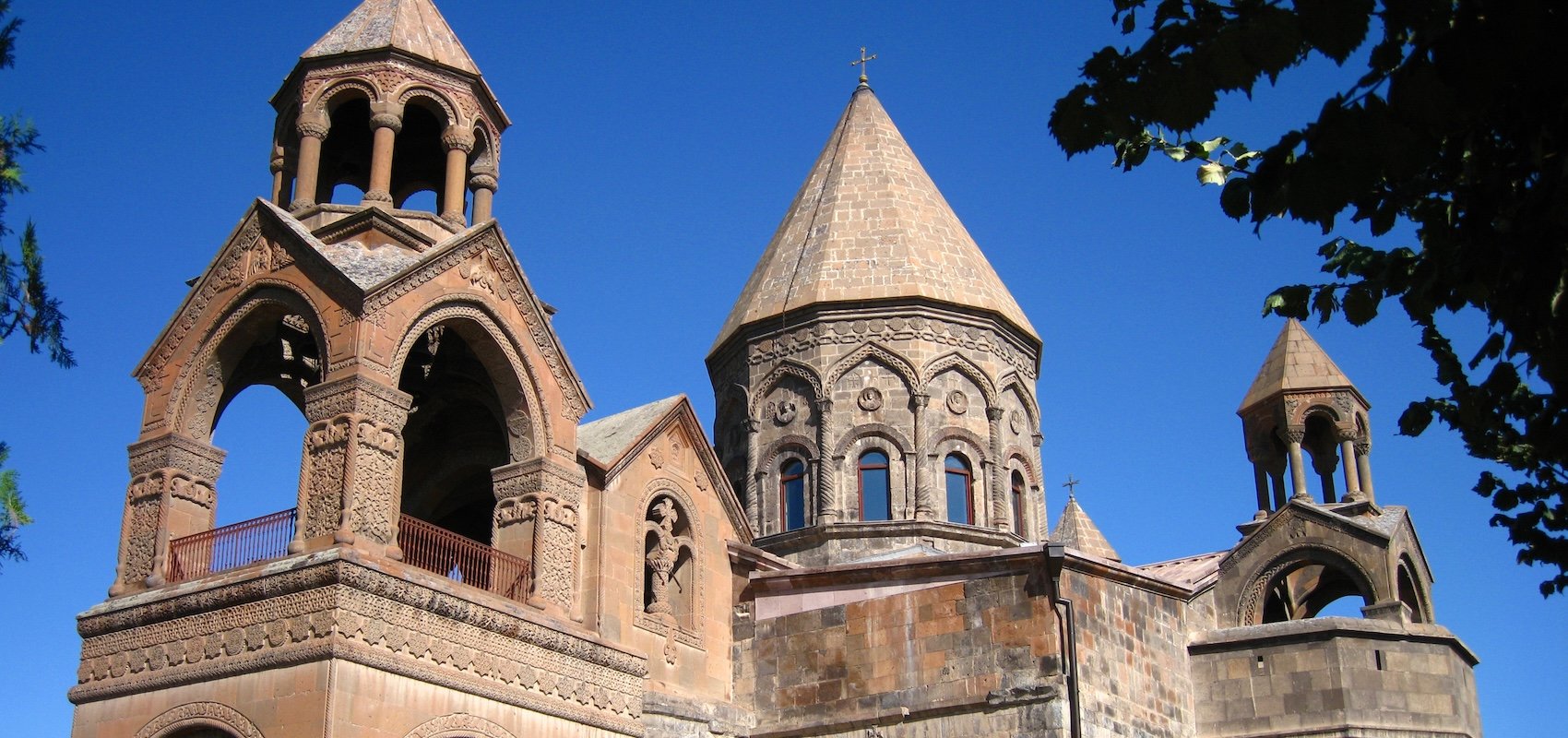
More importantly, the Armenian church is a unique national institution. For 1,700 years, it has kept the Armenian nation alive through statelessness, foreign conquest, and even genocide. It has a historic mission to preserve the Armenian people as a lingering light of the gospel in a region where most of these lights have gone out.
If Pashinyan succeeds in breaking the church, he will benefit by eliminating a rival center of influence. But he will also rob Armenian society of a unifying force, a mediating institution between individuals and the state, and a bulwark against secularization. It would be an enormous tragedy if American evangelicals and Catholics were enlisted in an effort to undermine this brother church, wittingly or not.
Does this mean that Christian leaders and activists should have boycotted Armenia’s prayer breakfast? Not at all. I hope that this event will result in strengthened support for Armenia among Christians in the U.S.
But Pashinyan clearly hoped that this prayer breakfast would help to channel American Christians’ support for Armenia toward him. As long as Pashinyan is persecuting Armenia’s national church, that is a trap we must avoid.
Our support should be focused where it is most needed—with the displaced people of Nagorno-Karabakh, and with the imprisoned priests and laypeople in Armenia.
