
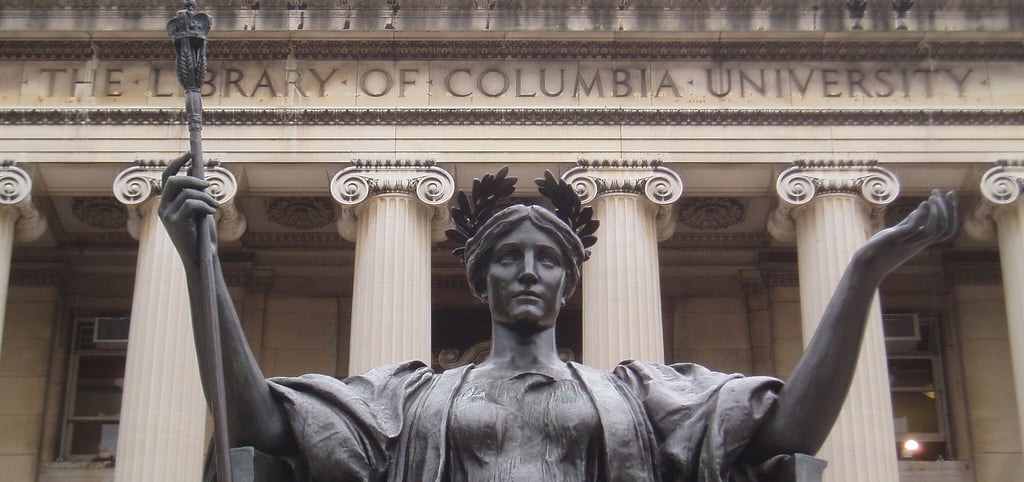
While majoring in computer science at Columbia University, I took part in a poetry workshop. We were assigned to write a Petrarchan sonnet, one of the most rigid of all the classic poetic forms. Arranging the lines in the proper metrical feet and rhymes was like solving an elaborate puzzle—the pieces were words, and the picture they would form could only be known once they were all in place. When I finally finished the exercise, I discovered a beauty that has stuck with me ever since.
When we read our poems in class, I learned that most of my peers had not followed the assignment. Many students made use of near rhymes instead of perfect rhymes, or wrote lines that did not rhyme at all. Some included lines much shorter or longer than iambic pentameter would allow. One student even submitted a “sonnet” composed of fifteen lines. These students knew how to rhyme and count to fourteen. What compelled them to break the rules anyway?
I recalled something my professor said that I had not given much thought to before. “Many of the greatest sonneteers,” he remarked, “rebelled against the sonnet’s strict conventions.” (Here he was referring to Keats’s “If By Dull Rhymes Our English Must Be Chain’d” and Denis Johnson’s “Heat,” which we studied in our seminar.) With this comment, our professor granted us permission to subvert the sonnet’s basic rules even as we wrote our very first of the form.
This was just one example of a larger educational trend at Columbia University: the elevation of the spirit of the avant-garde as the pinnacle of artistic achievement. Liberal arts classes I took as part of Columbia’s Core Curriculum highlighted norm-breaking authors, composers, and artists for singular focus and praise. We marveled at Picasso and the cubists for painting without the traditional restrictions of artistic perspective, but were even more impressed by Pollock and Warhol, who completely defied the core conception of beauty in art. We listened with awe as Debussy’s impressionist sonatas and Stravinsky’s modernist ballets introduced novel rhythmic structures and tonalities, but had to admit that John Cage outdid them both when he composed a four-minute symphony with no instruments at all. To be sure, these artists all created works that are deserving of study on their own merits. But too often we did not focus on the quality of their works themselves so much as the subversive statements that they expressed.
The poorly written “sonnets” I had to read represented a relatively innocuous symptom of a pervasive corruption that had been festering at the heart of Columbia’s educational program: Instead of being trained to contemplate beauty and truth, my fellow Columbians and I were being told to subvert them. As students at Columbia’s “academy of the avant-garde,” we learned that in order for art to have meaning, it must challenge norms and rebel against the oppressive structures of society. Was a sonnet composed of fourteen neatly written lines and a perfectly Shakespearean rhyme scheme really a work of art? If we were not avant-garde, we were nothing.
Only in my senior year did I fully understand the nature of this problem. That fall, our campus was overtaken by terribly loud and unceasing protests, culminating in the campus Gaza encampments of spring 2024. Our university commencement was canceled, and the embarrassing depths of my alma mater’s naked corruption were on display for all the world to see.
That year, I received an email from the student senate that was revealing. The email, written as a complaint against the recent use of police force to clear Hamilton Hall of the students and outside actors who had occupied it, included the following statement: “Since 1968, Columbia has gained a reputation as the ‘Activist Ivy’—for many Columbia students, including ourselves, it’s the reason that we chose this school.” I chose to study at Columbia because I believed it would be an ideal environment to gather knowledge and pursue truth, especially in light of its much-touted Core Curriculum, and I had assumed my classmates felt similarly. This email revealed otherwise. The members of the student senate, representatives of the student body as a whole, chose to study at Columbia in order to practice social activism, not to study wisdom.
I began to realize that the activist explosion at our university was a natural progression from its avant-gardist philosophy. My fellow Columbians had learned that the purpose of the liberal arts is to take part in a game of breaking systems and expressing political statements. Consequently, many concluded that a more effective and easier way of playing this game was not to create or study the arts at all, but to protest directly. It did not bother them that, in pursuing this goal, they would miss seminars, disrupt library study sessions, and wreak havoc on the entire university. To them, this was the goal of the university experience. From the academy of the avant-garde was born the activist academy.
Most administrators and professors, who had already bought into the avant-garde philosophy underlying Columbia’s pedagogy, nurtured and sustained the transformation of their university from a center of learning into an activist hub. Admissions officers selected prospective students on the basis of their propensity toward activism rather than academic merit. In 2020, deans proudly announced action-oriented seminars to educate students on the importance of protest and of amplifying the voices of the young. The Committee on Honors, Awards, and Prizes chose my class’s valedictorian from among encampment leaders while students with real scholastic achievements were relegated to lesser honors.
It is easy to wonder at the chaos overtaking our campuses today and assume it is the work of a few bad actors or the absence of discipline. But the truth is that the call is coming from inside the house. Punishing the loudest agitators is necessary but not sufficient: The deeper problem lies within the philosophy that now animates much of higher education. The academy of the avant-garde and the activist academy alike represent distortions of what a university should be. We must teach students to understand, respect, and thoughtfully build upon the traditions they inherit, not defy and dismantle them. Above all, we must rekindle in our brightest minds a love for truth and beauty pursued for their own sakes, not for the sake of making political statements or breaking norms. Then perhaps they will glimpse that unique beauty that exists only within the limits of fourteen strictly rhymed and metrically sound lines of verse.

YOU MIGHT ALSO LIKE
Ralston College’s Human Endeavour (ft. Stephen Blackwood)
In the latest installment of the ongoing interview series with contributing editor Mark Bauerlein, Stephen Blackwood joins…
The Roots of the Trans Violence Epidemic
Jesse Van Rootselaar and Robert Dorgan, two men pretending to be women, killed ten people in separate…
Why I Stay at Notre Dame
I have been associated with the University of Notre Dame since 1984, first as a graduate student…
