
In his excellent book about our troubled times, Democracy and Solidarity: On the Cultural Roots of America’s Political Crisis, James Davison Hunter notes that enduring solidarity rests on common affirmations and shared loves: “Solidarity . . . is a richer term than mere consensus.” It arises when people recognize in each other similar sentiments and attitudes, which produce “a sense of ‘we-ness’ or ‘usness.’”
Hunter argues that America’s “we-ness” and our common affirmations and shared loves have diverse sources. He allows that John Locke and other figures from the British Enlightenment influenced the Founders in decisive ways. But he also notes the enduring role of Protestant Christianity, especially dissenting forms such as Puritanism and Methodism, as well as revivalist and populist Christianity. By his reading, these forms of Protestantism lent themselves to political syncretism, which he calls America’s “hybrid-Enlightenment.” Liberal rights were advanced to protect individual freedoms, but their formulation was not accompanied by a rationalist assault on religious faith and traditional mores. Hunter cites Revolution-era luminaries who firmly believed that America would be a vehicle for God’s consummation of his millennial plans for humanity—and “the home of free government, reason, progress, and the ‘rights of man.’”
In Hunter’s telling, America’s hybrid-Enlightenment underwrote an ongoing expansion of solidarity. What began as rights accorded only to property-holding white men came to encompass wage-earners, blacks, and women. An American “we-ness” that was originally limited to Protestants was expanded to include Catholics, Jews, and religious outsiders such as Mormons. These developments were contested. But the rationales for reform came from within the American tradition, which is why we can tell a story of development, not discontinuity.
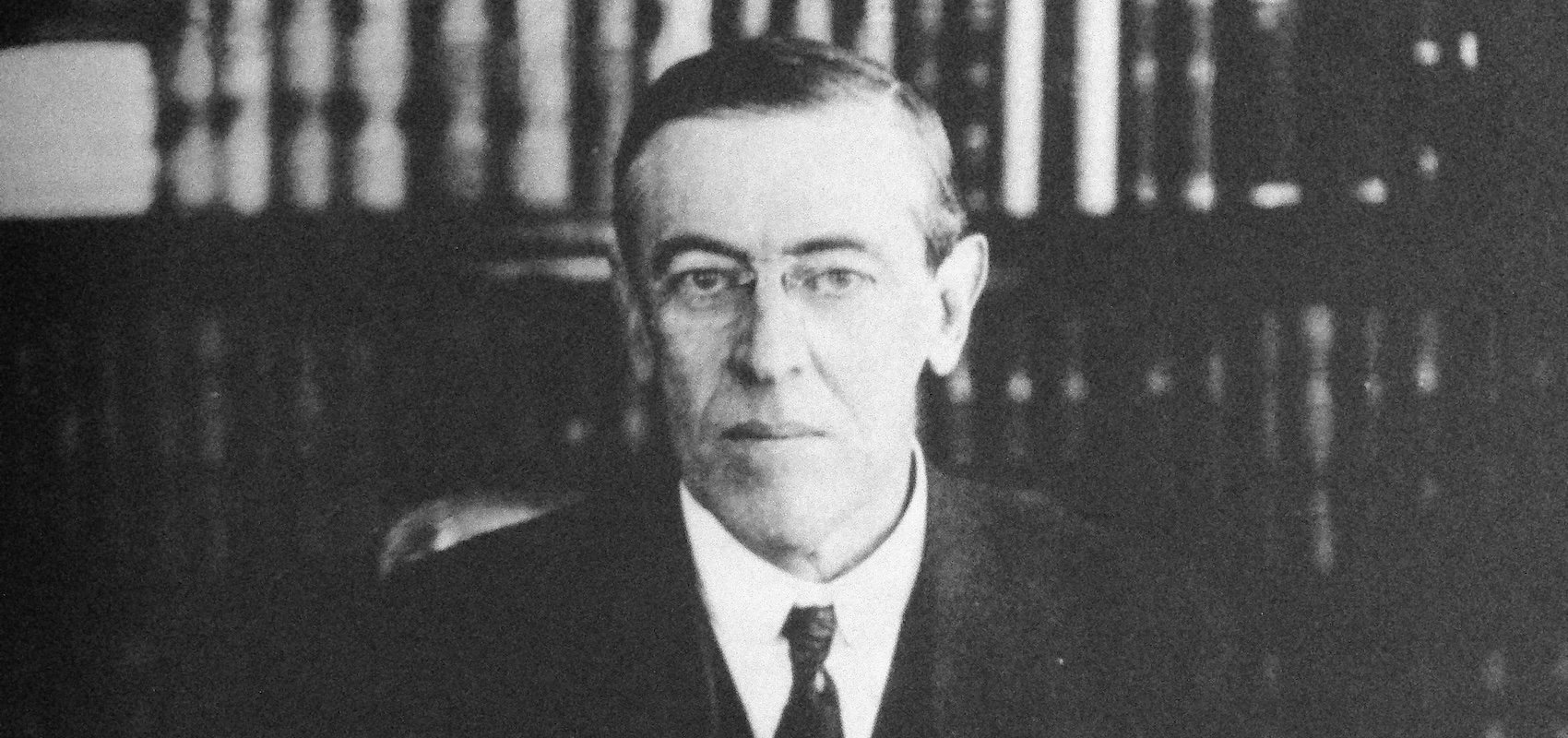
Democracy and Solidarity offers an American history in which solidarity is expanded and those once excluded are included. But this is only the liberal half of the story. Our history has also been marked by periods during which illiberal methods were employed to renew and buttress solidarity. The political response to the upheavals of the industrial revolution was one such period. In that era, Woodrow Wilson played a central role.
Wilson is a hate-figure among conservatives. Along with Franklin Roosevelt, Wilson is credited with the erection of the dreaded “administrative state,” which is said to betray the great American tradition of freedom. Conservatives accuse Wilson and Roosevelt of favoring the direction of society from above, inaugurating an illiberal tyranny of technocrats.
There’s something to these criticisms. As a young man, Wilson made his reputation with an influential book about America’s constitutional system, Congressional Government (1885). In that volume, Wilson bemoaned the immobility of the committee-driven process of legislation. He urged a more dynamic and energetic form of governance, the better to address the new problems and challenges facing the American nation. In practice, pivoting away from the checks and balances that limit government meant empowering the executive branch, allowing the president to serve as the functional leader of the legislative branch, as the prime minister does in the British parliamentary system.
When Wilson entered politics, first as governor of New Jersey and then as president of the United States (first elected in 1912), he did not attain his goal by altering the Constitution. Instead, Wilson established himself as the undisputed leader of the Democratic Party. He pushed through legislation to establish the Federal Reserve, passed a federal income tax, created the Federal Trade Commission to enforce antitrust laws, regulated child labor, and set an eight-hour workday for railroad workers.
These measures addressed the economic problems of his day. Many were denounced as violations of one or another aspect of the liberal principle of freedom of contract, which is the foundation of a free market unhindered by governmental intervention and regulation. (The Supreme Court’s 1905 landmark decision in Lochner v. New York upheld this liberal principle.) Moreover, Wilson achieved these legislative successes, because he often appealed over the heads of legislators to the American people. And as the Founders knew well, direct democracy is not a friend of liberal principles.
Wilson was not alone in his progressive zeal for reform. Had Theodore Roosevelt prevailed in the three-way election of 1912, he would have pursued his own version of muscular executive leadership. Both men were by nature attracted to power. But this does not explain their roles in our political history. The American people were anxious about plutocratic control. In the early twentieth century, trusts such as Standard Oil and U.S. Steel controlled entire industries. Labor unrest roiled the country. Left-wing political radicalism spawned acts of terrorism. Mass migration was transforming the demography of the country. And the extraordinary growth of American industry propelled the nation to the forefront of global affairs, a role difficult to square with older American traditions.
Put simply, the nation was rich but ill at ease, prosperous but at odds with itself. With his energetic and illiberal methods and programs, Wilson sought to stabilize and consolidate the country. And he largely succeeded. None of his signal achievements were reversed when Republicans assumed control of government in 1920. They persisted as central elements of America’s unique approach to regulated capitalism, an approach that renewed the social contract in the twentieth century and thus ensured that a broadly liberal approach to politics and economics would endure. Something similar can be said of Franklin Roosevelt, a demagogue in the mold of Wilson who likewise used illiberal methods to stabilize and unite the country in a time of greater crisis.
Wilson and FDR dominated the political culture of America in the first half of the twentieth century. Unlike the figures surveyed by James Davison Hunter, they do not fit into the liberal story of America. They did not expand the circle of inclusion into the American promise of freedom. (Wilson was a reluctant supporter of the Nineteenth Amendment, which accorded to women the right to vote; Roosevelt did not act to ensure civil rights for blacks.) Their vocation was different. They sought to renew American solidarity, which required taming and restraining certain kinds of freedom, especially freedom of contract. (Roosevelt intimidated the Supreme Court to secure the overturning of Lochner.) In a word, Wilson and FDR administered strong doses of illiberalism.
We are living in a similar period. Immigration, economic vulnerability, globalization—the American people are anxious. Once again, a powerful, energetic executive presses against liberal norms, as did Wilson and FDR. I don’t wish to commend any of the particular measures taken by the present administration, although some strike me as wise and necessary. My point is more fundamental. We do not need to read Carl Schmitt or Charles Maurras to meet today’s challenges. We’ve been here before as a nation, and we have had statesmen who addressed liberalism’s failures so that the American ideals of liberty could be renewed and reshaped for new circumstances. In 2026, we would do well to study the methods of Wilson and FDR and weigh their achievements as well as failures. For we need something of their innovation and daring to navigate our present crisis.



YOU MIGHT ALSO LIKE
Turned Away on Palm Sunday
In politics, diplomacy, war, or pretty much any field of human interaction, one must contend not only…
Timothée Chalamet Is Right About Art (ft. Suzy Weiss)
In this episode, co-founder and reporter for the Free Press, Suzy Weiss, joins Virginia and Germán to…
A Medieval Pilgrimage in Modern Assisi
When you go to the hilltop town of Assisi, you’re immediately struck by how medieval it is:…
