
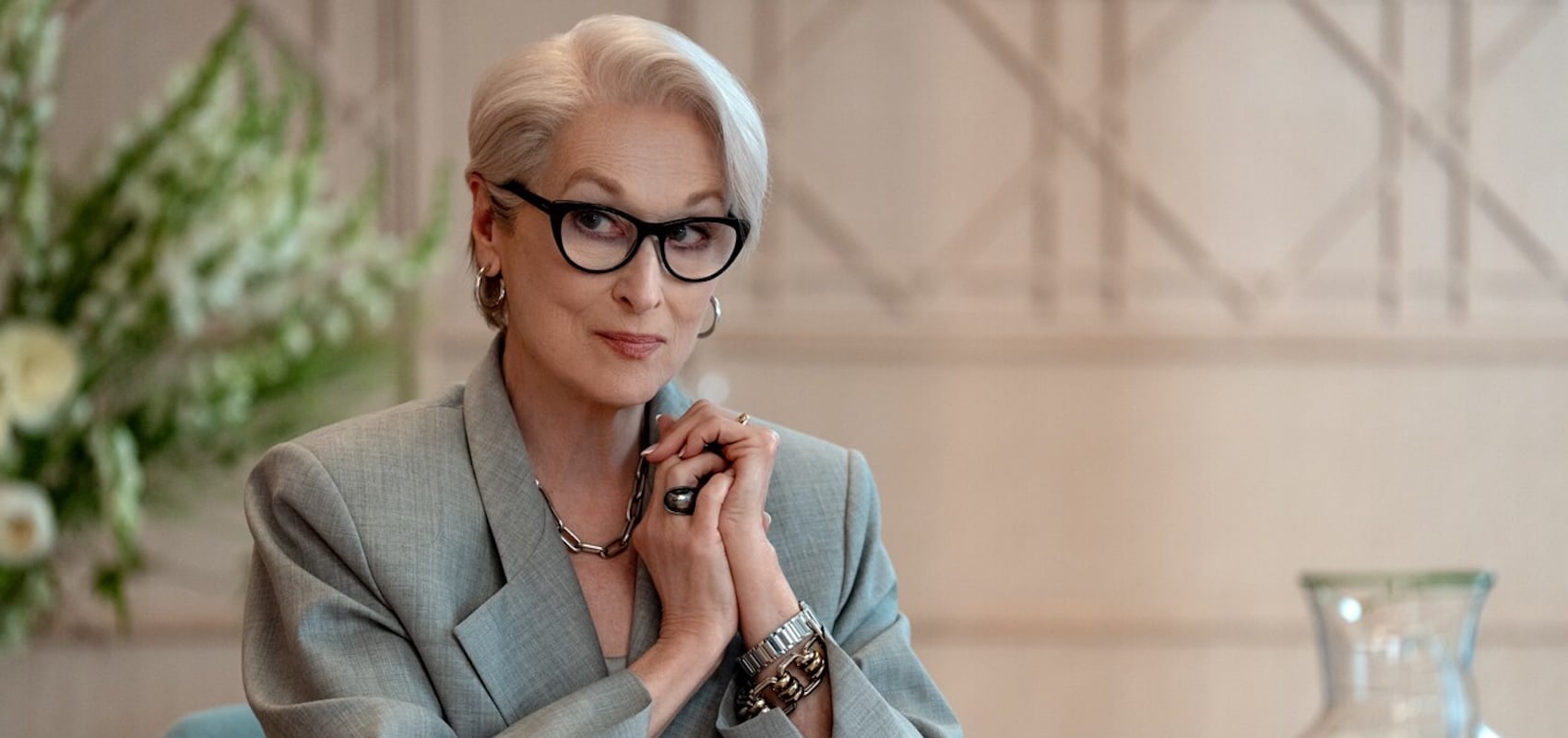
There is a scene in The Devil Wears Prada 2 in which Miranda Priestly, the eminent editor of Runway magazine, is forced to fly economy because of budget cuts to the magazine’s travel expenses. The audience in my packed theater, to my pleasant surprise, audibly gasped. Even for the supposedly anti-bourgeois New York City moviegoer, there is something inherently uncomfortable about watching our society’s most prestigious cultural elite being forced—like the rest of us—to endure the drudgery and difficulty of everyday life. The audience’s reaction was clear: We all, in our heart of hearts, pine for a return to hierarchy.
The Devil Wears Prada 2, the highly anticipated sequel to the 2006 smash hit, continues the story of Andy Sachs and her work at Runway magazine (a fictionalized Vogue). Miranda Priestly (loosely based on Vogue’s former editor Anna Wintour) is a cold, heartless, but ruthlessly effective and discerning editor in chief. The first film, unlike similar “chick flicks,” became a significant cultural artifact largely due to Miranda, a fashion connoisseur who holds the world to higher standards. While the original Devil Wears Prada chronicles Andy—a wide-eyed aspiring journalist—and her journey toward appreciating the value and weight of cultural institutions like Runway, The Devil Wears Prada 2 asks how these institutions will survive the twenty-first century, the era of social media, AI, and disposable content.
It is a rare thing for a film—much less a light comedy—to take a meaningful stance on a current and undecided topic in our culture. The movie is, in many ways, a rebuke of what social commentators have called “enshittification,” the process by which companies are bought out by private equity, optimized by consultants to maximize profitability, and, inevitably, rendered valueless, losing all the charm and personality that drove their initial success.
Why, however, should we mourn the downfall of institutions and magazines like Vogue? Were they not instruments of the very wokeness and cultural degradation so many have lamented? While we might be tempted to cheer their comeuppance, it is a mistake to think that we can live without them.
After Trump’s infamous attacks on legacy media during 2015 and 2016, many on the right deluded themselves into thinking that the cultural institutions that had dominated American public life, and which had been captured by the left, were on their way out. Those institutions seemed to have lost their cultural cachet, and many on the right responded by building new, politically aligned alternatives—what some political theorists have called “parallelism.”
But however much we want to believe that we can create new hierarchies of prestige, films like The Devil Wears Prada 2 remind us that, at the end of the day, people still long to be part of older institutions that once embodied excellence in their respective fields. Journalists still want to be published by the New York Times; authors still dream of writing fiction for the New Yorker; models still hope to appear on the cover of Vogue.
Whether these institutions can remain economically viable is a different question. In the film’s greatest scene, Miranda is forced to sit in the office building cafeteria with a group of Succession-like management consultants. This group speaks the derided but nonetheless insidious jargon of business school. Their calls to “release the beast” are inevitably followed by plans for budget cuts, downsizing, automation, and lowering of editorial standards.
Much as we hate management consultants and their habit of destroying everything they touch, there is a point to their rampage. In an era when consumers expect free content, profit margins for businesses like Runway are razor-thin. While the lavish lifestyle that New York journalists once enjoyed—described by Graydon Carter in his memoir When the Going Was Good—sounds like a dream to aspiring writers, it sounds like a nightmare to a financially responsible person.
The Devil Wears Prada 2’s solution to unprofitable journalism is, on its face, optimistic. The film proposes that these institutions must be bought and run by a new class of aristocrats: billionaires who are not concerned with the profit margins of these publications. The film points in particular to Jeff Bezos’s ex-wife, MacKenzie Scott. Unfortunately, people like Scott have, as yet, refrained from buying up Condé Nast or similar businesses.
This optimism has a dark side, however. What does it say about our society that institutions like Vogue, Vanity Fair, National Geographic, and the New Yorker can only maintain their place as museum pieces or charity cases, subject to the financial whims of people whose concerns can change at any moment? The alternative is the hollowed-out and lifeless profitability of twenty-first-century capitalism. In this sense, it would appear that journalism can no longer exist for its own sake.

YOU MIGHT ALSO LIKE
SlutCon’s Emotional Void
The tech-rationalist phenomenon “SlutCon” caused quite a stir online, perhaps predictably. SlutCon was a multi-day retreat and…
The Boys on the Brink
In the latest installment of the ongoing interview series with contributing editor Mark Bauerlein, Leonard Sax joins…
Serial Liar, Serial Comma
How would you write a public letter that you know will become front-page news? Would you write…
