
Since the start of 2026, Pope Leo XIV has embarked, in his Wednesday audiences, on catecheses about the Second Vatican Council. Beginning the new year with the great council is an inspired choice since the conciliar documents remain lively, full of solid biblical, theological, and spiritual reflection. If Leo’s intention is to keep the Church united in Jesus Christ, as his motto “In the one Christ we are one” (In illo uno unum) suggests, then the Vatican II documents make for a good launching pad. As he states, quoting Benedict XVI, “the Conciliar Documents have lost none of their timeliness.”
What is immediately noticeable is that Leo’s exegesis of the documents is as serene and placid as the documents themselves. And while the Vatican II decrees are rightly taken at face value—in the form they were approved by the world’s Catholic bishops and formally promulgated by Paul VI—this approach can overlook the crucial theological issues and robust debates that accompanied their drafting.
Leo began his instruction with Dei Verbum, the Dogmatic Constitution on Divine Revelation. But the battles over this document were so intense that the constitution itself was almost never written.
Why the controversy?
There were several issues at stake, but the primary one was the role of tradition vis-à-vis Scripture. So heated was the argument surrounding the exact nature of tradition that some wanted to abandon the document altogether and, instead, insert some paragraphs about revelation in the Dogmatic Constitution on the Church. At the end of the council’s second session in December 1963, however, Paul VI made clear the necessity of a document dedicated solely to divine revelation. Joseph Ratzinger, then a conciliar expert, contended that Paul’s directive was well-founded, since the Church needed first to listen to God’s word.
Of course, no one at the council doubted that tradition was central to Catholicism. But determining the precise relationship between the Bible and tradition was a matter of controversy. Prior to the council, Catholics often spoke of Scripture and tradition as two equal sources of revelation, from which the Church drew her doctrinal teaching. But historical research had shown that this disjunctive separation of the Bible and tradition was a post-Tridentine development, not found in the Council of Trent’s own decrees. As Gérard Philips, the moderator of the Theological Commission, noted, the bishops had now identified a problem—the relationship between Scripture and tradition—that would have been unimaginable for them even in the recent past.
After the rejection of the “two sources” language, crucial questions remained: How could the council enshrine “tradition” in a way that was faithful to the Church’s self-understanding and yet would not be injurious to ecumenical relations? Could Catholics speak of the material sufficiency of the Bible for the truths of divine revelation, thereby assuring a certain similarity between Catholicism and Protestantism on the written Word of God?
Paul VI himself sought further clarity on the question of tradition. Throughout the council, Paul worked hard (and successfully) to ensure that each of the sixteen documents was approved by an overwhelming number of bishops. He was always attentive, therefore, to any concerns, particularly those arising from the more conservative bishops, about apparently new theological directions. When the “two sources” language was abandoned, some bishops wondered if tradition was being slighted by the council.
In response, the pope sent a letter to the Theological Commission, asking it to consider again the exact force of tradition vis-à-vis the Bible. Sacred tradition had already been treated in the document, but Paul wanted to strengthen it, particularly to satisfy those who had lingering concerns.
In October 1965, Paul sent his emissary, the distinguished biblical scholar Augustin Cardinal Bea, to the Theological Commission, in order to improve the text. Bea distributed a sheet with seven possible formulas about tradition, while simultaneously encouraging the members to vote for the formula that read (and that is today enshrined in Dei Verbum): “It is not from Sacred Scripture alone that the Church draws her certainty about everything which has been revealed.” Although the theologians Karl Rahner and Philips himself resented Bea’s presence (for he seemed to call the commission’s work into question), the formula was theologically sound, affirming the importance of tradition while also allowing for a Catholic understanding of sola Scriptura, thereby keeping ecumenical unity in sight.
Just two weeks before his retirement in 2013, Pope Benedict discussed this dispute, noting that the Scripture-tradition relationship was “hotly debated” in the Theological Commission. But, he continued, the sentence suggested by Bea and chosen by the commission “is decisive . . . for showing the Church’s absolute necessity, and thus understanding the meaning of Tradition, the living body in which this word draws life from the outset.”
In his instructions on Dei Verbum, Leo also discusses the idea of doctrinal growth over time, citing the statement from the constitution that affirms, “this tradition which comes from the Apostles develops [proficit] in the Church with the help of the Holy Spirit.” Leo adds that “the Word of God, then, is not fossilized, but rather it is a living and organic reality that develops and grows in Tradition.”
Just here, Pope Francis would likely have cited Vincent of Lérins, who speaks explicitly about organic doctrinal growth. But unlike his predecessor, Leo cites Gregory the Great, Augustine, and, appositely, the most recent doctor of the Church, John Henry Newman, with his claim that Christianity is a dynamic reality, an idea that develops homogeneously over time.
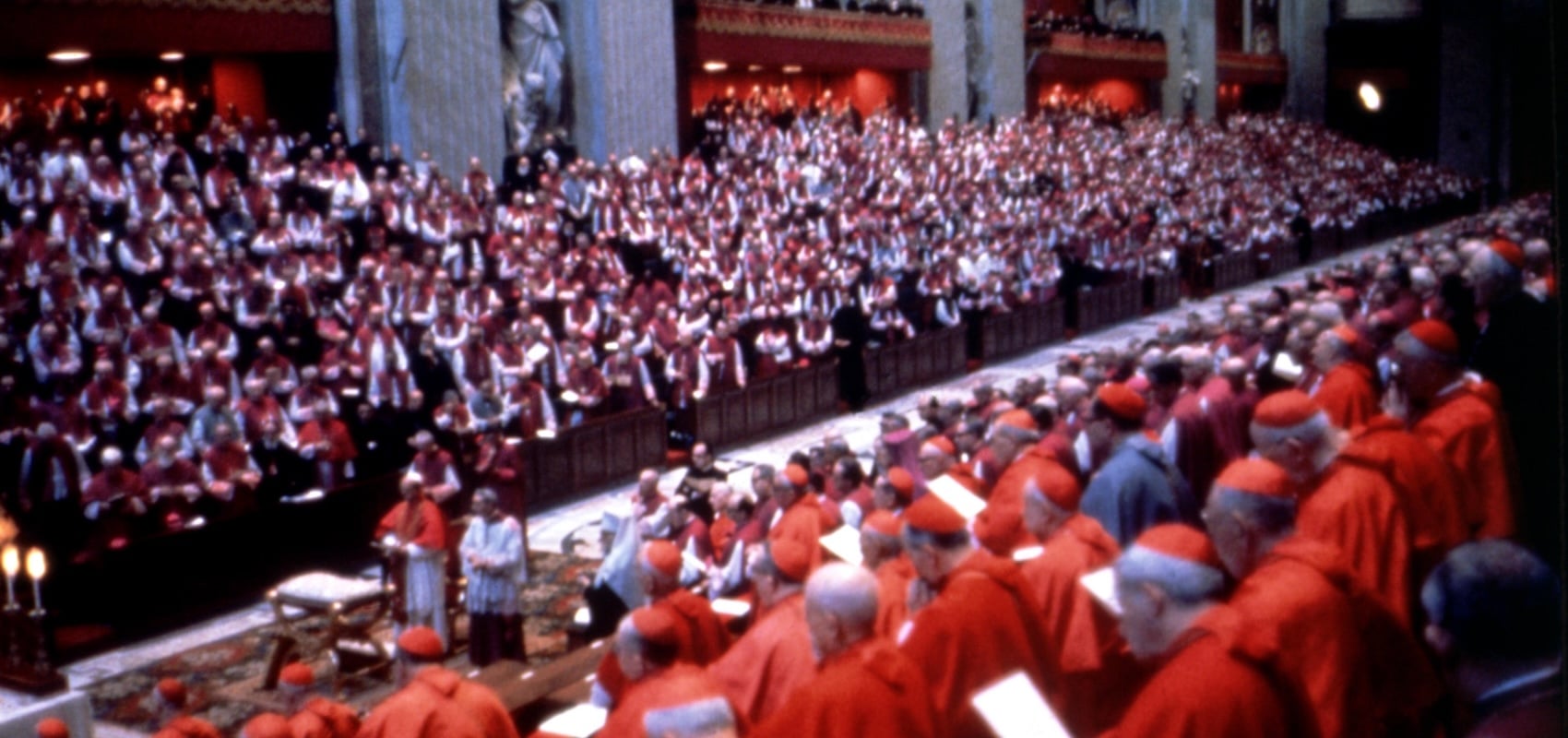
Leo speaks of doctrinal development in a rather matter-of-fact manner. But once again, the smooth conciliar prose conceals the heated debate that took place on the floor of St. Peter’s. The relatio (report) that was sent to the bishops in July 1964, to explain the draft of Dei Verbum, stated that tradition is affirmed under a “dynamic aspect,” so that a living reality is displayed, but nonetheless a reality “always retaining . . . its original identity.” The intention of the Theological Commission was to affirm tradition as something living and advancing, but organically so, without it mutating into something essentially different.
But speaking of Catholic tradition as “developing” or “advancing” was considered dangerous by some bishops. Cardinal Ruffini of Palermo, for example, was deeply troubled by any word indicating that tradition could grow over time. Such language appeared to call into question the perduring stability and solidity of Catholic doctrine. The Sicilian cardinal insisted, “Here [with this text] we find the judgment of Trent severely mutilated and changed.” But Ruffini never explained precisely how the draft on revelation overturned Trent, which had been silent on the question of development.
In response to Ruffini’s concerns, some minor alterations were made—but with the major point unchanged: Doctrinal development and growth take place over time. Ruffini would have benefited from a bit more study of both Vincent and Newman, since both artisans of development counseled a notion of change that was harmonious and architectonic, not one that transformed or altered Christian truth. To repeat Leo, the Word of God is “a living and organic reality that develops and grows in Tradition.”
Pope Leo’s continuing catecheses on Vatican II will likely yield numerous insights. But it is useful to remember that the final conciliar decrees were the result of robust and often fiery theological debates on questions of crucial and continuing importance.
