
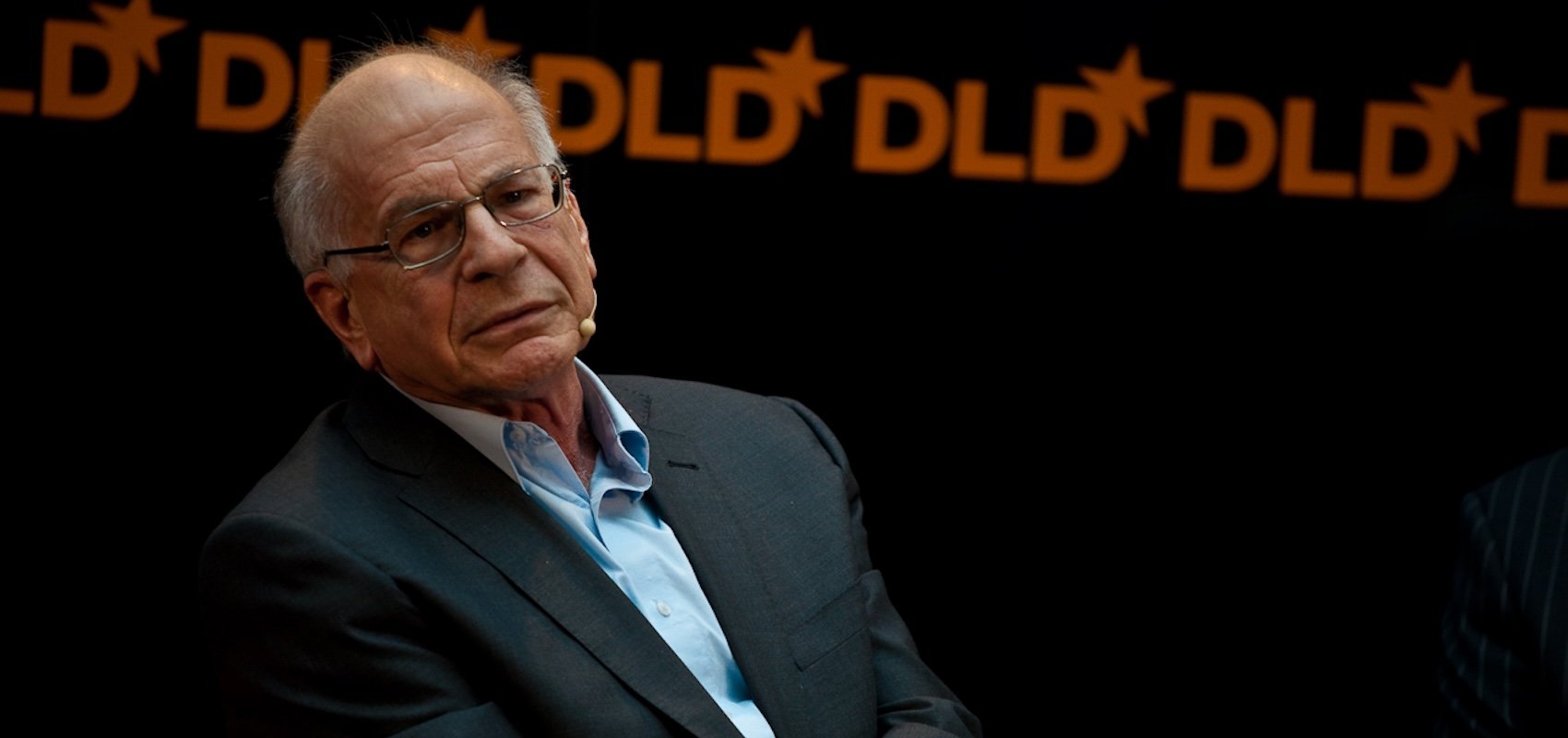
Daniel Kahneman was a Nobel laureate in economics, the author of the international bestseller Thinking, Fast and Slow, and a giant in the study of decision-making and behavioral economics. On March 27, 2024, he died. Not until a year later did it become known that he had taken his own life.
The revelation has received relatively little attention. It was made by Jason Zweig in an article for the Wall Street Journal on March 14, 2025. A month later, Katarzyna de Lazari-Radek and Peter Singer offered their views in an essay for the New York Times. Little else has been written, and nothing of any length. Kahneman made clear that he did not intend his death as a public act or statement, and yet it raises questions. When an expert on judgment and decision-making decides to take his own life, we can’t help asking whether his final act confirmed his reputation or undermined it. We wonder how we should approach the last years of our lives.
The reasons for Kahneman’s decision are not clear, and caution is warranted. But the articles by Zweig and de Lazari-Radek and Singer offer glimpses of his reasoning. Just before his death, Kahneman contacted several friends to inform them of his decision and say goodbye. In these messages, Kahneman explained that he was acting on his belief that “the miseries and indignities of the last years of life are superfluous.” He confirmed that he was not suffering from any condition that caused pain or disability. He was active, still capable of research and writing and of enjoying many things in life. Just before traveling to an assisted-suicide clinic in Switzerland, he spent several days in Paris, according to Zweig, “walking around the city, going to museums and the ballet, and savoring soufflés and chocolate mousse.” Nonetheless, Kahneman was convinced that his kidneys were “on their last legs” and that “the frequency of [his] mental lapses” was increasing. He was ninety years old. “It is time to go,” he concluded.
It is hard not to view Kahneman’s decision through the lens of his work. In Thinking, Fast and Slow, he considered the way in which the last years of a person’s life might govern the evaluation of that life. His conclusion was that, when we “intuitively” assess a life, its duration means little. Most important are the peaks and ends—in other words, the most intense high points and the manner of death. To describe this phenomenon, he used his “peak-end rule.” Kahneman argued that this rule creates distortions and prevents us from thinking clearly, logically, and well. But it is not clear that he thought we could or should do much about it.
Kahneman cited many experiments in demonstration of the peak-end rule. One involved painful colonoscopies, another holding one’s hand in very cold water. But one experiment explicitly concerned the evaluation of a person’s life. A psychologist and his students developed two versions of the biography of a fictitious woman, “Jen,” who never married and had no children and “died instantly and painlessly in an automobile accident.” In the first version, she was “extremely happy throughout her life (which lasted either thirty or sixty years), enjoying her work, taking vacations, and spending time with her friends and on her hobbies.” In the second version, she lived an additional five years, dying when she was thirty-five or sixty-five. The extra years were described as pleasant, but less so than the earlier thirty or sixty years. Each participant in the study was asked to consider the desirability of a version of Jen’s life and the total happiness she experienced.
According to Kahneman, the results demonstrated that the length of a life meant little and the quality of the last years meant a great deal to the assessment of that life. Even the doubling of the length of Jen’s life had no effect on assessments of its desirability. More strikingly, the addition of five “slightly happy” years to an otherwise extremely happy life “caused a substantial drop in evaluations of the total happiness of that life.” These results confounded Kahneman. He suggested tweaks to the experiment, but these only confirmed that “what truly matters when we intuitively assess” a life—or shorter events, such as a vacation or childbirth—“is the progressive deterioration or improvement of the ongoing experience, and how the person feels at the end.”
To help him understand this result, Kahneman distinguished two types of utility, corresponding to two selves. “Experienced utility” was the amount of pleasure (or pain) a person experienced at each moment over a period of time. In contrast, “decision utility” reflected an assessment of the pleasurableness (or painfulness) of the episode as a whole. The “experiencing self” knows the experienced utility of an episode. It can answer the question, “Does it hurt now?” The “remembering self” assesses decision utility. It can answer the question, “How was it on the whole?”
When participants in the study ignored the length of Jen’s life and focused on its last five years, their remembering selves made judgments on the basis of decision utility. They assessed her life as a whole and did not think about the sum of the experienced utility of each moment her experiencing self would have known. Kahneman likened the remembering self’s indifference to time, its emphasis on peak events and endings, to storytelling. “In storytelling mode,” he observed, “an episode is represented by a few critical moments, especially the beginning, the peak, and the end. Duration is neglected.” The remembering self tells the story of our lives.
It is tempting to believe that, when Kahneman decided to end his life, he relied on the perceptions of his remembering self. From this perspective, his life would be no better if he lived an additional five or more years. In fact, it would be judged worse, because it would be marred by “the miseries and indignities” of his last years. By avoiding these last years, he would give the story of his life a more pleasant ending, and it would be judged better on the whole. But if this was his view, it would have been met with several objections.
Not the least of these was Kahneman’s insistence that the storytelling of the remembering self was wrong. By the standards of rational decision-making, to ignore duration and emphasize peak events and endings was irrational. The sum of Jen’s experienced utility had to be greater if she lived five years longer. Nor was it reasonable to evaluate an entire life by its last years. Kahneman called both these assessments “indefensible.” The “logical” approach was to understand a life as “a series of moments, each with a value,” and the value of a life as “the sum of the values of its moments.” “The remembering self’s neglect of duration, its exaggerated emphasis on peaks and ends, and its susceptibility to hindsight combine to yield distorted reflections of our actual experience.”
And yet, in his own life, he did not dismiss entirely the storytelling of the remembering self. He regarded this contradiction as an artifact of his humanity. Episodes of his life were shaped by recollections of peak events and their endings; they were largely unaffected by their actual duration. Kahneman was even known on occasion to end his vacations a day or two early to ensure that they produced good memories. “I am my remembering self,” he wrote; “the experiencing self, who does my living, is like a stranger to me.” Still, it seems unlikely that he would make a truly momentous decision on the basis of a judgment he considered inaccurate. To end one’s vacation on the basis of the distorted judgment of the remembering self is one thing; to end one’s life on that basis is another.
Another problem with attributing Kahneman’s decision to the judgment of the remembering self is that his remembering self was not going to be around to judge. Unless Kahneman believed in an afterlife, he could not expect to remember his life after it had ended. His remembering self would die with him. Of course, the experiment involving evaluations of Jen’s alternate lives suggests that the work of the “remembering self” is not always a work of memory. The participants did not remember and evaluate their own lives; they imagined and evaluated Jen’s. The label “remembering self” is therefore slightly misleading. The self who ignores duration and focuses on peak experiences and endings is not always engaged in remembering. Rather, it is evaluating an experience—its own or someone else’s. The remembering self must still, however, have a place to stand, a perspective from which to evaluate. In the case of Kahneman’s evaluation of his own life, this perspective is paradoxical. His life was not over; the end was not known. It seems he was imagining his life from the perspective of someone who survived him, someone who already knew the ending.
Comments from Lazari-Radek and Singer tend to confirm this. Kahneman, while still alive, judged that his life was “complete.” “Kahneman thought that he had completed his life,” wrote Lazari-Radek and Singer, presumably on the basis of their conversations with him. This is a perplexing statement. Can a life be judged complete before it is over? Kahneman seemed to think so. In his messages to friends, he suggests that anything further he could do or experience would be “superfluous.”
This judgment is especially perplexing given that he purported to believe that his life was meaningless. In the interview with Lazari-Radek and Singer, Kahneman denied that his work had any objective significance: “Other people happen to respect it and say that this is for the benefit of humanity,” but they were mistaken. “I just like to get up in the morning because I like the work.” When Lazari-Radek and Singer argued that his work was important, he disagreed: “If there is an objective point of view, then I’m totally irrelevant to it. If you look at the universe and the complexity of the universe, what I do with my day cannot be relevant.”
If Kahneman’s life was meaningless, how could it be complete? Completion assumes a whole: a story with a beginning, middle, and end; a chord, the resolving note of which has been sounded; a picture in which all is in its place and nothing is missing. A meaningless life, a life without significance, can never be complete because it is not whole. Yet Kahneman believed his life was somehow both meaningless and complete. Of course, he made no pretense to objective judgment. His sense of completion was simply “a feeling.” “I feel I’ve lived my life well,” he said, “but it’s a feeling. I’m just reasonably happy with what I’ve done.”
Lazari-Radek and Singer did not accept Kahneman’s assessment of his work or his life. They thought his work was valuable: “We do not agree that the size and complexity of the universe render irrelevant an individual’s work for the benefit of humanity.” And they thought Kahneman still had more work to do; he “could still enlighten audiences on how to make better decisions.” Nonetheless, they respected Kahneman’s decision to end his life: “If, after careful reflection, you decide that your life is complete and remain firmly of that view for some time, you are the best judge of what is good for you.” They added that a judgment that a person’s life was complete carried special weight “in the case of people who are at an age at which they cannot hope for improvement in their quality of life.”
But Kahneman’s staking his life on the “feeling” that it was complete remains extraordinary, given that he was a behavioral economist, much of whose work consisted of showing us that our feelings are often mistaken and distorted. Zweig suggested that Kahneman’s decision to end his life was unrelated to the principles of decision-making that he promoted in his work. It was motivated “above all” by a desire “to avoid a long decline, to go out on his terms, to own his own death.” Zweig noted that Kahneman was deeply troubled by the death of his wife in 2018, after years of dementia. His mother likewise lost much of her memory before she died. Zweig surmised that Kahneman did not want the same to happen to him. When in his last message to his friends Kahneman stated that “the miseries and indignities of the last years of life are superfluous,” this meant, Zweig thought, that Kahneman believed he faced the same fate.
In short, Kahneman was scared. He was afraid that his cognitive abilities would decline along with his body. It is an understandable fear. For most of us, the ability to move our bodies easily, to hear, see, and think clearly, to live without depending on others—these seem like the minimum requirements for living well. The prospect of losing them is frightening.
We all experience fear. Some of us change our behavior as a result: We stop riding our bikes on crowded streets, pass on that trip to the Himalayas, or avoid having children. But sometimes we don’t change our behavior, even though we are afraid. In these cases, we judge the good to be attained as worth the risk.
The word for willingness to withstand fear in pursuit of a good is “fortitude” or, more commonly, “bravery.” At first glance, to suggest that Kahneman lacked bravery seems silly. This was a man who calmly and methodically faced what many would consider the ultimate and deepest loss, death. Traditionally, a willingness to die on the battlefield or in other difficult situations has been the mark of bravery. But in one of his essays on fortitude, Josef Pieper quotes Thomas Aquinas to remind us that it is not the risking of death that matters, but the realization of the good: “To take death upon oneself is not in itself praiseworthy, but solely because of its subordination to good.” Real bravery requires a correct evaluation of things, of the risks as well as what one hopes to preserve or gain. Kahneman’s willingness to face death was brave only if it was for the sake of something good—good enough to warrant ending his life.
What was the good that Kahneman hoped to gain? Fear points to what we value. Fear arises from the perception that we are in danger of losing something we believe is good. In Kahneman’s case, it appears he feared the deterioration of his mind and body. One might say that he wished to preserve his physical and mental health. But if this were the case, ending his life was not a good solution. A dead man has certainly not succeeded in preserving his health. A more exact description of the good he pursued might be: He wanted to preserve an image of himself, free from the deterioration associated with aging. He wanted to see himself, and to be remembered by others, as he was in his vital years.
In a notorious article for the Atlantic in 2014, the bioethicist Ezekiel Emanuel articulated his desire to live no more than seventy-five years. “How do we want to be remembered by our children and grandchildren?” he asked. “We wish our children to remember us in our prime. Active, vigorous, engaged, animated, astute, enthusiastic, funny, warm, loving. Not stooped and sluggish, forgetful and repetitive, constantly asking, ‘What did she say?’ We want to be remembered as independent, not experienced as burdens.” He admitted that “with effort our children will be able to recall” the good moments. But if we live much past seventy-five, he contended, the later years—the years of disabilities and caregiving arrangements—will inevitably become the salient memories. He concluded, “Leaving them [our children]—and our grandchildren—with memories framed not by our vivacity but by our frailty is the ultimate tragedy.”
The desire to be remembered as healthy and vital is only natural. We regard blossoming flowers as more beautiful than wilted ones. A prowling tiger wins our admiration more than a wounded one. And a new, gleaming building more inspires our awe than one that totters in disrepair. In each case, the stage in which an object is regarded as at its most vital defines what we consider the object to be. A flower is known by its blossoming, the tiger by its prowling, the skyscraper by its proud piercing of the sky. We can still recognize these objects when they are not at their most vigorous, but their lives take their meaning and significance from the stage in which they most fully realized their purposes.
Still, this focus on our vital years is not satisfactory. The vital years are attractive, but they are not a totality. A flower that does not wilt is artificial. A tiger that cannot be wounded is a stuffed animal, and a building that is impervious to gravity is a fantasy. A man whose body never deteriorates is not human. To end one’s life for the sake of perpetuating a memory of oneself as vigorous and successful is a sacrifice of the real to the fake. It is not bravery.
Underlying the desire to avoid the later years of life is a failure to distinguish between living and the image of living. Preserving one’s image as immune to illness and decay might be worth ending one’s life if the image were thought commensurable with those additional years of life—if the fact of existence were essentially the same as an image of existence. In that case, a few years of life could be deemed superfluous, an unnecessary epilogue. That the image is only a story, and those extra years are years of actual existence, wouldn’t matter. Life and the image of life would be equivalent.
Kahneman’s decision to die at ninety and Emanuel’s desire not to live beyond seventy-five suggest that this equivalence has some salience. For those of this mindset, the qualitative distinction between a life and the image of a life tends to dissolve. The experience of living has no greater reality, no firmer foundation, than an image of that experience. The two are commensurable. Both can be placed on a single continuum of pleasure and pain.
In The Brothers Karamazov, Elder Zosima speaks of our connection with “mysterious worlds,” in which are buried the roots of our thoughts and feelings. These mysterious worlds are concealed from us, and yet we have been granted a sense of our living bond with them. Indifference arises when this bond dies. We might fight off indifference with distractions and passing pleasures, but it is a losing battle, especially as we age and the pleasures lose their appeal.
For a social scientist like Kahneman, the risk of losing touch with these mysterious worlds would seem acute. Much of Kahneman’s work was an attempt to describe the ways in which humans were likely to behave irrationally. This work required Kahneman to keep an eye on what was rational, according to a scientific understanding that depended on objective observation and measurement. Such a focus leaves no room for mysterious worlds.
The exclusion of mystery can be seen in Kahneman’s consideration of the study of well-being. As he became familiar with existing work in this area, he realized that almost every study depended on responses to survey questions that measured the remembering self’s assessment of well-being, not that of the experiencing self. Since he was already convinced that the assessments of the remembering self were not reliable, he sought ways to measure well-being from the perspective of the experiencing self. His solution was to assume that every moment experienced by the experiencing self and every episode known to the remembering self could be understood in terms of utility—that is, as either pleasurable or painful.
Kahneman was not naive about this categorization. He conceded in Thinking, Fast and Slow that “the experience of a moment or an episode is not easily represented by a single happiness value.” There were two obvious complications. First, feelings come in many forms. “Positive feelings” include emotions as varied as “love, joy, engagement, hope, [and] amusement.” (Likewise, “negative emotions” could include emotions as different as “anger, shame, depression, and loneliness.”) Second, positive and negative emotions may exist at the same time. An event might be experienced as amusing and shameful. Still, Kahneman insisted that it was “possible to classify most moments of life as ultimately positive or negative.”
This perspective flattens the world. Falling in love and eating ice cream differ not in the kind but only in the degree of pleasure they bestow. The death of a daughter and the traffic jam that makes us late for work differ only in the degree of pain they cause. A hug from a friend and a bite of cake are more or less the same thing. Some events may be more positive or negative than others, but in the end, all events are commensurable. All are on the continuum of utility, which cannot comprehend mystery.
Perhaps Kahneman’s utilitarian calculus was merely a method of simplifying complex issues for the sake of his experiments. But it would be difficult to leave this viewpoint at the office. Anyone who thinks in this way regularly for his work would be likely to acquire the habit in other areas of his life. For Kahneman, all was either pleasurable or painful. All that life offered fit neatly, without remainder, within the parameters of his experiments. The possibility that he might learn something new, something significant enough to change his experience of living, was evidently unthinkable.
Aging has a way of tightening our focus on matters that escaped our attention earlier. By the time we reach our seventies, the urge to make our mark on the world—through amassing wealth or power or praise—may still exist, but it will have faded. In this way, aging can clear away distractions that hid things that were there all along. What seemed a loss is a gift, for it calls attention to the fullness of existence itself.
But not every loss incurred during aging will cause us to recognize the fullness of being. Most will be experienced as losses, nothing more. Much therefore depends on whether we have an expectation of something beyond the loss, however mysterious that something may be. Entertaining this expectation is a habit of thought that determines whether we experience life as a dead end or as an adventure in understanding what it means to live well.
One might expect Kahneman to have developed this habit of thought. But we know that he regarded his work not as a pursuit of the truth about living well, which would redound to “the benefit of humanity,” but rather as a private amusement, like a crossword puzzle.
He may have had a point there. Many of the experiments on which Kahneman’s work relies seem too contrived to reveal much that is profound or helpful to living. One wonders what we can really learn about well-being or human flourishing from our reactions to painful colonoscopies or the amount of time we hold our hands in cold water. Likewise with assessments of the life of a woman who might live five more “slightly happy” years. The experiments are clever, but they are detached from the concrete experience of living. Perhaps after a lifetime of developing experiments of this kind and being handsomely rewarded for it, Kahneman sensed their hollowness.
Was Kahneman’s decision the right one? None of us can know what he faced or the reasons for his actions. Still, we can hope that when our time comes, we will have the courage to withstand the pain and indignities of aging. Elder Zosima says of those who take their own lives, “There can be no one unhappier than they.” Even though he knew the Church considered suicide a grave sin, he confessed that he prayed for them and thought “in the secret of [his] soul” that he was permitted to do so, for “Christ will not be angered by love.” Perhaps this is what we owe Daniel Kahneman: not our condemnation, but our prayers.
Image by nrkbeta, licensed via Creative Commons. Image cropped.


YOU MIGHT ALSO LIKE
Beware the “Orthobro”
On a late September morning, I approached the registration table outside the entrance to a small Greek…
John Allen, Nonpareil Vaticanista
Early Sunday morning, July 28, 2002, things were looking grim for the closing papal Mass of World…
Why Can’t Conservatives Create Art?
Modern conservatives recognize their duty to reverse the devastation wrought by nearly a century of progressive cultural…
