
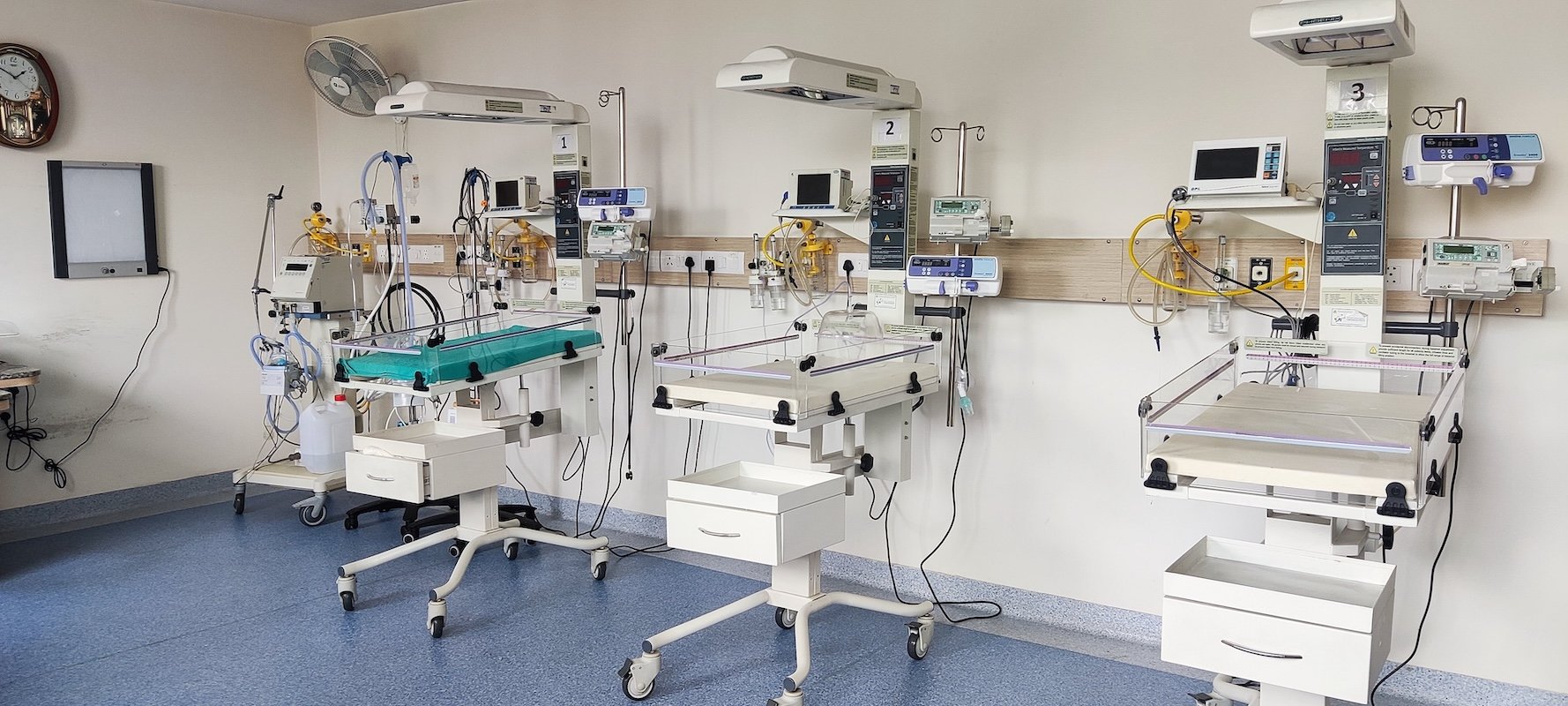
A physician declares his dying patient—a seven-pound baby boy—“dangerous as dynamite,” a “menace to society.” A routine medical procedure could save the boy’s life, but he was born deformed. Later reports will find that most of the deformities are cosmetic: He is missing his right ear, and the skin on his shoulder is defective. But, critically, there is a blockage at the end of his intestine.
This last seals the boy’s fate. There will be no lifesaving operation. The crying baby with chubby legs and wide-open blue eyes, facing the flashbulbs of the press, is instead to be starved and dehydrated to death. It is an act of the “kindest mercy” for the child to be “put out of its misery,” the physician has told the parents. For the next decade, in newspaper columns, in public speeches, and even in a feature film that he will write and star in, the physician will present his patient as an exhibit in his argument that compassion and the scientific method compel American medicine to bring about rational ends to “lives of no value.” The editorial board of the New Republic, Helen Keller, and many leading physicians will agree with him.
The Bollinger baby—christened by his relatives Allen after his father, yet unnamed in the press and even in modern accounts of the tragedy—became the first publicized case of a newborn in America forced to die because of his disabilities. The year was 1915. The physician became a celebrity. Decades before Jack Kevorkian, decades before either abortion or assisted suicide was legalized anywhere in the United States, there was Harry Haiselden, the surgeon and showman at the head of the German-American Hospital in Chicago.
No jury would convict Haiselden. He insisted that he treated his “defective” infant patients as he did “because he love[d] them.” He loved them to death. Sometimes he actively accelerated their deaths: He removed the umbilical ligature of one patient, leaving him to bleed to death, and prescribed another potentially lethal doses of opiates. It was an ambivalent love. “Horrid semihumans drag themselves along all of our streets,” Haiselden warned at the end of his autobiography. “What are you going to do about it?”
It is tempting to dismiss Haiselden’s odious question, precisely because it is odious. That would be a mistake. Today Haiselden is achieving a posthumous conquest of the medical field. His victories are not just in Canada, where the Quebec College of Physicians and many clinical ethicists have urged Parliament to legalize the euthanasia of disabled newborns, or in the Netherlands, which under the infamous Groningen Protocol has been euthanizing “neonates” with terminal illnesses for two decades.
It is in less likely places that Haiselden’s victory is taking shape, pitting parents against the physicians of their disabled children—parents like Krystal VanderBrugghen, who alleges that her child with Down syndrome received inadequate, discriminatory, even life-threatening medical care, in “the best children’s hospital in the world.” Stories like hers have been a century in the making.
The best children’s hospital in the world for 2026, according to Newsweek and Statista, is the Hospital for Sick Children (SickKids) in Toronto. I walked into SickKids in the summer of 2025 to see Krystal, a “mama bear” according to one of her friends, and Mo, who asked me not to use his real name because one of his children is receiving treatment at the hospital, and he fears retaliation. Krystal befriended Mo’s wife in the coffee lounge over the summer, and soon Mo was friends with Krystal, too.
We decided it would be best to speak in the wing of the pediatric unit, whispering whenever a nurse walked past. Mo and Krystal both credit religious faith—Mo is Muslim, while Krystal and her husband Jeremy are Canadian Reformed Christians—with fortifying them to bring children with Down syndrome into this world. Mo said his wife felt guilt-tripped by their healthcare team, who asked her immediately what quality of life she, Mo, and their three other children would have if she gave birth to a child with Down syndrome. “At the end of the day,” Mo told me, “I am not God. I cannot decide who lives, who doesn’t live.” Now, with his child with Down syndrome already five years old, the experience of raising him is “probably . . . the best thing in my life.” Krystal experienced the same pressure and reward. She was advised three times by clinicians that she could “terminate at any point and start again.” She didn’t want to start again. She wanted her child to be born.
On December 4, 2023, eighteen months before I met Krystal and Mo, Veya was born at McMaster University Medical Centre in Hamilton, Ontario. Like many children with Down syndrome, she had a cardiac defect, which in her case meant that she was in active heart failure for the first four months of her life. She needed cardiac surgery, which required her to be transferred to SickKids Hospital in Toronto. It is an hour-plus commute for Krystal on “a good day,” especially since the AC in her car stopped working. It was worth it; the surgery worked. “It’s funny,” said Krystal. “They try so hard to end this life, but the second she’s born, they do everything they absolutely, possibly, humanly can do to preserve her life and get her here to get her heart repaired. But once we started getting involved with GI [the gastrointestinal team] and she started having more problems, that’s when it was like they drew the line.”
A month after her heart was repaired, Veya developed an undiagnosed liver disease, causing her bile to be thick. She underwent liver surgery. This time, the surgery didn’t work. Veya desperately needed a liver transplant, and although the rest of her individualized specialty care team approved her for a liver transplant, the transfer team denied her this lifesaving treatment. Krystal still doesn’t know the reason. Veya needed to stay in the ICU.
Without a liver transplant, Veya’s immune system was vulnerable. I asked how Mo was recruited to help with Veya’s medical journey. “I invited him into my meetings,” Krystal said. Mo continues for her: “Yeah. I hear stories. Krystal tells me what’s happening. She’s gone through a lot, like, mentally. I’ve lived here almost a year. That’s hard. So God knows what she’s going through, right?” Mo’s child was being treated for leukemia in the hospital, and he had no complaints against SickKids. “It’s interesting because I’m seeing two sides, right?” said Mo. “I’m seeing my side and then I’m seeing her side. Two different teams, but from her side, Krystal’s team, and I’ve used this word a lot, I’ve been baffled on what’s happening.”
The quality of care for Veya dropped precipitously, Krystal and Mo believe. Shortly after Veya was denied her liver transplant, while she was unattended, she received a potentially lethal amount of potassium, ten times her usual dosage. Her heartbeat exceeded 350 beats per minute. The hospital told her that the overdose “passed through four pharmacists and two nurses,” Krystal said on a recent podcast. “We’re really sorry but it was around Christmas time,” was the only excuse she received from the hospital about the incident that nearly killed her daughter.
SickKids declined to answer my questions about the incident and about whether any steps were taken to prevent a similar incident in the future. In an emailed statement, a spokesperson commented: “We cannot comment on individual cases due to patient privacy. . . . Decisions about care for each child’s unique case are guided by clinical expertise, ethical standards, multidisciplinary collaboration, and partnership with families.”
At first, Krystal believed the potassium overdose had been an innocent mistake. Now she is not so sure. At several points, the physicians in the ICU have seemed to “[want] to free up a bed spot and rush her out because she’s been here for too long.” Three days into her care, a doctor said that if Veya needed a ventilator, she would not receive one, despite being on full code, because “it would do more harm than good.” (Due to a 2019 court decision in Ontario, physicians need not seek consent for a Do Not Resuscitate order, or even inform patients that one has been placed against them, if their care is deemed “medically futile.”) Krystal had to enlist the patient relations department in order to get her daughter’s DNR lifted.
She felt coerced into giving up. “SickKids is very ableist,” Krystal told me. Another ICU physician put his hand on her shoulder and said, “You know, Mom, it’s been such a long road for you guys. You can admit when enough is enough, and you can let someone die with dignity.” Was the overdose intentional? An effect of neglect? Or a simple accident? Whatever the case, it happened, Krystal and Mo believe, only because Veya is disabled. At one point, when she asked whether Veya was being denied a transplant because of her Down syndrome, a transplant physician answered, “Mom, I think you know the answer to that deep down in your heart.” She heard similar comments from the physicians. “[Another] ICU doctor said, ‘We look at Veya, all that she is and all that she was born with,’” Krystal said. “And I said, ‘What, a head, two arms, two legs?’ I’m like, ‘Yeah, she came with a cardiac defect. That’s fixed. That’s not causing the problem. Or are you isolating her extra chromosome here?’”
The accidents—if accidents they were—continued, always occurring when Veya was by herself. “Every time I step away, something happens,” Krystal said. Mo interrupts: “Twenty-minute lunch break.” Krystal continues: She went on a “twenty-minute lunch break, and they shut off a medication that they knew from a couple days ago she had withdrawal symptoms from.” Another incident occurred when Veya was struggling to breathe. It was a code blue, but the crash team, instead of rushing to help Veya, was slowly walking to her. Krystal had to raise the alarm herself.
Krystal and her husband Jeremy felt that Veya was unsafe at SickKids. The Delta Hospice Society and the Euthanasia Prevention Coalition organized a round-the-clock daily watch over Veya. But SickKids began to clamp down on the visits. It also banned Veya’s general pediatrics team from visiting unless they first asked for permission. When I spoke with Krystal, she was in the last steps of organizing an ambulance to move Veya to another hospital.
At the same time, Veya was meeting her development milestones. She liked geese and her bravery beads; she played with her brothers and sisters. “That’s the thing,” Krystal told me. “This ICU admission, she’s actually met three milestones, or two—I guess popping [your teeth] is not really a milestone. Maybe it is, but I’m like, you learn to smile. You learn how to coo. You just can’t make noise because she’s got the [respiratory] tube. But then, you popped your first tooth. I’m like, look at this! This isn’t a kid on death’s door. But they’ve been treating her like she’s on her way out and palliative.” When SickKids was handing Veya over to another hospital—at the time, Krystal was considering either McMaster or a hospital in the United States—SickKids said that she was not on palliative care.
As is the case throughout Canada’s healthcare system, it is difficult to find conclusive evidence of neglect or wrongdoing when medical care is subpar. But SickKids Hospital is no stranger to euthanasia. Just two years after Canada legalized medical assistance in dying (MAID)—a euphemism for euthanasia—a panel inside SickKids Hospital, co-chaired by the director of its department of bioethics, envisioned MAID for minors without the need for parental consent, a practice unheard of even in the Netherlands, which permits euthanasia for “mature minors.” (Currently, MAID in Canada is legal only for those over the age of eighteen.) The policy was written to address the need for “MAID-providing institutions to reduce social stigma surrounding this practice.” SickKids declined to answer my questions about this policy, including whether it is in force today.
SickKids has historically been at the forefront of letting children die of their disabilities, especially children with Down syndrome. A study found that between 1952 and 1971, of fifty children with Down syndrome and blocked food passages, twenty-seven were left to die of their obstructions instead of receiving routine medical treatment. In 1979, the institution was lambasted by the Canadian Psychiatric Association, which warned that “this increasingly common act in medical practice is being vigorously promoted by able and influential advocates within our profession and within our society at large,” despite the fact that it was likely illegal without a court order.
Between June 1980 and March 1981, a spree of murders struck SickKids hospital. Over the course of several nights, thirty-six babies and infants died, many of them due to an overdose of digoxin, a drug used to control heartbeats and often used for assisted suicide in the United States. A judge confirmed that at least five of those deaths were murders (though the defense believed the number was closer to seventeen), and yet the judge at the preliminary hearings absolved the only suspect, a pediatric nurse. No one else was ever charged, despite statistical evidence from the U.S. Centers for Disease Control that tied another nurse to the deaths.
Two years later, with the scandal refusing to die down, a Royal Commission of Inquiry investigated the deaths. Richard Rowe, the chief cardiologist at the hospital, was asked by the commission whether he disapproved of so-called mercy killing. His response: “almost.” He explained that since the thirty-six babies had a “minimal chance of surviving,” the motive behind their deaths might “perhaps be that of mercy-killing.” It was not true: Many of the children had been likely to survive. Some were barely sick. Adrian Hines described his son Jordan: “He entered the hospital a healthy baby with a touch of pneumonia. He didn’t even have a heart condition.” An autopsy revealed that Jordan had died of digoxin overdose, a medication he was never prescribed.
The main medical associations in Canada declined to condemn the homicides at SickKids. The president of the Ontario Medical Association claimed, “I don’t know if withholding surgery is legal,” while a spokesman for the Canadian Medical Association emphasized that the CMA had revised its ethics code “to allow patients to die in dignity.” When asked by investigators whether the dramatic increase in the number of deaths in the hospital’s cardiac ward could have been caused by euthanasia, the chief cardiologist was vague. “[Euthanasia] may have come into those discussions. We talked of many things and we didn’t keep notes.”
SickKids declined to answer my questions about its history concerning infanticide and discriminatory treatments, the institutional norms that might have enabled them, and what steps, if any, were taken to prevent similar incidents going forward: “At SickKids, we are deeply committed to upholding our core values of compassion, dignity, respect, and equity in every aspect of patient care. Our staff bring extraordinary skill, judgement, and dedication to their work to ensure that every child and family receives the highest standard of care, regardless of diagnosis or ability.”
SickKids Hospital is not the only institution that has allowed children with disabilities to die of treatable illnesses. It accords with the direction of the field of medicine over the past century. The preventable deaths of children with disabilities occur, for the most part, without media interest. To understand why the law and societal outrage have failed to stop this practice, we must trace the history of child murder in North America since 1915.
And we must discard a fiction: that infanticide, being illegal, was not historically practiced by physicians in North America. As the medical historian Martin Pernick stresses, “the history of infanticide by lay people—parents, midwives, and governments, dating back to ancient Greece—was widely discussed in these debates [over selective non-treatment of disabled children]. But the role played by past American physicians in such decisions is now virtually unknown.”“Therapeutic homicide”—a term used in an editorial of the Canadian Medical Association Journal a decade ago, before Canada legalized euthanasia—is, as a rule, practiced by physicians before receiving legal sanction. Under these conditions, it is uncommon but not rare. Its fatal logic is the starting point for the devaluation and killing of people with disabilities.
Even as Roe v. Wade was being argued before the Supreme Court in 1971, Who Should Survive?, a film produced by the Joseph P. Kennedy Jr. Foundation, dramatized the decision to let a baby with Down syndrome die of a treatable intestinal blockage. The film was based on real deaths at Johns Hopkins University Hospital. Over the course of fifteen days, as the medical team and parents wait, the child dies of starvation.
Near the end of the film, a litany of questions is posed to the audience. “Do all children have a right to life? Who should protect the child’s rights? Do physicians have a duty to preserve life? Does mental retardation diminish the right to life?” The film is quick to note how the excruciatingly slow death of the child affects the nurses and the physician. The child’s interests are not considered. The film merely asks questions, as if doing so were nonpolitical: “The film you are about to see has a beginning and an end—but no conclusion, because it provides no answer to the questions it poses.”
Left unsaid is that a child without Down syndrome, presenting the same physical defects, would never be left to die. A non-disabled baby with a treatable life-threatening illness would receive treatment, even if the parents and medical team disagreed. Anything else would be medical malpractice or child abuse. By contrast, those deemed “profoundly disabled,” whose lives have “no value,” receive no protection.
The slippery slope that Roe’s critics warned of in fact happened in reverse: first infanticide, then mercy killing, and finally eugenic abortion on demand. Legalization followed clinical practice, not the other way around. The logic continues to prevail in the courts, whether in America, Canada, Colombia, or the Netherlands: If passive euthanasia is valid, why not active euthanasia? If prenatal abortion, why not “post-natal abortion”? If disability is a qualifying condition for assisted death, based on the empirical determination of medical experts in view of “medical futility,” then to what extent is consent necessary or even desirable?
Yet the justification for these acts is offered only after the fact. Ronald Regan’s 1983 “Evil Empire” speech is more often invoked than read, and most people would be surprised to learn that its early paragraphs are not about the USSR, or even communism: They are about evil at home. Every year, publications such as the Washington Post and the New York Times were reporting that thousands of babies were being left to die from hunger or treatable medical conditions—for the sole reason that these babies had disabilities, whether terminal or not, and were deemed “defective.” This reporting sparked the Baby Doe laws after Ronald Reagan’s surgeon general, the pediatric surgeon C. Everett Koop, denounced the nontreatment of viable babies as contrary to medical ethics. In March 1983, the Department of Health and Human Services, under the auspices of a federal law that protected people with disabilities from discrimination—a precursor to the Americans with Disabilities Act—passed an executive action to stop selective nontreatment and starvation. Yet the courts overturned the action, as Congress had not passed the requisite legal protections. In response, Congress passed a weakened amendment to the Child Abuse Prevention and Treatment Act—which the American Academy of Pediatrics continues to claim is irrelevant to physician or institutional standards. So the legal protections enacted by Reagan lapsed.
The practice of selective nontreatment based on disabilities has continued. Though as a medical option this practice is presented as rational, the people it kills are often those with conditions that are at the same time being fear-mongered in the media—whether trisomy 13 and 18, HIV, or Thalidomide poisoning. One senior medical director at a faith-based perinatal center in New York told me, “Back in the early nineties when I started on the faculty, the chairman [of pediatrics] at the time said that although other hospitals were starting to withhold nutrition and hydration from children with terminal illness, that’s something that would never, ever happen at this facility. But you know ten years later, into the early 2000s, it was something that when the parents asked, the ethics committee would often approve it.”
Today, in most facilities across the United States, the ethics committee would not need to be involved. Though neonatologists are split on the ethics of withdrawing food and water for newborns—surprisingly, more so for the terminally ill than for the disabled—a recent survey of neonatal intensive care units (NICU) published in the Journal of Perinatology found that a majority of NICU units in North America now practice “withdrawal of artificial nutrition and hydration” for newborns. Of those facilities, more than 80 percent reported not requiring an ethics consultation before ceasing all food and water; virtually none had a policy on which diagnoses would qualify a patient for withdrawal of nutrition and hydration. The American Academy of Pediatrics now classifies feeding children as morally optional.
Since this is how disabled children are treated, it is no wonder that the medical field is nonchalant about the fates of children born alive after botched abortions. In January 2019, Ralph Northam, a pediatric neurologist and then-governor of Virginia, caused a furor by describing what happens when infants survive third-trimester abortions:
When we talk about third trimester abortions, these are done with the consent of, obviously the mother, [and] with the consent of the physicians, more than one physician, by the way, and it’s done in cases where there may be severe deformities, there may be a fetus that’s non-viable. So in this particular example, if a mother is in labor I can tell you exactly what would happen. The infant would be delivered; the infant would be kept comfortable; the infant would be resuscitated if that’s what the mother and the family desired, and then a discussion would ensue between the physicians and the mother.
To ask whether this is legal is beside the point. It does not need to be legal to be practiced, since any law is in force only to the extent that it is followed.
There is an irony to the story: In its final summer, the Biden administration, hardly a pro-life administration, quietly reintroduced some of the Reagan administration’s protections. Section 504 of the Rehabilitation Act of 1973 now explicitly prohibits healthcare discrimination based on disability. Thus a newborn with Down syndrome and a heart problem must, by law, receive whatever “medical treatment is provided to other similarly situated children.” But this legal requirement is not enforced. Most hospitals, despite the fears of ethicists, made no changes to their policies, and the media failed to report on the regulation. So the regulation became moot. Last year, a study reported that between 2019 to 2022, adults with both Down syndrome and Covid were more than six times more likely than patients with similar comorbidities to have had a DNR placed on them—a rate far higher than any other illness or disability, including any terminal illness. Yet there was no reckoning among healthcare clinicians or institutions. The soul of medicine does not easily change after a century of practice.
It is impossible not to wonder what would have happened to medicine if the Bollinger baby—Allen—had not been killed by his primary physician. After all, Allen was nearly saved. The Chicago Tribune reported on the figure whom Harry Haiselden called a “wild eyed, interfering, hysterical woman,” a certain Catherine Walsh of 4345 West End Avenue, who attempted to convince either the mother of the baby or the physician to spare the boy after the medical commissioner of Chicago had failed to do so.
It is an astonishing piece of journalism, made even more so by the fact that Walsh’s voice was uncommon in contemporary debates over the Bollinger baby. Though opposition to Haiselden’s actions was voiced, mostly by Catholics quoted in the press (with opinion more divided among secular, Jewish, and Protestant experts), prominent figures who might have advocated for the child instead condemned him. Helen Keller, otherwise an advocate for the disabled, endorsed Haiselden’s work as a “service to society,” since “no one cares about that pitiful, useless lump of flesh.” The Baltimore Catholic Review, published under James Cardinal Gibbons, claimed that “no one could be blamed if the child was let die according to nature” and supported Haiselden’s actions.
Yet Catherine Walsh, by her own account, nearly succeeded. She sought and received permission to baptize the child, although the child, unbeknownst to her, had already been christened. All we know is that Catherine belonged to a local Catholic Church; she likely was the mother’s friend. Her comments to the Tribune were quoted in full:
I went to the hospital to beg that the child be taken to its mother. It was condemned to death, and I knew its mother would be its most merciful judge. I found the baby alone in a bare room, absolutely nude, its cheek numb from lying in one position, not paralyzed. I sent for Dr. Haiselden and pleaded with him not to take the infant’s bloom on his head.
It was not a monster—that child. It was a beautiful baby. I saw no deformities. I patted him. Both his eyes were open, he waved his little fists and cried lustily. I kissed his forehead. I knew if its mother got her eyes on it she would love it and never permit it to be left to die.
“If the poor little darling has one chance in 1,000,” I said to Dr. Haiselden, “won’t you operate and save it?” The doctor laughed. “I’m afraid it might get well,” he replied.
As I left the hospital a man said to me. “I guess the doctor is right from a scientific standpoint. But humanly he is wrong.” “Thank God,” I answered, “we are all human.”
It took five days for Allen to die. Anna Bollinger, the boy’s mother, never recovered from the death of her fourth child. She never saw the child; the medical staff would not permit it. Even amid the savagery of the First World War, Anna’s death almost two years later was front-page news across the country. Her husband, Allen Bollinger, told the Associated Press: “After the baby’s death, my wife fell into a settled melancholy and wasted away. If ever a woman died of a broken heart she did.”
It is callous to claim that a moral lesson can be gleaned from this level of suffering. Yet in 2025, in the lobby of SickKids, the best children’s hospital in the world, I found myself walking away from Mo and Krystal repeating Catherine’s words from 1915: “Thank God, we are all human.”
On August 1, five weeks after the last time I spoke with Krystal, Veya, whose middle name was Hope, died after a nineteen-month fight. Just like Allen, Veya was the fourth child. Her parents managed to move her to another hospital, the same hospital in which she was born. “Through the incredible team at McMaster [Hospital], God brought deep healing to our hearts from the trauma we left Sick Kids with,” Krystal wrote on her Instagram account. “Her last days were tender, peaceful, and full of love.”
Image by Lyfhospital, licensed via Creative Commons. Image cropped.

YOU MIGHT ALSO LIKE
Päivi Räsänen and the Failure of Hate Speech Laws
On March 26, the Supreme Court of Finland handed down its verdict in the case of Päivi…
The Parental Rights Paradox
Two weeks ago, the U.S. Supreme Court intervened in Mirabelli v. Bonta, restoring a lower-court injunction that…
Epstein’s Revelations
Far from a mere sordid distraction or an endless supply of tabloid slop, the Epstein files may…
