
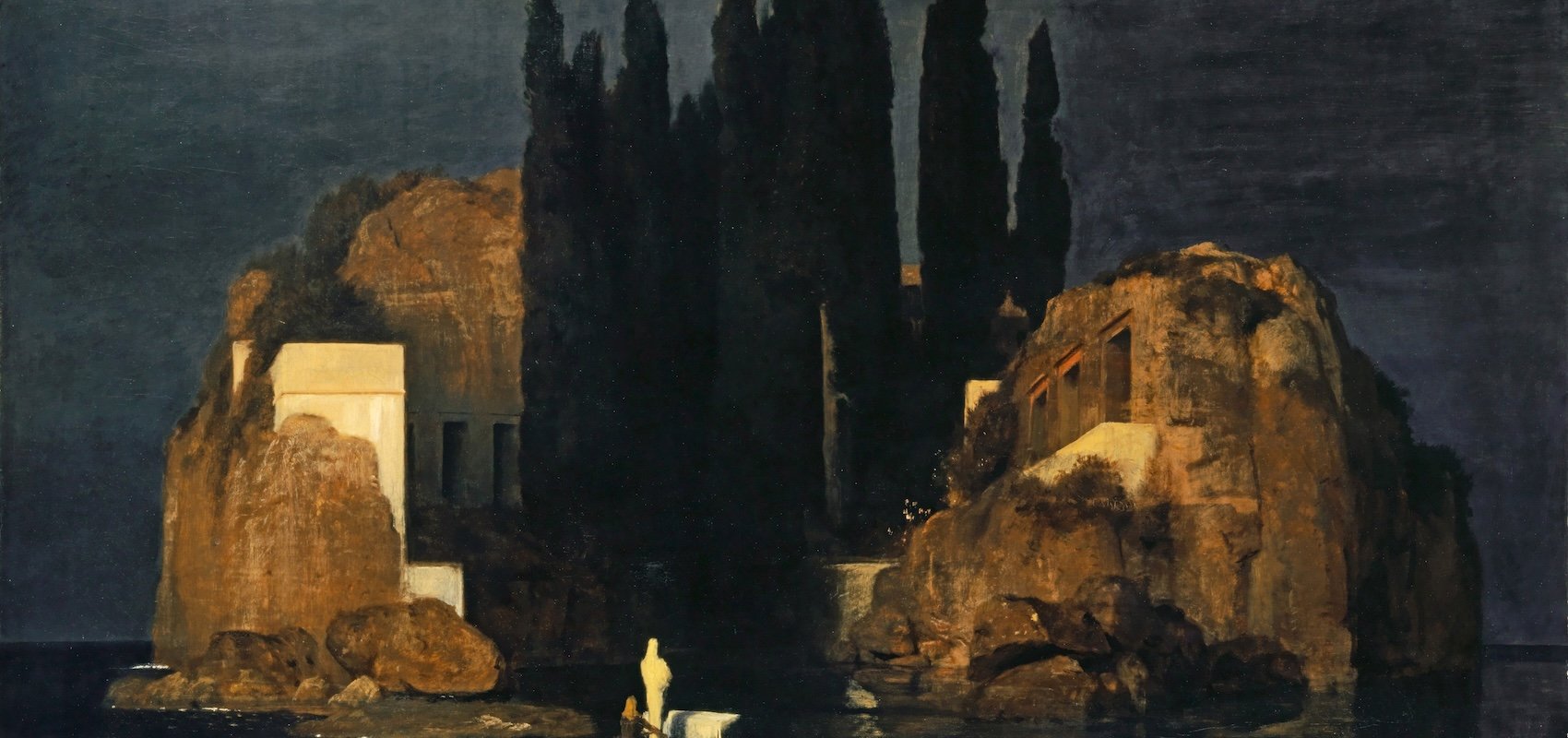
Shoah is the Hebrew word for catastrophic ruin and unmitigated disaster. It appears in Psalm 35 as an imprecation against enemies: “Let ruin come upon them unawares!” It’s also used in Zephaniah and elsewhere to describe the desolation brought by divine judgment and in Proverbs for the inevitable ruin brought by the ways of the wicked.
The Camp of the Saints, the controversial and until now fugitive novel by Jean Raspail (retranslated and republished by Vauban Books), is a story of shoah. As Nathan Pinkoski observed in his assessment of The Camp of the Saints (“Spiritual Death of the West,” May 2023), ruin and loss were the novelist’s preoccupations. In other books, Raspail imagined the moral and spiritual experience of cultural destruction and desolation. In The Camp of the Saints, he imagines something different. He depicts the more complex and terrifying fate of self-destruction and self-chosen destitution.
Shoah is also a biblical term used to refer to the Holocaust. That historical event has had a searing effect on the West. But in my estimation, Auschwitz can be understood as a condensed symbol of the many catastrophes that led up to the death camps. The early decades of the twentieth century saw unprecedented slaughter in the trenches of the Western Front, a bloodthirsty revolution in Russia inspired by an ideology born in the bosom of Western Europe, and economic depression and dislocation that triggered political upheavals.
Many reflective and sensitive people hungered for revolution in the 1930s. Some endorsed communism; others threw in for fascism. Different though these choices may have been, they were made against a shared judgment that the civilization of the West had reached a dead end. It was in this atmosphere of revolutionary nihilism that another world war broke out, more destructive and bloodthirsty than the first.
Germans spoke of their defeat in 1945 as Stunde Null, “zero hour.” It was the time when everything that came before, spiritual as well as material, was reduced to rubble. France did not suffer complete collapse, but after its liberation, it endured a painful and often violent reckoning over wartime complicity and compromise. Americans like to think of World War II as our “good war,” in which we defeated evil forces. But we should not neglect the effect the war had on many. John Rawls was scarred by his visit to Hiroshima shortly after the war’s end. By some accounts, that experience played a role in his loss of faith. And, of course, those who liberated the concentration camps glimpsed the shoah, not just of the Jewish people, but of their own civilization.
There are many ways to tell the story of the rebuilding of the West after 1945. One focuses on French existentialism, which captured the imaginations of many in the 1950s. The reason was simple: Sartre, Camus, and others outlined how to exist in a metaphysical vacuum, a world in which no inheritance can be honored, no authority can be trusted, no truth believed. Existentialism was irresistible, because it offered a way forward when everything has been discredited.
But existentialism’s influence was limited. After all, life goes on. In the war’s aftermath, men took up the tasks of governance; they rebuilt shattered economies and breathed what life they could into established institutions and traditional authorities. But their hearts were not in it. Soon after the war’s end, Camus drew upon Nazi rhetoric with artful irony to formulate the truth of Western civilization’s condition: “Disaster is today our common fatherland.”
With his characteristic humanity, Camus saw in this statement a glimmer of hope. We could at least be in solidarity in our shared desolation, in our suspicion of our inheritance, in our sense that the truths and authorities we once believed in had been exposed as clay idols, smashed by historical events.
In Return of the Strong Gods, I give a sketch of how the inescapable nihilism of Camus’s formulation was transformed into a positive program for the reconstruction of the West. The open society consensus took shape, formulated by figures such as Karl Popper and Friedrich Hayek and then developed by others. But I don’t want to rehash those details. It’s sufficient to illuminate the logic of shoah, which has a paradoxically happy side, not just a sad one. Like the glamor of evil, emptiness has its allures.
One promise of complete destruction is freedom. Sartre played up this aspect when he noted that, due to the lack of any metaphysical truths, it falls upon us to create our own meaning. (Popper said something similar in The Open Society and Its Enemies, as have many others.) With his usual Cartesian rigor, Sartre advanced an anti-metaphysical doctrine to ensure this freedom: Existence precedes essence. Human experience is malleable, and reality is ours to make and remake. This open field for action has a political as well as a personal aspect, which is why Sartre’s doctrinaire and revolutionary Marxism was entirely consistent with his existentialism.
The open society consensus never embraced explicit nihilism. Rather, it turned the destruction and diminution of the West’s inheritance into the blessings of pluralism, inclusion, and peace. In the hands of Isaiah Berlin, the liberal virtue of tolerance became a metaphysical doctrine of pluralism. Although seeking to avoid nihilism, this doctrine accommodates the reality of a shattered world. Old truths that once seemed monolithic are broken apart. The upshot, Berlin and others hoped, would be a society that is more welcoming and inclusive—a borderless world.
Although initially formulated by establishment liberals who hoped to lay enduring foundations, the open society consensus had few antibodies to protect against revolution. Leaders may impose pragmatic limits—changes can be deemed too costly or too difficult to implement. But under the shadow of disaster, revolution can become irresistible. Revolution at least seeks a future we can affirm and champion.
Nihilism also promises peace: If nothing is worth fighting for, nobody will fight. Raspail grasped this aspect of nihilism. Note the novel’s denouement. There is no cataclysmic conflict at the end. The migrants land unmolested. Yes, there is violence, but it occurs on the margins, rather like today’s drip-drip of terrorism countered by SWAT teams and drone assassinations in remote regions of the world.
And I must not fail to mention prosperity. One benefit of civilizational collapse is the elimination of impediments to commerce and innovation. Without reverence for an inheritance, we are free to treat everything as raw material. In recent years, my appreciation for Alexandre Kojève has increased. I now understand him as attempting to theorize a stable and managed condition of nihilism—which, if that is our fate, is better than the unstable and disintegrating version we see more and more of these days.
Pinkoski rightly notes that The Camp of the Saints is not a novel about the West against the Rest. It’s a story about civil war within the West. In that war, Raspail imagines a decisive moment. One million migrants are poised to land in France. In this apocalypse, the final victory of the nihilism at the heart of the postwar West is exposed. The collapse is immediate and complete.
In this respect, Raspail was not a prophet. The civil war is not ending; it is just beginning. The failures of the open society consensus in economics, culture, and foreign policy are now evident. The reaction known as populism has gathered strength. Rather than witnessing an apocalypse, we are entering a long struggle at the end of an era. My image for the end of the postwar era is “the return of the strong gods.” The phenomenon, however we describe it, is real. Flags are being waved; the warm loves of people and place are stirring. Old truths are reemerging. Metaphysical imaginations are being rekindled. In some quarters, God’s authority is being reasserted.
I’d like to end with a word of counsel. I hope that readers of First Things will be combatants in the struggle against nihilism in the West. In that struggle, we must be patrons of one or another of the strong gods. Yet, we should resist the notion that our adversaries are necessarily willful enemies of the West. Some are. But most are children of the sad history of the twentieth century, which we share, even as we seek to overcome the last century’s solidarity in shame. As Raspail saw so clearly, negation, especially self-negation, can create no lasting fatherland. In the rising civil war over the future of the West, let us be guided, therefore, by affirmations. For they create a solidarity more generous than Camus’s fragile and failing brotherhood of shared disaster.



YOU MIGHT ALSO LIKE
Beware the “Orthobro”
On a late September morning, I approached the registration table outside the entrance to a small Greek…
Why Can’t Conservatives Create Art?
Modern conservatives recognize their duty to reverse the devastation wrought by nearly a century of progressive cultural…
John Allen, Nonpareil Vaticanista
Early Sunday morning, July 28, 2002, things were looking grim for the closing papal Mass of World…
