
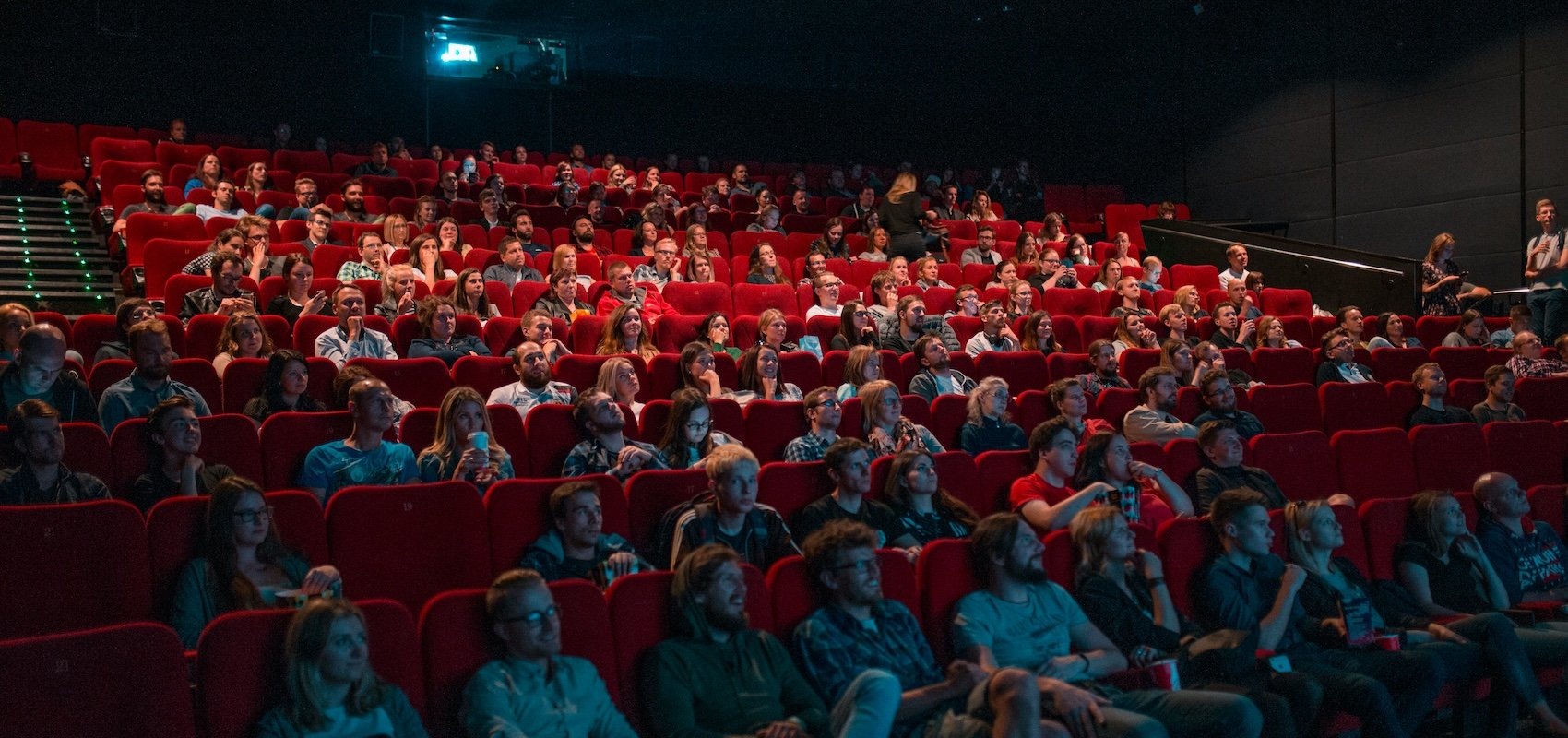
First Things editors and writers share the most memorable films and TV shows they watched this year.
Veronica Clarke
Deputy editor
My mind often strayed westward this year, recalling my days in Wyoming perfumed with sagebrush and Lucky Strike cigarettes, which you could only buy at the gas station on the Indian reservation. Playing Red Dead Redemption 2 probably had something to do with it. And yes, I may be cheating, as it is neither film nor TV. But the open-world video game, which follows the decline and fall of an outlaw gang, is often more cinematic than cinema, and the storytelling is exceptional—even surprisingly Christian. Dan Houser, RDR2’s principal writer and the co-founder of Rockstar Games (known for the irreverent Grand Theft Auto franchise), “binged on Victorian novels” during the game’s production, reading Middlemarch and Dickens, as well as Tolstoy and Keats. He wanted the game to have a “novelistic” feel. Arthur Morgan, the main character, has one of the best redemption arcs I have ever seen, made all the more powerful because the player can choose to accept or reject said redemption. Players have reported the game to be life-changing in its immersive exploration of morality and mortality.
The American West continued to serve as the backdrop to the films I watched this year. Ari Aster’s Eddington, set in a New Mexico town, explores contemporary politics and the insanity that was COVID within the narrative framework of Greek drama. It deserved more success, but perhaps the history is too recent. Clint Bentley’s Train Dreams, meanwhile, is set in the Pacific Northwest, and is a beautiful paean to the American frontier worker. The heady mix of human fragility and fortitude encompassed in these narratives is almost intoxicating in a time where culture feels superficial and fleeting, disconnected from both the land we inhabit and any sense of shared greater destiny.
Justin Lee
Associate editor
Virtually no films have been made about the COVID pandemic. Few films or TV series have even featured COVID-era mask wearing. The reason for this is simple: We all want to forget. We’re content with the lacuna in our cultural memory.
Ari Aster’s Eddington is the only film I’ve encountered that takes the pandemic head-on. When the sheriff (Joaquin Phoenix) of the titular small New Mexico town challenges the incumbent mayor (Pedro Pascal) over mask mandates and other progressive nonsense, the town steadily descends into chaos and unhinged violence, political and anti-political pieties having given cover for acting on personal grievances. Eddington is a fever dream of everything we hated about the pandemic era: neighbors turning on neighbors; holier-than-thou liberals “trusting the science,” worshipping at the altar of safety while engaging in rank hypocrisy; family members consumed by conspiracy theorizing; white liberal youths self-lacerating and rioting over a petty criminal dying of a fentanyl overdose; Antifa; false flags; paranoia.
The film is hilarious and crazymaking—a near-perfect satire of the era. But it also hits too close to home. Despite loving the film, I hated reliving the pandemic. There were moments that felt almost like PTSD flashbacks, resurrecting the loneliness, frustration, anxiety, fury, powerlessness, and sense of betrayal I experienced during our national nightmare. And yet it was cathartic.
Eddington is the film everyone needs but no one wants. It was punished accordingly: Shot on a $25 million budget, it grossed only $13 million globally. Now market-tested, our self-imposed amnesia is sure to continue.
Germán S. Díaz del Castillo
Associate editor
I saw seventy films for the first time in 2025. Many of them stand out. I delighted in Whit Stillman’s “Doomed Bourgeois in Love” series, especially Barcelona; I was deeply touched by Walter Salles’s I’m Still Here; I found sound and moving theology in Wes Anderson’s The Phoenician Scheme; I was surprised by Ronan Day-Lewis’s beautiful and spiritually alert directorial debut, Anemone; I cried my eyes out on an airplane while watching Isao Takahata’s Grave of the Fireflies; I admired Wim Wenders’s slow and thoughtful Perfect Days; and I discovered an incisive commentary on the role of art in what I believe to be this year’s best new movie: Sentimental Value.
In spite of this, I keep coming back to a little Mexican movie I’ve been quietly obsessed with for almost ten years: Roberto Sneider’s Me Estás Matando, Susana (You’re Killing Me, Susana). After rewatching it for the umpteenth time, I decided to finally read the novel the film is based on, José Agustín’s Ciudades Desiertas (Desert Cities). The story follows Eligio, a man who chases his wife after she runs off from their home in Mexico City to attend a writers’ program at an unnamed Midwestern university. The book is much more of an anthropological commentary. It explores sociological and character differences between the Mexican and the American. The film, while not abandoning these themes, is more about marriage than anything else. It reminds the viewer that the key to a loving marriage (and a happy life in general) is accepting the vulnerability that comes with making a gift of ourselves.
Francis X. Maier
Consulting editor
My own happy experience of work in Hollywood is detailed here. But the industry has changed a lot since the 1970s. For one thing, the public appetite for material, much of it now via streaming services, has exploded like a tumor with attitude. The result is a tidal flow of mediocre film and television storytelling, most of which is worth missing, and some of which—like this year’s live-action Snow White movie—is uncannily bad. True, there are some 2025 exceptions. F1 with Brad Pitt is a marvelously executed racing film, maybe the best sports movie ever made, and a well-deserved smash financial success. For viewers with a taste for the scary, Wolf Man and Weapons are chilling little gems, the latter with a twist of dark humor at the end. Add to that Sinners, an ingenious twist on the vampire genre; its Irish dance sequence is simply brilliant. And Downton Abbey: The Grand Finale is exactly what it claims to be: the memorable end to a memorable story.
Most of 2025’s really good stuff though has been on TV. Eddie Redmayne is terrific in Peacock’s reimagining of The Day of the Jackal. Likewise Mark Ruffalo in HBO Max’s Task. Netflix’s The Diplomat is always entertaining. BritBox’s Blue Lights is an absorbing police drama; and the same network’s shrewd detective comedy Ludwig is a delight. The thousand-pound talent in today’s entertainment industry, though, is Taylor Sheridan. His Paramount+ series Landman, with Billy Bob Thornton, is some of the most addictive TV ever produced—rough, dark, and often funny at the same time. My wife and I are also hooked (alas) on another of Sheridan’s Paramount+ series, Mayor of Kingstown, a gritty crime drama that deserves the Emmy in at least two categories: “most bad words in a single sentence,” and “it’s always darkest just before it goes black.” Its bleakness is redeemed—insofar as it can be—by a storyline that grabs you by the throat and never lets go, and an excellent cast including Jeremy Renner and Hugh Dillon.
Liel Leibovitz
Columnist
About a third of the way through Wake Up Dead Man, the third installment in the massively popular Knives Out franchise, its protagonist, the celebrated detective Benoit Blanc, tells us what he really thinks about religion and the Catholic Church. In Daniel Craig’s delightful Kentucky drawl, words like “homophobic” and “misogynistic” sound less like partisan claptrap and more like poetry, but you expect the overall outcome to be just the same: another attempt to dress up progressive propaganda as art to score cheap political points.
And then, a priest named Fr. Duplenticy talks back. He is played by the sublime Josh O’Connor, and his response is a passionate, stirring, nuanced, and exquisitely written defense of faith itself. And from that moment on, Blanc, atheist extraordinaire, is on the road to Damascus.
It helps that most of the film takes place inside a gorgeous church, which Blanc visits to investigate the stabbing of a charismatic monsignor with a cult following, a Dagger John for the YouTube age. But the murder isn’t the real mystery occupying the brilliant sleuth; he is possessed by more pressing questions, like what do we believe and why. Religion, Blanc argues, is nothing but storytelling. Maybe, Fr. Duplenticy responds, but the stories it tells “resonate with something deep inside us that’s profoundly true that we can’t express any other way.”
With stars like Glenn Close, Josh Brolin, Kerry Washington, and Mila Kunis delivering heartfelt and vulnerable turns as believers grappling with guilt, doubt, hope, and other impossible emotions, the film is a slow meditation that culminates in a moment of true grace, lingering long after the culprit is revealed and the mystery solved.
Sohrab Ahmari
Contributor
We are living through a golden age of horror—or “post-horror,” if you want to get technical about it: films that typically straddle horror and drama and have something important to say about the world. This year didn’t disappoint: Weapons, Zach Cregger’s superbly crafted follow-up to his excellent Barbarian, using a Pulp Fiction-style scrambled, multi-POV plot to tell a story about the child-devouring shrew; Ari Aster’s modern COVID Western, Eddington, which shifts from a comic register to something much darker, along the way drawing a brilliant parallel between woke and anti-woke (both function as strategies for the legitimation of market power); and 28 Years Later, in which a post-apocalyptic Britain must choose between a decadent liberal elite, multicultural takeover, and a brutal far right (the future, in short, is now).
Stephen G. Adubato
Contributor
Over the last few months, I’ve been barraged with content about the “quiet religious revival” overtaking Gen Z. Clearly, the pendulum has swung from the days when religion was seen as an antiquated, confining institution to be rebelled against to a source of hope and meaning in a disenchanted world. In light of the vibe shift, I’ve revisited films and TV shows that feature the swinging of the religious pendulum between generations.
When director Krzysztof Kieslowski released his ten-part series on the Ten Commandments on Polish television in 1989, he caused quite a stir. Why, viewers wondered, would a self-proclaimed agnostic make a film series that not only features the Decalogue, but that subtly glorifies them? Kieslowski recognized that after the fall of communism in his homeland, the only way forward must begin with recovering the dignity of the human person. Despite his alleged lack of faith, he believed that the Decalogue was a fitting place to begin this task. Each hour-long installment of the series presents a plot revolving around an ethical drama that creatively interprets one of the commandments.
For a more recent exploration of the impulse to recover faith in the face of disillusion, I’d highlyrecommend Ramy, the Hulu dramedy series loosely based on the life of producer and star Ramy Youssef. The show traces the story of a millennial growing up with his Egyptian-immigrant parents in suburban New Jersey, whose longing to achieve the American Dream of bourgeois comfort has caused them to lapse in their Muslim faith and to sever their ethnic roots. Spiritually hungry, morally unmoored, and suffering from a crippling porn addiction, Ramy earnestly pursues a relationship with God by going all-in on practicing his religion—much to the chagrin of his more “evolved” parents. Such an earnest portrayal of a young person’s search for God is rare among the slop offered by most streaming services. And as a millennial born to a family of lapsed Christians, I’ve never felt so seen.
John M. Grondelski
Contributor
2025 is the sixtieth anniversary of several movies deservedly deemed classics. Two enduring epics of American audiences mark their diamond jubilees: The Sound of Music and Doctor Zhivago.
Doctor Zhivago hit U.S. theaters just before Christmas sixty years ago. Viewed from this perspective, it reveals how our minds and the culture have changed. Today’s viewer likely does not understand the significance of Zhivago’sdebut, considering the ban on the book it’s based on in the defunct Soviet Union. When America’s biggest city elects a mayor who thinks socialism can work, one sees how much water has flowed down the quiet Don. A culture tolerant, even in ecclesiastical circles, of “accompanying” the sexually unfaithful might not readily brand suave Yuri Zhivago with the scarlet letter. It might instead wonder what all the ado is about: “Get a divorce and marry Lara!” And, in a woke world, how many moderns would find in Strelnikov a kindred spirit when he proclaims, “Feelings, insights, affections, it’s suddenly trivial now. The personal life is dead . . . history has killed it.”
Two other 1965 films deserve mention. The Spy Who Came in from the Cold depicts the shifting allegiances behind “staying on top” that make clarity of principle the enemy. And Kadár and Klos’s Shop on Main Street, set in Slovakia during the World War II fascist roundups of Jews, wrestles with a man’s conflicting drives: greed and generosity, cowardice and courage.

YOU MIGHT ALSO LIKE
How the State Failed Noelia Castillo
On March 26, Noelia Castillo, a twenty-five-year-old Spanish woman, was killed by her doctors at her own…
The Mind’s Profane and Sacred Loves
The teachers you have make all the difference in your life. That they happened to come into…
History’s Pro Tips on Iran
Nothing in human experience compares to the wars of the last 120 years. Their scope has grown…
