
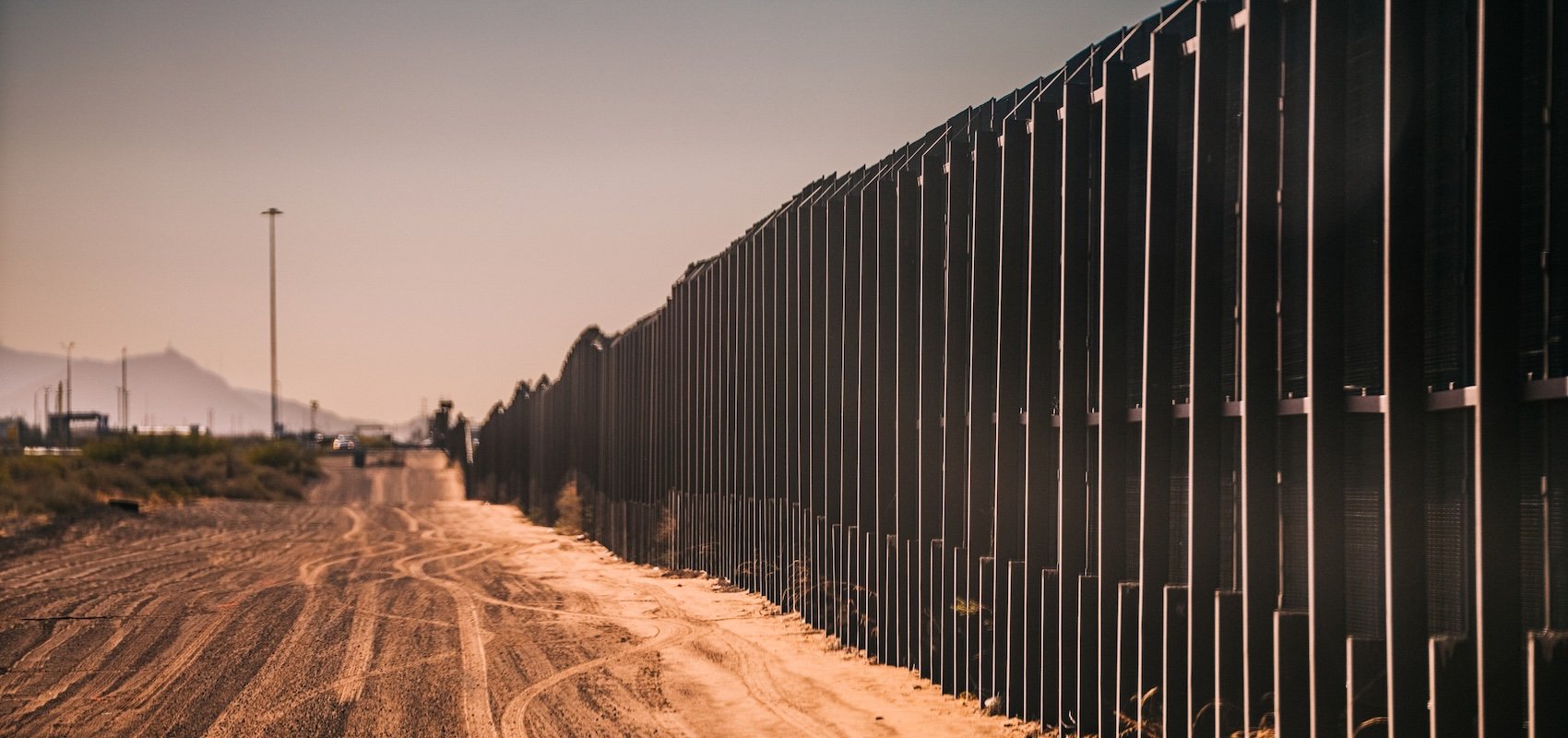
With the border secure, the time is ripe for comprehensive immigration reform for the first time in forty years. The U.S. Conference of Catholic Bishops offers our legislators an outline of a balanced path forward, protecting our nation and its citizens while respecting the dignity of each human person.
Today’s immigration debates tend toward a simplistic binary: standing with immigrants—including the undocumented—or supporting law enforcement efforts to remove noncitizens with no legal status. The U.S. bishops take a more nuanced stance in their Special Message, affirming the duty of a nation to control immigration while recognizing the human cost of “indiscriminate mass deportation,” which ensnares noncitizens brought here as children, those married to U.S. citizens, and those who have developed significant ties to the country.
The bishops apply two bedrock principles of Catholic social teaching: solidarity and subsidiarity. Solidarity recognizes that each of us, created in the image and likeness of God, possesses inherent dignity. Even those illegally in the United States have a claim to dignity and respect. Indiscriminate mass deportation violates the principle of solidarity because it treats the undocumented as a monolithic whole without distinguishing individual claims for remaining within our political community. Subsidiarity recognizes that human beings flourish in community, including the political community.
Deeply influenced by natural law, legal scholars applied these principles as nation-states emerged centuries ago. Every human being, they said, has a right to emigrate—leave his or her country—if the conditions for human flourishing are absent in his or her homeland. And, every country has a qualified right to control its borders, including excluding potential immigrants. Countries, however, have a duty to accept some immigrants if they can be incorporated into the economic and social fabric of the nation without undue hardship on its citizens.
These principles apply Catholic teaching on the universal destination of goods. Gifted by the Creator, the goods of the world are for the benefit of all. The common good, however, is achieved in the particular. Parents, for example, contribute to the common good by feeding, forming, and educating their children. Justice requires, however, that they share their surplus in some fashion with the broader community.
The same applies to the nation-state. The United States contributes to the common good of the world by creating an environment where its citizens can flourish. Our excess, in justice not charity, should be shared with others in need through foreign aid or by providing immigration opportunities. What is needed for the nation to flourish and what is surplus is a matter of prudential judgment on which reasonable people can disagree.
Forty-four years ago, University of Notre Dame president Rev. Theodore Hesburgh chaired the Select Commission on Immigration and Refugee Policy, which led to the Immigration Reform and Control Act of 1986. Sympathizing with “the plight of illegal aliens,” Hesburgh also considered the cost to “Americans whose wages and standards are depressed by their presence”; the undocumented themselves who often risk life to enter illegally only to face exploitation by employers; and those noncitizens “waiting patiently in line” for years to enter the United States legally.
Democrats and Republicans alike sought to “close the back door on illegal immigration so that the front door on legal immigration may remain open.” Congress attempted to close the back door with sanctions for employers who hired undocumented labor. It also reformed legal immigration and provided a path to citizenship for most of the 4.5 million undocumented immigrants then residing within our borders.
The attempt to close the back door was a spectacular failure, and we are dealing with the fallout four decades later. By the early 2000s there were 12 million undocumented immigrants residing in the country. When President George W. Bush attempted in 2007 to push through comprehensive immigration reform, including another amnesty, House Republicans balked. Their mantra: Fool me once, shame on you, fool me twice, shame on me. They lacked faith that future presidents would vigorously enforce our immigration laws. This stalemate has persisted for nearly twenty years.
In 2021, the floodgates opened with the president abusing his power to parole people into the United States, allowing millions in, knowing that only a small percentage had legitimate asylum claims. Pew Research estimated that a record 3.5 million unauthorized aliens entered between 2021 and 2023, with the number continuing to rise at record rates throughout the first half of 2024.
The pendulum swung strongly in 2025 with the new administration aggressively targeting criminal aliens, encouraging the undocumented to self-deport and sweeping up even those trying to quietly build lives in the United States, instilling fear throughout the undocumented population. This is an unfortunate but natural backlash to the failure to keep the promise made by both parties four decades ago to shut the back door of illegal immigration.
Yet herein lies hope. In 2007, House Republicans told the president to secure the border before considering some form of relief for the millions here in undocumented status. The border is now effectively secure.
For the common good, the Trump administration should continue to deport criminal aliens. It should also work with Congress to develop legislation that adopts a comprehensive, three-pronged reform plan to fix our broken immigration system.
First, the back door must remain shut. The bill should impose heavy penalties on employers who hire undocumented employees, with employees facing a potential lifetime ban from the United States for accepting such employment. The executive branch’s discretion to skirt Congressional intent by granting parole or Temporary Protected Status to millions must be reined in by this bill. The United Nations estimates that over 139 million people in the world are displaced or stateless. Civil war, famine, natural disasters, and terror give each of these people a right to emigrate. Our response to their plight shouldn’t be left to the president alone. Together, our political branches should make prudential judgments on how many of the world’s “masses yearning to breathe free” the United States can absorb.
Second, the United States should calibrate our guest worker program to the ebb and flow of the economy. While protecting the American workforce, the United States ought to have a healthy front door to meet the market demand for labor in the United States.
Third, with the border now secure, we can turn our attention to the millions of unauthorized immigrants residing among us. Some own businesses, employing citizens and noncitizens alike. Others are hardworking individuals simply seeking a better life for themselves and their families. Some were brought here as children by their parents. Others have married citizens. Many have developed strong community ties. Congress ought to provide a path to legalization of status for many of these immigrants.
We must keep the back door of illegal immigration closed. The common good of the United States depends on it. There will be no do-overs. If we grant legal status to some portion of those currently here illegally but fail to secure the border, we will never see another amnesty, and the current efforts at deportation will seem like child’s play when the next backlash inevitably comes.
We are in the best position in decades to achieve comprehensive immigration reform. We must seize the opportunity, creating a more secure and prosperous nation for future generations.
