
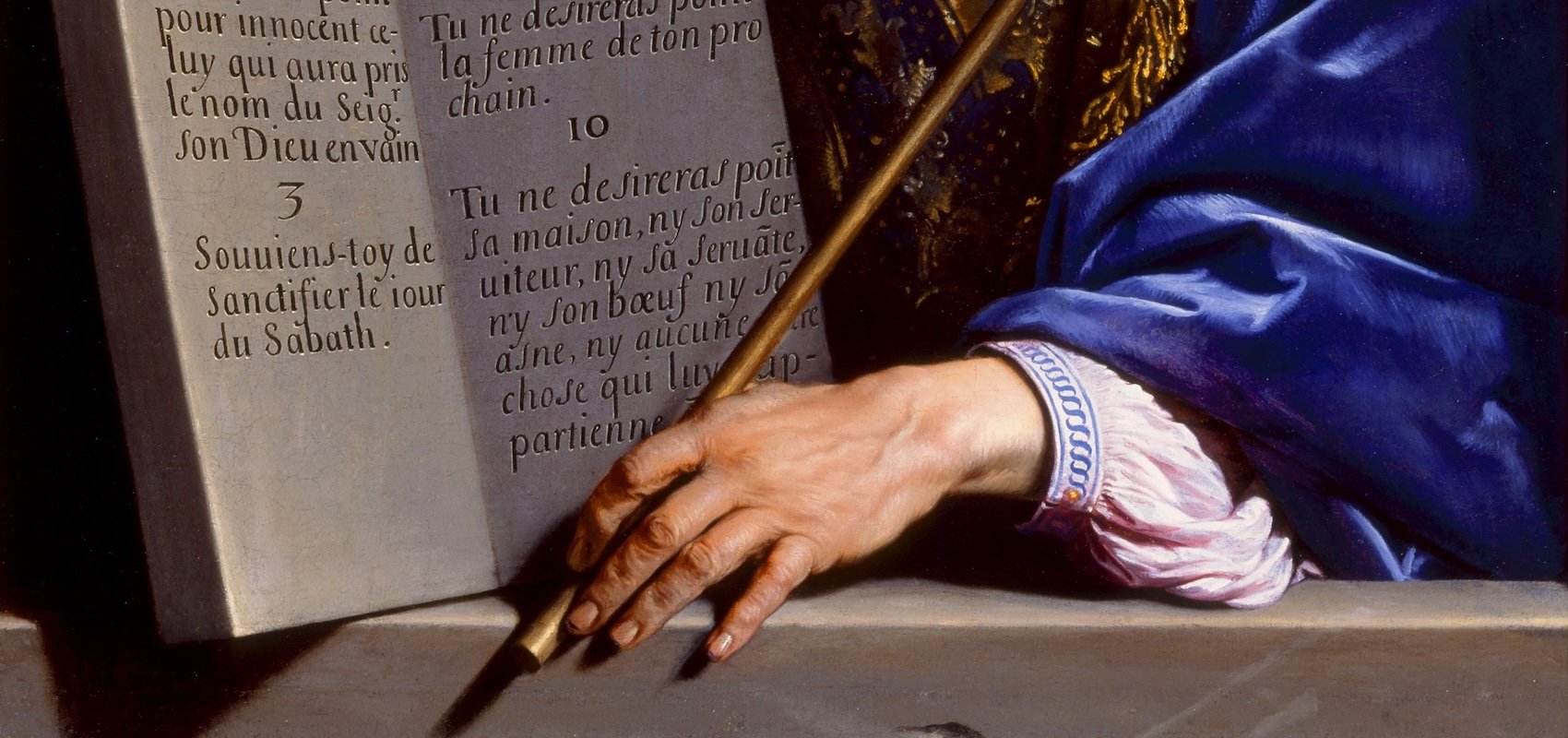
Natural law theory teaches that God embedded a teleological moral order in the world, such that things mature toward fixed ends. Human beings exist to realize both natural and supernatural ends, and, being rational creatures, we’re obligated to discern and pursue goods that fulfill ourselves as the creatures we are. There are moral truths we can’t not know, so we can tease out principles and precepts that prescribe actions to guide us toward our proper ends and prohibit actions that don’t.
Natural law articulates an objective moral standard as an antidote to the subjectivism and emotivism of contemporary morality. Because this moral order is embedded in nature, and we all live in the same world, natural law offers a universal morality. In our pluralist polities, natural law has advantages over specifically Christian moral reasoning. Scripture no longer packs the cultural punch it once did. You can’t persuade modern people that same-sex sexual desires are perverse by citing Leviticus or Romans.
I dissent. I believe, sed contra, that the conscientious natural lawyer is obligated to take revelation into account.
Natural law claims to draw out the moral truth of the human condition. Fine. What is the human condition? According to Genesis, it includes revelation. God spoke to man right from the beginning, issuing an explicit prohibition that becomes the occasion for the Fall: Do not eat fruit from the tree of the knowledge of good and evil. God didn’t stop speaking after Eden. He spoke to Cain, Noah, Abram, Isaac, Jacob, Moses, Israel, and, at least from the time of Moses, that speech was recorded in written form. Divine revelation is thus a fact of the human condition. Humanity as it actually exists is humanity addressed by the Creator. If we reason about ethics from the assumption that humanity is unaddressed by God, we’ve mistaken the kind of creatures we are.
What is a natural lawyer to do? Imagine a natural lawyer—let’s call him “Andrew”—who wants to form sound moral principles without the aid of special revelation. Then he discovers this book, the Bible, that claims to be the speech of the Creator-God addressed to humanity. It includes an abundance of complex and profound ethical teaching, especially in the Gospels. Andrew realizes this book has had a massive impact on the moral imagination of European and American civilization, and increasingly in Africa and Asia. No book has contributed as abundantly to human flourishing as this one. If Andrew ignores it, he’s ignoring one of the massive ethical realities of human history.
How does Andrew go about reckoning with it? Imagine he is a social scientist who prides himself on giving secular accounts of social phenomena. In the West, he realizes, this book generated such basic ethical and political concepts as the dignity of man, compassion for the weak, the use of power to protect the rights of the poor, the full humanity of women, the conviction that forgiveness triumphs over vengeance, the primacy of charity, the goodness of humility, the possibility of moral improvement. Andrew the social scientist operates well within the confines of natural law reasoning: Though the Bible isn’t revelation (because there’s no such thing as revelation), it’s an indispensable compendium of ethical instruction, a great human treasure. He starts quoting the Golden Rule and Jesus’s two great commandments and snatches of Torah as examples of man’s highest ethical achievement. Even secular Andrews have to spend some time pondering Scripture.
Imagine our Andrew is a Christian who believes the Bible contains something more than the discoveries of an ancient people and the teachings of a singular rabbi, Jesus of Nazareth. He believes it is divinely authored, that Scripture records, and is, God’s address to man. He can’t treat the Bible as a merely human book. Because the God who embedded a moral order in the world also gave humanity a book, this book must be important to the realization of the ends of humanity.
Andrew might be tempted to set the book aside, so as not to be or appear sectarian. That option troubles him, because he’d be ignoring a document he believes is the Creator’s revelation to humanity. How can suppressing this book be conducive to human flourishing? He might introduce a distinction between natural and supernatural: Natural morals are known by reason, but revelation discloses supernatural truth that leads us to our ultimate end in the vision of God. But it doesn’t take much time in the Bible to recognize that it stubbornly refuses to confine itself to “supernatural” instruction. The promises to Abram are about the altogether earthly history of his descendants, their land, and the blessing they’ll bring to the scattered nations. Alongside detailed prescriptions for animal sacrifice, Leviticus requires just weights and measures in market transactions.
Precisely because his job is to reflect on the actual condition of man, Andrew has to treat the Bible’s ethical teaching as the supreme ethical teaching there is, supreme because it comes from the living God who is Creator of heaven and earth. Precisely on the grounds of natural law theory, Andrew the believing natural lawyer has to become a biblical ethicist.
This essay was Leithart’s opening statement in a debate on natural law with Michael Pakaluk at Biola University on February 11, 2026.

