
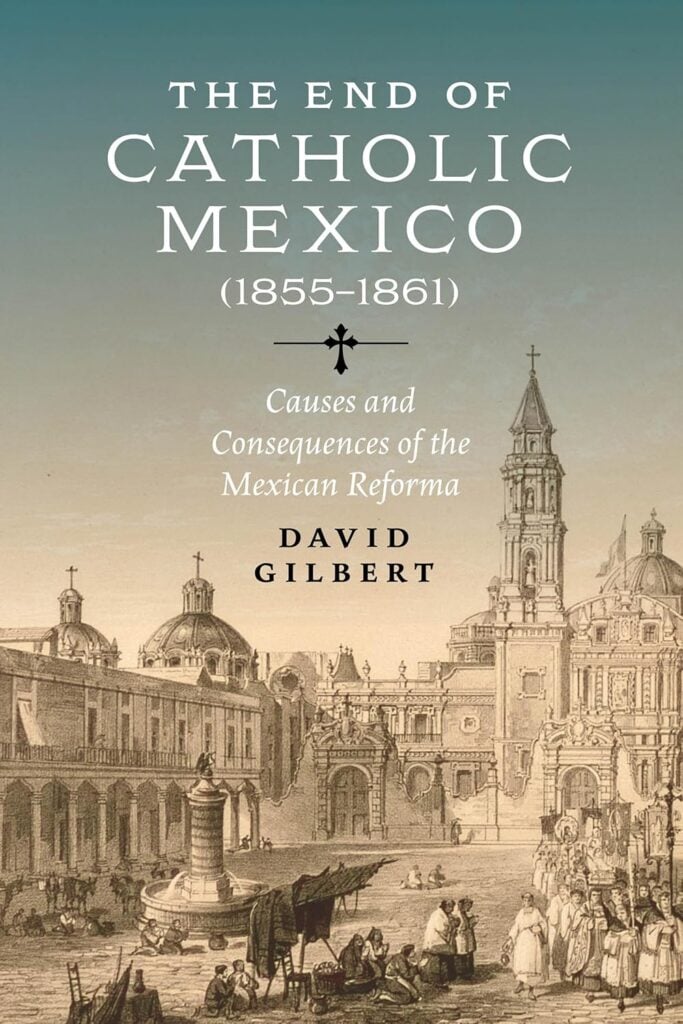
The End of Catholic Mexico (1855–1861):
Causes and Consequences of the Mexican Reforma
by david gilbert
vanderbilt university, 314 pages, $34.95
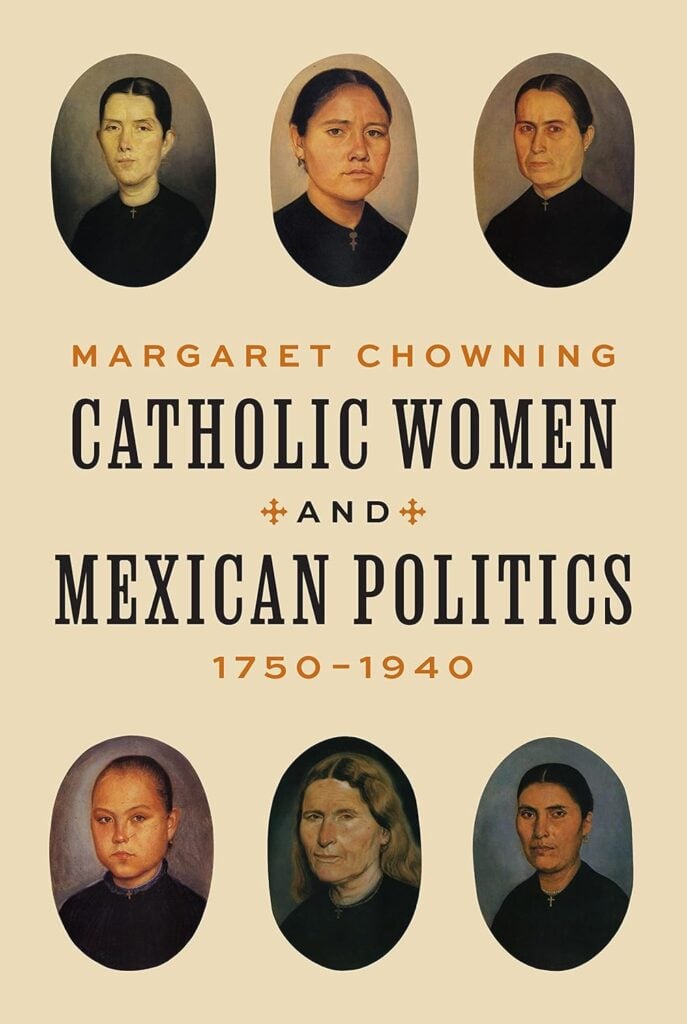
Catholic Women and Mexican Politics, 1750–1940
by margaret chowning
princeton university, 376 pages, $32
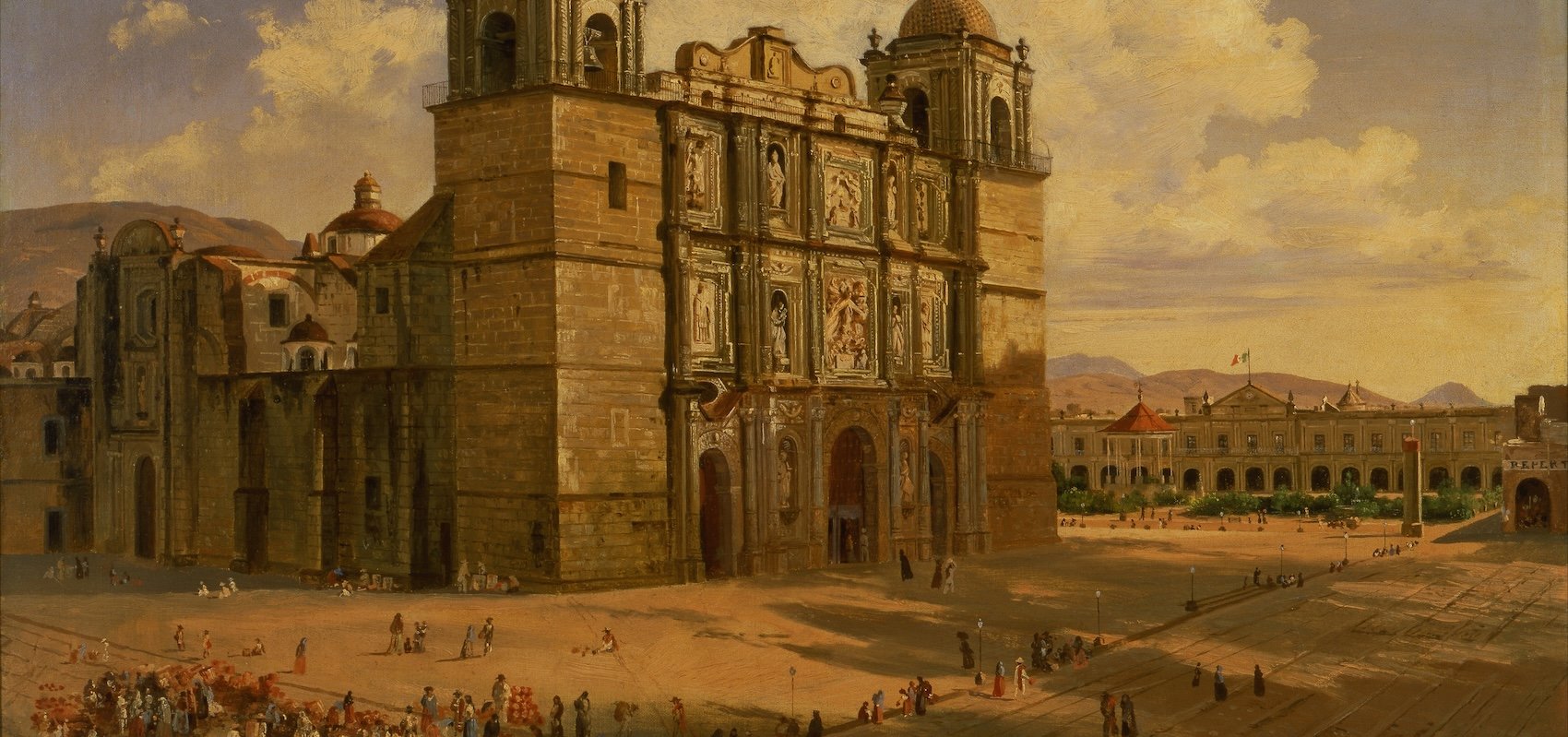
There is a narrative of Mexican history that might be called “liberal,” or perhaps more accurately “liberal-national-revolutionary.” It says that enlightened thinkers and politicians in the nineteenth century, led by political liberals such as Benito Juárez, took on the entrenched power of the Catholic Church and ultimately prevailed, introducing freedom of speech, freedom of religion, and secular education in the Constitution of 1857 and further reforms in the ensuing decades.
This liberal Reforma stripped away much of the inherited wealth of the Church, greatly reduced Catholicism’s political influence, and made religious devotion a private matter. Public processions, for example, were outlawed, and public schools were prohibited from teaching religion. The long dictatorship of Porfirio Díaz, known as the Porfiriato (1876–1911), undermined these gains, as Díaz, once a liberal hero, sought accommodation with both the Church and foreign capital in his pursuit of “order and progress.” The religious hierarchy regained some of its wealth and power, and piety returned to the streets and schools in much of the country.
The Mexican Revolution (1910–20), the liberal narrative continues, restored the civil and legal progress that had been lost during the Porfiriato and went beyond the liberal era in two key areas. First, the revolutionaries of the twentieth century were committed to a broader social and economic agenda, which entailed the destruction of the hacienda and sought the prosperity of the rural poor and urban workers. Second, the liberals of the nineteenth century had embraced Mexican nationalism in theory, yet they had looked to the United States as the model liberal polity and depended on American help for some of their key military victories. By contrast, the revolutionaries of the twentieth century rejected the American model, stood up to the United States, and asserted Mexican sovereignty over the nation’s lands and minerals.
The culmination of this account of Mexican history is the presidency of Lázaro Cárdenas (1934–40), during which the Mexican state distributed millions of acres of land to formerly landless peasants, sided with the workers in dozens of strikes, and expropriated the British- and American-owned oil industry, turning the new state-owned Petróleos Mexicanos (PEMEX) into one of the great exemplars and bulwarks of Mexican nationalism. Later generations of politicians succumbed to the temptations of corruption and opportunism during the long one-party rule of the Institutional Revolutionary Party, but the Constitution of 1917 and the Cárdenas presidency survive as the revolutionary DNA and proof of concept.
More recently, the neo-Zapatista uprising in Chiapas in the 1990s—never definitively defeated and, at least rhetorically, continuing to the present—demonstrates the continuing appeal of the revolutionary vision. In the liberal story, the Mexican state’s great and enduring accomplishments are its liberation of the people from the institutional Church and from Catholic “fanaticism,” the rendering of a measure of social justice for the peasant and the worker, and the assertion of Mexican nationalism against all forms of foreign domination, especially that of American capital.
This liberal narrative can be criticized from various standpoints, but I will focus here on the religious perspective, from which it is not so much wrong as incomplete. Its problem is not only that it devotes little attention to Catholicism, but that it cannot account for the depth of the Mexican people’s religious commitment. If the liberal narrative is the basic story of modern Mexico, why is Mexico still so Catholic? Unlike its neighbor Guatemala, now almost 50 percent Protestant, Mexico remains an overwhelmingly Catholic country, despite sharing a long border with that hegemon of evangelical Protestantism, the United States, which has sent Protestant missionaries into Mexico for more than a century. Why did Catholic peasants—the very people who were supposed to be the primary beneficiaries of the Revolution—fight a bloody war against the new revolutionary state in the Cristero Rebellion of 1926–29? Why did they rise again in the 1930s? In the nineteenth century, why were peasants and indigenous people more likely to side with “reactionary” conservatives than with forward-looking liberals? There seems to be a deep-seated Catholicism in Mexico that transcends race, class, and social status and that persists despite all manner of political, legal, military, and cultural pressures.
Historically, many liberal and revolutionary statesmen insisted that Catholics who resisted liberal and revolutionary reforms had been brainwashed into fanaticism and superstition by priests and old women and simply did not know what was good for them. Contemporary historians of Mexico, who skew left and secular, are not quite so quick to condemn Mexican religiosity, but nevertheless have downplayed Catholicism as a political, economic, and cultural force. In most cases, we have not so much a conspiracy as a mismatch between historians’ interests—leftwing politics, progressive moral reform, resistance to class, race, and sex-based oppression—and the undeniable centrality of Catholicism in Mexican history. At their best, these scholars recognize that they are not quite getting to the heart of the Mexican experience.
The last two decades have seen a steady stream of scholarship on Catholic aspects of modern Mexican history, by historians such as Stephen Andes, Jürgen Buchenau, Matthew Butler, Ben Fallaw, Jaime Pensado, Brian Stauffer, William B. Taylor, Edward Wright-Ríos, and Julia Young. (There has also been some helpful work on Mexican Protestantism, a tradition that has at times mediated between Catholicism and liberalism.) Two recent books, one by David Gilbert on the Liberal Reforma of the mid-nineteenth century, the other by Margaret Chowning on the political role of Catholic women, serve as excellent complements (or antidotes) to the liberal version of Mexican history. If liberal scholars incorporated these fine works into their teaching and research, they would present a richer and more coherent account of the Mexican past.
Gilbert’s book, based on extensive archival work and many previously unknown sources, is a detailed retelling of the period from 1855 to 1861, the central years of the Reforma, during which, he argues, a “culture war” rapidly polarized Mexican society into warring camps that no longer understood or sympathized with each other. On the liberal side, the loss of more than half the national territory to the United States in 1848 was a traumatizing event that made liberals reject what they saw as the backward economy and stultifying culture of their home country in favor of the industrial dynamism and progressive outlook of the United States. On the conservative side, defeat by the United States provoked not emulation but rejection, a doubling down on the goodness of Hispanic, Catholic culture in contrast to the crass pragmatism of the neighbor to the north.
Gilbert’s book is worth reading for many reasons, but let me focus on one: the extreme nature of liberal reform. In the United States—founded by men of various religious persuasions and embracing religious liberty in the First Amendment to its Constitution—liberalism seems moderate, normal, even banal. That was not the case in nineteenth-century Mexico. For centuries before the Spanish Conquest in 1521, the Aztecs, Maya, Zapotecs, Mixtecs, and many other indigenous peoples had lived under arrangements in which religion and politics were so intertwined as to be almost indistinguishable. Spanish colonial society replaced indigenous religion with Catholicism, but religion and politics remained deeply interconnected. Mexico did not experience the Protestant Reformation in the sixteenth century, nor did it move toward religious toleration or accommodation in the seventeenth century, as some European states were forced to do. Enlightened ideas did filter across the Atlantic, but they appealed only to a tiny elite. In short, in 1850 Mexico was Catholic, deeply Catholic, in a way that Europe had long ceased to be.
In this Catholic, conservative, traditional society, liberal ideas were explosive, unpopular, and to some Mexicans almost incomprehensible. Religious toleration was taken as a rejection of the divine claims of Catholicism. The forced sale of Church lands was seen as either cruelty or venality. The elimination of fueros (clerical privileges) was viewed as an attack not just on the priesthood but on the moral order of a hierarchical society. Liberals faced a dilemma: If they stayed to true to their ostensible principles of religious neutrality, private property, and civil freedom, the Catholic Church would remain dominant in the hearts and minds of most Mexicans; but if they acted to weaken Catholic power and influence, they would betray their liberal principles. As Gilbert documents, time after time they chose to betray their principles. They closed monasteries. They expelled priests and bishops from the country. They imprisoned Catholic leaders without trial. They outlawed criticism of the government. They confiscated Church property. To make Mexico liberal, they acted illiberally. To establish religious toleration, they acted intolerantly. Readers, even American readers, will have a difficult time viewing the Reforma as reasonable or natural. If they have eyes to see, they will recognize the shocking radicalism of liberalism.
Chowning’s book, focused on Catholic women’s activism, fleshes out some of the background to the resistance and conflict featured in Gilbert’s work. Mexican women, Chowning demonstrates, were extremely involved in Catholic lay associations in the nineteenth century. Some of these associations were dedicated to social service, but most had a more religious or spiritual purpose, such as devotion to Our Lady of Guadalupe or the Sacred Heart of Jesus. Chowning contends that women’s involvement in these organizations was inherently political, in that women collected and managed dues and fees, negotiated with Church authorities, and developed their own goals and procedures. Then, having built their own networks and raised up their own leaders, Catholic women entered the political arena when their interests as Catholic women were threatened, most notably in response to liberal reforms in 1849 and 1856. It was in the cities where Catholic women were most involved in lay associations, Chowning shows, that they protested most vociferously. The entrance of women into the public square scandalized liberals and, when followed by similar actions against the revolutionary reforms of the twentieth century, led them and their revolutionary heirs to deny the vote to women until the surprisingly late date of 1953. Although theoretically committed to equal rights and the liberation of women, Mexico’s liberals feared that women’s votes would be overwhelmingly reactionary.
Notably, Chowning shows that the most successful and popular women’s groups were dedicated to Eucharistic adoration. In each local chapter, the most important organization of the nineteenth century, Vela Perpetua (Perpetual Vigil), named thirty-one cabezas de día (day leaders), each of whom was responsible for organizing pairs of women to serve half-hour vigils in front of the Blessed Sacrament for twenty-four hours of one day of each month. In this way, there would be continuous Eucharistic adoration by at least two women, all day, every day. Chowning is most interested in how Vela Perpetua fostered female leadership, political awareness, agency, and activism—and she makes a convincing case that it accomplished these things—but to me the story of Vela Perpetua and similar organizations points to spiritual realities that may answer some of the most enduring questions about Mexican history.
I have long pondered Mexico’s spiritual vitality. How did so many Mexican Catholics manage to keep the faith amid the onslaught of liberalism, revolution, secularization, American invasions, Protestant evangelization, and outright persecution? In the past I have attributed their resilience to the kind of faith that is forged in adversity. As Christ says, “Blessed are those who are persecuted for righteousness’ sake.” Many Catholics also point to Our Lady of Guadalupe and the ways in which Mexico might be under her special protection. Without discounting those explanations, I’m now inclined to see adoration as the hidden source of the nation’s spiritual reservoir. Deep Mexico, México profundo, is Eucharistic Mexico.


YOU MIGHT ALSO LIKE
The Serpent and the Dove
Late in the evening of Thursday, September 8, 1955, Communist Party officials in Shanghai launched a mass…
Students for Notre Dame
As I walked out of class Thursday morning, the day before the planned student-led “March on the…
What the USCCB Gets Wrong About Birthright Citizenship
In the wake of the 2007 Supreme Court decision to uphold Kansas’s ban on partial birth abortion,…
