
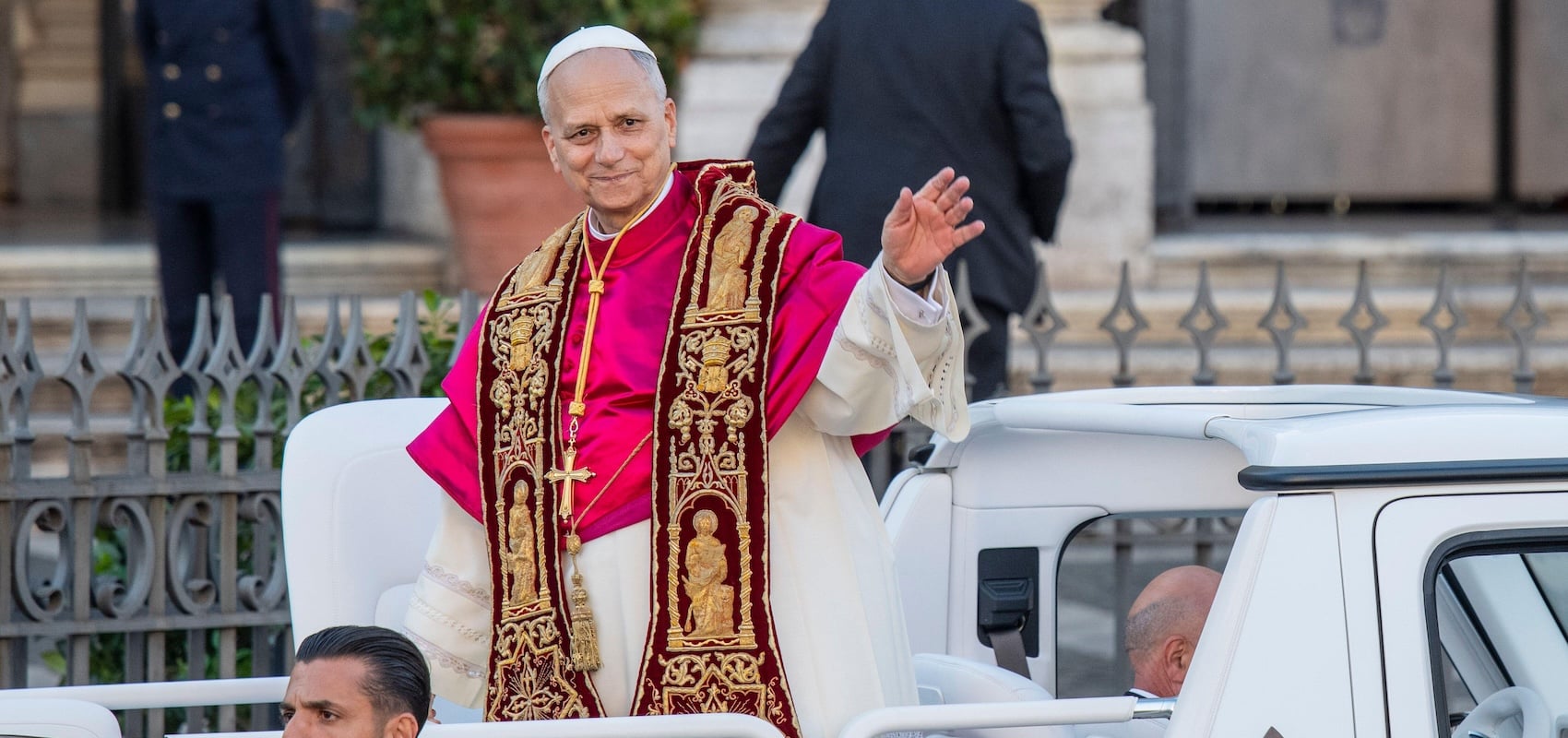
Almost one year in, Pope Leo’s vision for his pontificate is still coming into focus. But there are a few key characteristics that are worth noting. First, and most obvious, Leo is not Francis II.
For much of Francis’s pontificate, the air around the Vatican was polluted with ecclesiastical fear. Francis, for all his talk of synodality, consolidated power not just around himself, but in himself. Those familiar with his governance say that most decisions came directly from him or from someone in his inner circle. If there was any wider consultation, it was usually one-on-one, which permitted him to control the conversation and the outcome.
The traditional power structure of the Vatican left day-to-day governance to the secretariat of state; Francis governed differently. Under his papacy, certain dicasteries were elevated in importance, while others were consistently circumvented, often marginalizing area-specific experts. This was first done through motu proprio, and later solidified with the new constitution Praedicate Evangelium. Church law was an afterthought in much of Francis’s governance. Personal access more than ecclesiastical jurisdiction seemed to dictate decisions. And papal favor was capricious and determinative. For a class of people who gave their lives in service to a hierarchical structure, there was not much, if anything, that could be done other than endure the situation. All of this unfolded under the banner of “synodality,” a process that consumed vast amounts of time, money, and energy in the latter years of the Francis pontificate.
With the election of Robert Prevost to the Chair of St. Peter, the culture of fear disappeared overnight. Prevost, while not widely known by people outside the Vatican, was recognized by the Vatican establishment as a listener and consensus builder, which is likely one of the reasons why he got elected. Reports indicate that during the General Congregations of cardinals leading up to the conclave, there was wide consensus across ecclesiological borders that the next pope should be a man who listened and governed within the traditional structures of the Vatican and Church law. Prevost, a canonist by training, carried a resume that promised a return to regular order.
On that front, Leo has delivered. He has brought back consistories, something Pope Francis spiked after experiencing pushback from the cardinals on his agenda; the secretariat of state has been moved back into the role of managing the Holy Father’s affairs and the governance of the Vatican City State; Leo has consulted various perspectives on any particular question, as his private audiences attest; and men with the fitting ecclesiastical experience have been elevated to important positions.
All of this is with an eye toward unity, In Illo uno unum (In the One, we are one), Pope Leo’s papal motto. After twelve years of Pope Francis, the divisions within the Church were raw and there for everyone to see. German bishops pushed heterodox positions through their Synodal Way; the Dicastery for the Doctrine of the Faith promoted new theological “paradigms” and blessings for same-sex couples that were firmly rejected by bishops from around the world; Traditionis Custodes fueled the liturgy wars; and men who otherwise would not possess authority beyond their local diocese were elevated to the College of Cardinals.
Pope Leo clearly wants to move beyond these divisions, but he also seems committed to doing so with as much continuity with Francis (and previous popes) as possible. It is not healthy for the Church to simply be a reflection of the current pope’s particular preferences, which is what too often happened under Francis. This is a difficult balancing act when following a maverick. To bring new calm to the governance of the Church, while not repudiating Pope Francis, seems to be an important goal for Leo.
Needless to say, this approach will leave some frustrated and disappointed. There are those who would like to have a Francis II pontificate, and there are others who want much of the Francis pontificate explicitly repudiated, especially Francis’s signature pursuit—synodality. Leo has given no indication that he will satisfy either of these camps, but he may draw them together in ways that will bridge the deep divisions.
From what we’ve seen so far, Leo’s synodality, unlike Francis’s, is more stylistic than structural. Leo employed it during the consistory in January, and certainly isn’t shy about using the term. But it seems unlikely that the Church will further expend untold resources pursuing it. Already there is less superficial fanfare. Synodality, as Francis envisioned it, is becoming a footnote.
Theologically it remains to be seen which direction Leo will take, but his training in canon law will only help provide structure to his thinking. His Augustinian background will also certainly be a guide. Greater rootedness in the theological tradition of the Church, including the Church Fathers, can only be a positive. No more “making a mess” of things.
And then there is the question of Vatican II, which still dogs the Church. Sixty years later, admittedly a short amount of time in church years, there remain debates about how to implement the council. As Leo has made clear in his Wednesday general audiences, what matters most in implementing the council is the council documents themselves. If we want a listening Church and a Church rooted in Vatican II, then perhaps the first thing to do is listen to the council fathers by going back and reading the texts. That is a form of listening, and perhaps the most important listening the Church can do today. It will guide decisions about liturgy, evangelization, Church governance, and more.
If this is the sort of synodality Leo pursues, it will bring about a unity the Church desperately needs. May it be so.

YOU MIGHT ALSO LIKE
When the Bells Stop Ringing
Some years ago, I was a resident at Conemaugh Memorial Medical Center in Johnstown, a small postindustrial…
Gen Zeal
Everyone assures us that we enjoy the blessings of progress: Capitalism has produced great material wealth, modern…
Pitch for a Catholic Novel
Imagine a middle-aged white man in good clothes waiting for a morning train at a station of…
