
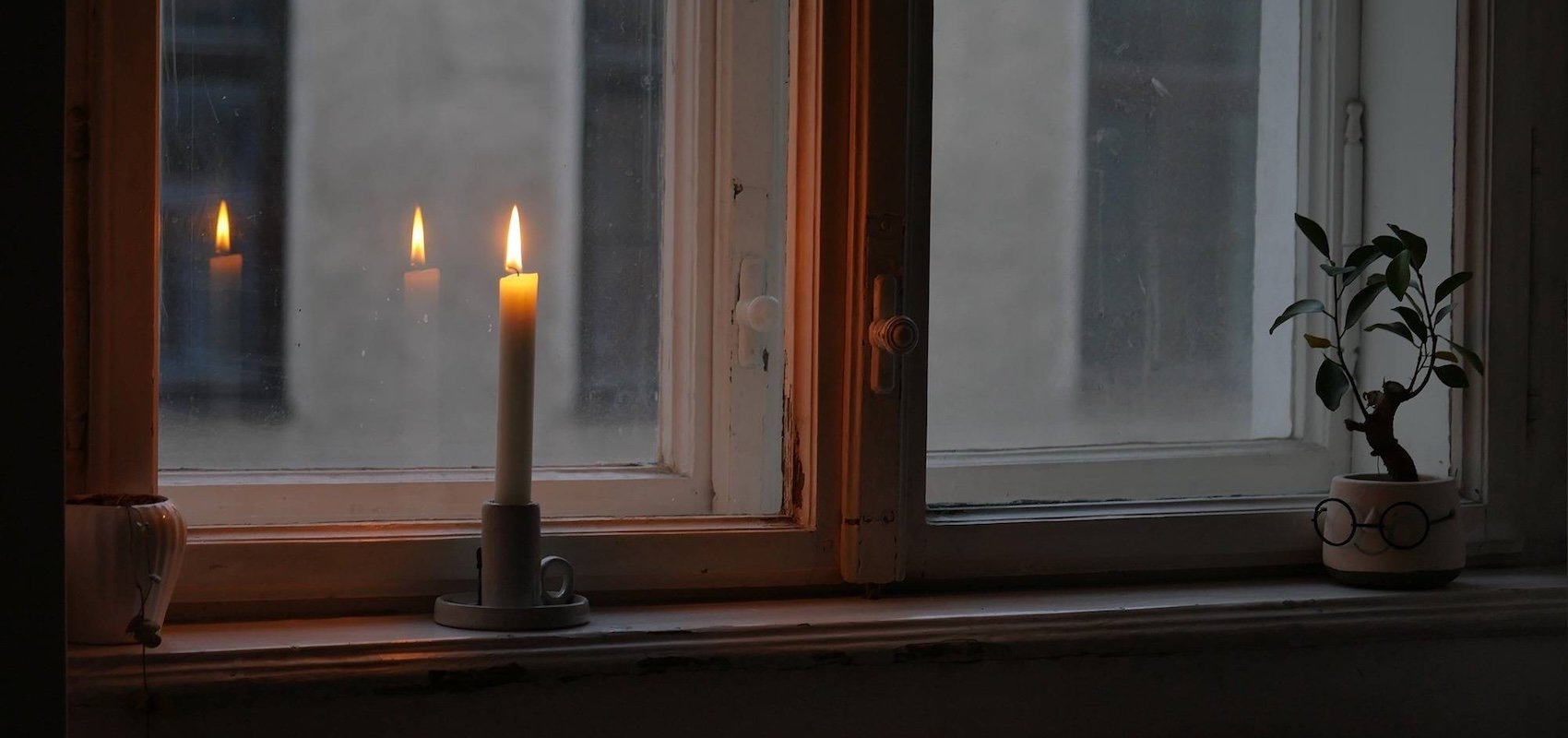
On December 23, 1981, President Ronald Reagan called for Americans to place a lighted candle in the window on Christmas Eve. He did so at the request of Romuald Spasowski, who had defected four days earlier, seeking political asylum for himself and his family, after martial law was declared in Poland on December 13. It was the birth of an American tradition worth remembering in this season of “good will toward men.”
Cold War defections in the 1970s featured Soviet chess grandmasters such as Lev Alburt from Russia, athletes such as Martina Navratilova from Czechoslovakia, and ballet dancers including, most famously, Mikhail Baryshnikov from Latvia. In 1978, Arkady Shevchenko, then an under-secretary-general at the United Nations, became the top Soviet diplomat to defect after spying for the CIA for several years. But Romuald Spasowski was the Polish ambassador to the United States. As a former deputy head of the Polish foreign ministry serving his second tour as ambassador to the United States, whose late, great Marxist revolutionary father had streets named after him in Warsaw and elsewhere, he was the highest-ranking non-Soviet, communist official to defect from behind the Iron Curtain.
Spasowski did not depart quietly. In the speech announcing his defection at the U.S. State Department on December 20, 1981, he described the military crackdown as a “state of war . . . imposed upon Poland, a state of war against the Polish people. . . . I, ladies and gentlemen, cannot be silent.” He pledged solidarity with those resisting the “brutality and inhumanity” of martial law: “I have decided this at the moment I have learned that Lech Walesa, the most beloved leader of Solidarity, is arrested and kept by force.” The Solidarity movement in Poland was an independent trade union that opposed the communist government.
Communist Poland’s crackdown on its own people also impelled the defection of the Polish ambassador to Japan. On Christmas Eve, at the U.S. Embassy in Tokyo, Zdzislaw Rurarz requested and was granted political asylum in the United States for himself and his family. In May 1981, the ambassador had already cordially greeted Walesa at the head of a nine-member Solidarity delegation to Japan. Of his defection, Rurarz explained that he could not serve under “a declaration of war by the government against the nation”; he added that he chose the United States because it was a free country where he could continue his fight against the “perfidious Polish junta” and the “real maker of the Polish drama” behind the Kremlin walls.
Both defectors had been committed communists with impeccable party credentials. Both men had strong wives who were devout Roman Catholics despite ongoing coercion from the Communist Party. Both were fathers to children who wanted a future of freedom for Poland. During Spasowski’s tour as Polish ambassador to India, his nineteen-year-old son died under suspicious circumstances after rejecting communism. A decade later, like more than 10 million other Poles out of a population of some 36 million, Spasowski’s daughter and son-in-law joined Solidarity. The birth of that independent trade union in Poland in 1980—along with their experiences witnessing freedom in diplomatic postings in the West—contributed to Spasowski and Rurarz’s conscious decision to defect and disavow communism. In 1982, the two men were sentenced to death in absentia by their former masters.
These diplomatic defectors saw martial law for what it was: a declaration of war on the Polish people. Rarely justified, martial law was profoundly unjust when used by a totalitarian regime that had never allowed for individual rights, rule of law, and limited government in the first place. And it could have been worse: Soviet tanks stood at the ready to crush Solidarity and the budding freedom it evoked for an entire country. Many—in the West as well as the East—expected the next Hungary 1956 or Czechoslovakia 1968.
Ronald Reagan understood the moment. After Spasowski’s personal request, Reagan placed a lighted candle in the second-floor window of the White House dining room. Then he spoke to the nation—and the world. In an Oval Office address saturated with images of light against darkness—from the star of Bethlehem heralding the “promised Prince of Peace” to the Christmas tree as “a reflection of the love Jesus taught us” to the Menorah “symbolizing the Jewish festival of Hanukkah” to the “twin beacons of faith and freedom” brightening the American sky through even the most difficult times—he urged all to light a candle in the window on Christmas Eve “as a small but certain beacon of our solidarity with the Polish people.” Like Spasowski and Rurarz, he held the root problem to be the communist regime: that of Poland and of its Soviet overseers. As always, Reagan conveyed freedom in terms of rights—God-given, natural, inalienable—and corresponding responsibility. In his view, Americans were both blessed and obligated: “Let the light of millions of candles in American homes give notice that the light of freedom is not going to be extinguished.”
Reagan’s diary entries, written at the time, attest to the depth of his worldview. He noted developments in Poland before the declaration of martial law, and, on December 14, he “Called the Pope re Poland. Expressed our concern & intention to keep close tabs on what is going on.” In the days before Spasowski’s surprise defection, Reagan’s non-stop schedule included a lunch session with the Vatican’s secretary of state and a National Security Council meeting regarding Poland, in which he “took a stand that this may be the last chance in our lifetime to see a change in the Soviet Empire’s colonial policy re Eastern Europe.” Already committed to “peace through strength,” he placed the latest repression of the Polish people and the interlacing opportunities presented by Solidarity, the diplomatic defectors, and a Polish pope at the heart of his Cold War strategy.
Pope John Paul II also understood the moment. Already internationally popular, it was this native son of Poland who had encouraged his own countrymen and sparked the formation of Solidarity through his nine-day pilgrimage home in summer 1979. Without him, this first, significant tear in the Iron Curtain would never have happened. Before and after the declaration of martial law in Poland, John Paul II issued public statements and sent private letters. At 6:30 p.m., on December 24, 1981, in a silent, powerful message, he lit a candle in the window of the Vatican.
Millions of Americans, and more around the world, followed the lead of the president and the pope. That same Christmas Eve, after their long journey and safe arrival at Dulles Airport, around 11 p.m., Zdzislaw Rurarz and his family were moved by the candles displayed in the windows of many homes on their drive into Washington, D.C.
For this Christmas season, candidates for a lighted candle in the window abound. One contender would surely resonate with Reagan, and his name is Jimmy Lai. For five years, Lai has been held in the harshest conditions of solitary confinement by Hong Kong authorities acting for their CCP masters. Last week’s 855-page “guilty” verdict against seventy-eight-year-old Lai after a classic show trial is the latest evidence that light is ever needed to fight darkness. Reagan would regard Lai as representative of all Hong Kongers—indeed, all Chinese and all others in repressed lands—yearning to be free, as is their God-given right. “Glory to God in the highest; and on earth peace to men of good will,” and keep lighting candles.

YOU MIGHT ALSO LIKE
Turned Away on Palm Sunday
In politics, diplomacy, war, or pretty much any field of human interaction, one must contend not only…
Timothée Chalamet Is Right About Art (ft. Suzy Weiss)
In this episode, co-founder and reporter for the Free Press, Suzy Weiss, joins Virginia and Germán to…
A Medieval Pilgrimage in Modern Assisi
When you go to the hilltop town of Assisi, you’re immediately struck by how medieval it is:…
