
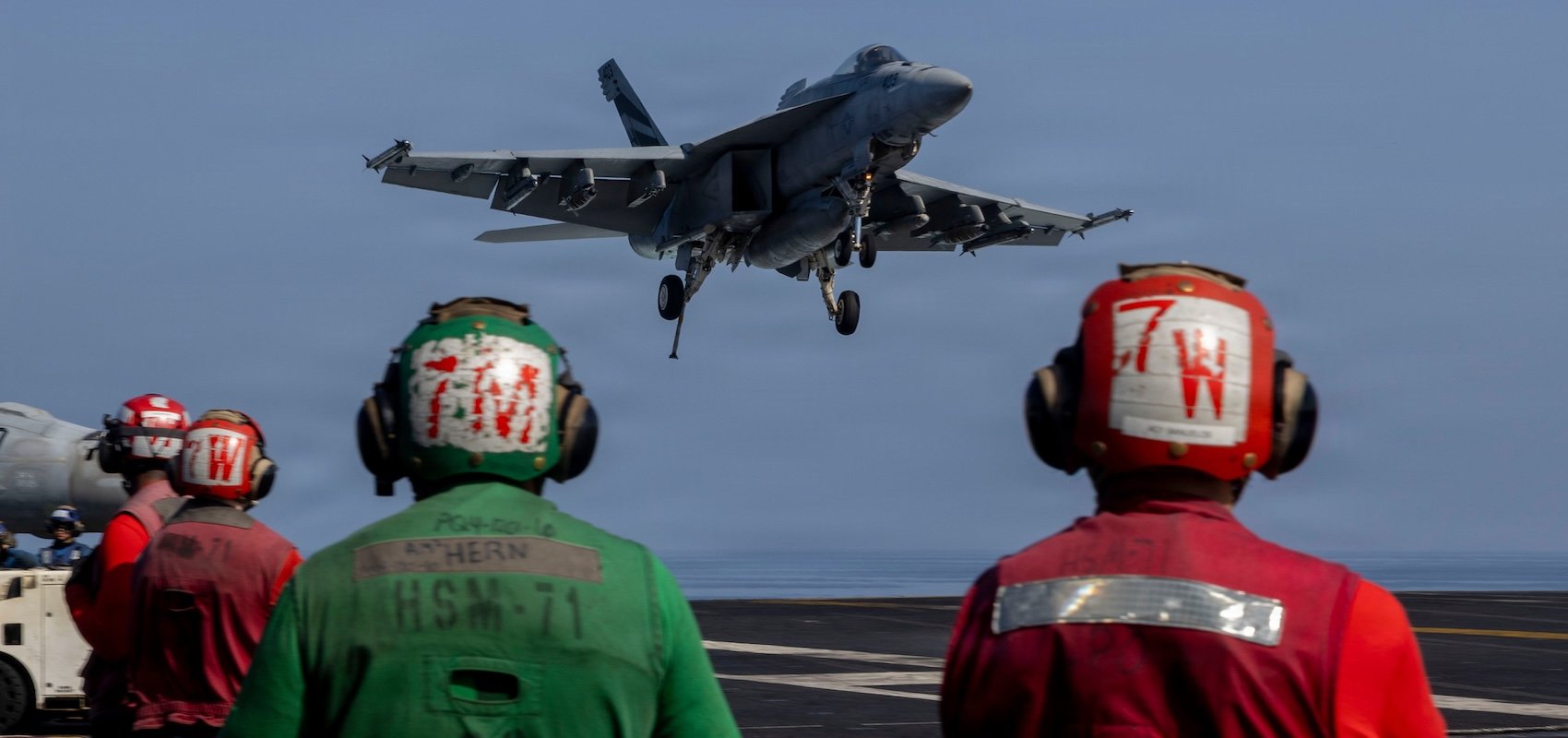
The machines of war have sprung into action once again in the Middle East. Bombs are falling in Tehran. Missiles are being flung this way and that. A supreme leader is felled in a targeted airstrike. An explosion kills schoolchildren. It all seems numbingly familiar.
What is one to think of the latest round of hostilities? Just war theory is often treated as a moral checklist. This is a mistaken view. It is a tradition of thought that helps us frame the realities of war in moral terms, the better to ponder and discern the moral contours and limits of lethal violence.
Just war analysis begins with a strong presumption against violence. As the Catholic Catechism puts it: “All citizens and all governments are obliged to work for the avoidance of war.” This presumption of avoidance is manifest in the just war principle of last resort. All other means of resolving conflicts must be exhausted before fighter planes take to the air and drone swarms are launched.
It is difficult to apply this principle to the present conflict. In one fashion or another, Iran has been at war with the United States and its ally Israel for decades. During the Iraq war in the 2000s, Iran supplied its proxies with IEDs that claimed the lives of many American soldiers. Since the end of that conflict, Tehran has supported an array of proxy armies and paramilitaries throughout the Middle East. The first Trump administration killed a high-ranking Iranian general with drones. Last summer, the U.S. joined Israel in pummeling Iran with air strikes. Iran and the United States have toggled between a cold and hot war for some time.
In view of this unhappy history, on Saturday morning, when Trump announced “major combat operations” against Iran, he was not so much declaring war as recognizing the failure of the most recent tacit ceasefire. His administration had been engaged in negotiations with Iran concerning its nuclear program. As has been the case for two decades, Tehran played a cat-and-mouse game in these negotiations, appearing to concede when the United States has exerted economic and military pressure, and then backtracking as the U.S. backs off. This dance now seems to be taking another turn around the ballroom floor. Trump’s justification for launching Operation Epic Fury echoes that of prior administrations: “We will ensure that Iran does not obtain nuclear weapons.”
On Sunday, Pope Leo asked political leaders “to assume their moral responsibility to stop the spiral of violence before it becomes an irreparable abyss.” He called for “reasonable, authentic, and responsible dialogue.” The Trump administration can claim to have pursued exactly that path, but to no avail. The Iranians were determined to force the issue by rejecting curtailment of their nuclear program. Under the circumstances, perhaps it was reasonable to decide that another round of hot war was necessary to force Tehran back to the negotiating table, this time with a willingness to abandon its nuclear weapons program.
I don’t pretend to know if realistic alternatives to warfare were available. In theory, it’s always possible to keep talking. But the principle of last resort is prudential, not theoretical. Just war reflection accords a benefit of the doubt to political leaders, who must weigh many complex factors.
Along with last resort, just war theory requires a just cause. It’s important to understand this principle under the rich notion of “final cause,” which is to say the purpose for which a country goes to war. National sovereignty is the “final cause” behind defensive wars triggered by unjust aggression, one of the clearest instances of just cause.
Trump has outlined four explicit purposes (causes) for the “major combat operations.” As I’ve noted, the most prominent is the goal of denying Iran the capacity to produce and deploy nuclear weapons. Curtailing Iran’s ballistic missile program is closely related to this aim, as is the destruction of the Iranian navy. More remote is the goal of diminishing Iran’s capacity to fund and supply its proxies. Finally, there is a tacit aim, often gestured toward, which is grandiose: to create the condition for the Iranian people to free themselves from theocratic tyranny. “The hour of your freedom is at hand,” Trump said as he ended his announcement of hostilities.
The cause of freedom may seem noble, but it is morally suspect as a war aim. There is a great deal of oppression around the world. If liberation and freedom are cause enough for war, then we’ll have far too much of it.
The other war aims are limited in scope. One may judge them wise or foolish, but they are not morally suspect in themselves. Diminishing or neutralizing the war-making capacity of one’s enemy is the baseline cause pursued by nations that make war. Moreover, just war theory requires the use of force proportional to legitimate war aims. The current military operations show no indication of escalation to a ground war with invading armies. The restricted aggression suggests that the Trump administration wishes to apply only as much force as is necessary to degrade Iran’s military capacities and force the Iranian government to make concessions in the nuclear negotiations that will follow a ceasefire.
A sobering final thought: Just war theory also puts forward the principle of probability of success. In view of the failure of past administrations to declaw Iran, it’s not unreasonable to conclude that the present airstrikes and cruise missile attacks will blow up facilities and kill people to no good effect. The Iranian regime will survive, regroup, and rearm, ready for another turn around the dance floor of futile negotiations, in which case the explosions, deaths, and suffering will have been for naught.
The fog of war is proverbial. In the Middle East, one can say the same of peace, which is often war by other means. The circumstances of American involvement in that region are morally complex. For this reason, it is unwise to issue confident moral judgments about Operation Epic Fury.

