
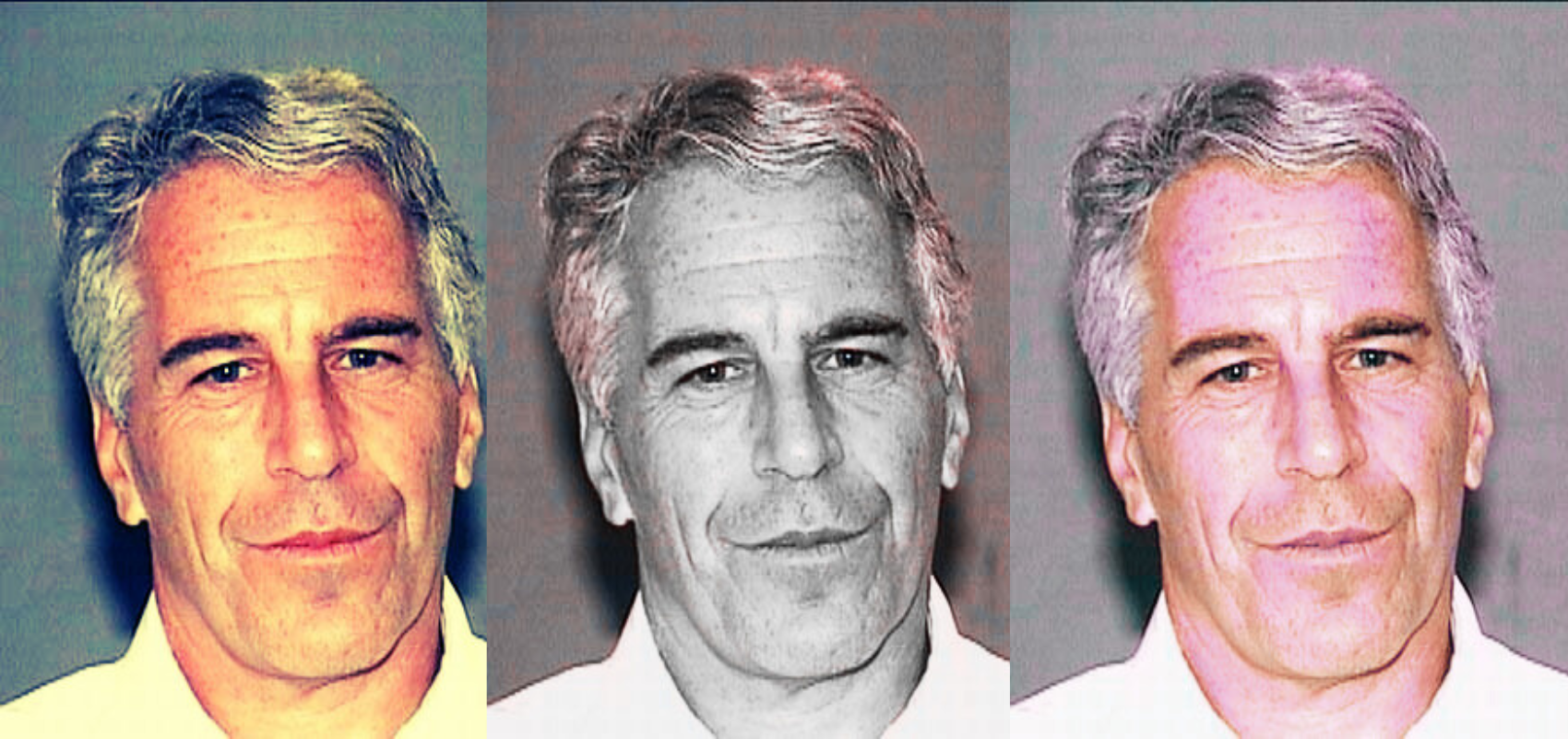
At risk of being controversial, I must take issue with Jeffrey Epstein. Buried in the latest tranche of files released by the U.S. Department of Justice is a 2013 email in which the alleged sex trafficker to the stars expresses his frustration with the approach to philanthropy taken by the Bill and Melinda Gates Foundation. Epstein complains to an interlocutor: “Can’t they come up with a better foundation structure and goal. Then to make the ludicrous statement that every life is equal. [If] so then give each one the billion kids one dollar for food. Every year, save a billion lives. It is Catholicism at [its] worst.”
As endorsements go, the Vatican couldn’t have asked for better. Bill Gates, it is worth noting, is not a Catholic, though he told Rolling Stone in 2014: “We’ve raised our kids in a religious way; they’ve gone to the Catholic church that Melinda goes to and I participate in.” However, his foundation does claim to be “[g]uided by the belief that every life has equal value,” which certainly does sound like Catholic social teaching.
Paragraph 2319 of the Catechism instructs that all human life “is sacred because the human person has been willed for its own sake in the image and likeness of the living and holy God.” Pope St. John Paul II, in his 1995 encyclical Evangelium Vitae, describes humankind as “one great family, in which all share the same fundamental good: equal personal dignity.” Addressing bioethical questions in Donum Vitae, Joseph Ratzinger, as he then was, warned of offenses against “the equality, dignity and fundamental rights of the human person.”
The doctrine of imago Dei, inherited from Judaism and b’tzelem Elohim, reflects the Catholic belief that all persons are created in the image of God and—this part is sometimes forgotten—that this spiritual likeness calls us to imitate God in how we live our lives. In the body of Christ, all belong, and none more or less so than others.
This commitment to the universal dignity of life puts Catholicism at odds with contemporary political ethics on the left and the right. Progressives order their worldview around the principle of autonomy maximization: It is not life itself that is inviolable, but the right to live one’s life to the fullest expression of identity or preference, unencumbered by the constraints of virtue, tradition, or social convention. Hence “my body, my choice” and the reframing of suicide as means of asserting total bodily autonomy—autonomy over the timing and circumstances of death itself.
Catholicism, as Epstein observed, is a roadblock to this version of progress because of its insistence on the inviolability of life. Since the mid-twentieth century, the Church has been sidelined in Western center-left politics and derided in popular culture specifically because of its commitment to life. Its opposition to abortion and euthanasia marks it out as a Thou Shalt Not institution, shaking its fist at secular modernity and seeking to regain control over the lives and choices of populations that long ago rejected its teachings.
Life itself has become a matter of preference, as can be seen in efforts on both sides of the Atlantic to legalize assisted suicide and to reframe abortion as a “healthcare” decision that women should be free to choose up to the point of birth. Catholicism is not primarily a religion of Thou Shalt Not—it is a religion in which faith and good works are incentivized by the hope of salvation and eternal life—but there is a place for Thou Shalt Not. When human life becomes cheap, an inconvenience to “get rid of” or a burden to be offloaded at a scheduled time, there is moral value in a voice that preaches the gospels of life, hope, worth, and equal dignity in communion with God.
This pits the Church against not only secular progressivism but the impulses and priorities of the post-Christian right. Where faith in Christ has been supplanted by discipleship to modern-day Caesars, and fidelity to the gospel by a worldview rotten with racial resentment and authoritarian expediency, the sanctity of human life stands no chance. Consider how readily conservatives have accepted the killing of activists by ICE agents and how callously they proclaim “FAFO!” (“F— Around and Find Out”) when one of their ideological opponents suffers injury or even death. These are responses as devoid of charity as they are scornful of life.
The same goes for the welcoming into the right-wing fold of smirking Jew-baiters like Nick Fuentes and fascists who proudly defy the teachings of Christ and of the Church by asserting the racial superiority or inferiority of this demographic or that. These bigotries are irreconcilable with the theology of life that emanates from imago Dei. They are not only un-Catholic but anti-Catholic.
Of course Jeffrey Epstein disdained Catholic doctrine on the universal validity of human life. He is far from alone in recognizing Catholicism as the bulwark against barbarism; others impatient with the Church’s immovability on the life issue, whether on the left or the right, rebel against its requirement of submission to one another in reverence for Christ. Pride knows humility to be its mortal enemy.
The Church has no difficulty in explaining why it believes in the equal and inviolable dignity of the person; it is for worldly ideologies to explain why they don’t. And as life becomes increasingly disposable and its moral worth conditional, it is more necessary than ever that Catholicism stands athwart the advance of a post-Christian ethic in which autonomy, utility, or heritage take precedence over the inalienable sanctity of a God-given gift.

YOU MIGHT ALSO LIKE
Turned Away on Palm Sunday
In politics, diplomacy, war, or pretty much any field of human interaction, one must contend not only…
Timothée Chalamet Is Right About Art (ft. Suzy Weiss)
In this episode, co-founder and reporter for the Free Press, Suzy Weiss, joins Virginia and Germán to…
Via Crucis, 2026
The Way of the Cross—and the third, seventh, and ninth stations in particular—has been an especially appropriate…
