Before London was a global city, it was just a city, and people lived there. Across its two-thousand-year history, London has always had a working class. In the sixteenth century, that class acquired the name “cockney.” The word originally referred to an excessively pampered child and probably came to denote Londoners because rural folk regarded them as soft.
Of course, cockneys have never regarded themselves in that way. Their self-aggrandizing myth portrays native Londoners as tough, spirited, and blessed with the gift of the gab. Over the centuries, a set of distinctive cultural traditions was born in the capital: a cuisine (pie and mash, pale ale, jellied eels); a costume (the black suits of the “pearly kings and queens,” adorned with shiny white buttons); and the songs of the music hall tradition, some of which will be familiar to Americans (“Daisy, Daisy / Give me your answer, do”).
Perhaps the most distinctive feature of cockney culture is its language—not only h-dropping and glottal stops, but also a complex and esoteric system of rhyming slang (phrases like “I can’t Adam and Eve it,” meaning “I can’t believe it”). This is the accent of Michael Caine, Adele, David Beckham, and Ray Winstone—the traditional sound of working-class London, still to be heard from the black-cab drivers who now drive to work from well beyond the boundaries of the city. These cabbies will often describe London’s current state in very direct terms. They are not at all happy about it.
You see, the cockneys have mostly left London. Between 2001 and 2021, census records show that the number of “White British” people in London fell from 4.3 million to 3.2 million, at a time when the overall population of the city grew substantially. Political scientist Eric Kaufmann believes that this exodus of nearly a million people was almost entirely made up of cockneys, who have since settled in Essex, Kent, and other surrounding counties. It is obvious to anyone who lives in London that the city is now composed almost exclusively of affluent white British people—who earn 50 percent more than those outside of the capital—and ethnic minorities, some poor and some very rich. Vestiges of cockney culture continue to circulate in the British mainstream, particularly in film and TV intended for an international audience, but the cockney London of previous centuries is gone. The capital doesn’t have a white working class anymore.
Traditionally, a “true cockney” was born within earshot of the bells of St. Mary-le-Bow in Cheapside, a church that dates back to 1080 and is celebrated in the English nursery rhyme “Oranges and Lemons.” In modern London, road and air traffic have increased ambient noise levels so much that there are no longer any maternity units to be found within audible range of “Bow Bells” and therefore no more “true” cockney babies. But in the pre-modern era the sound carried for many miles and the cockney kingdom covered a large swathe of London: all of the east, plus parts of the south and north. These were the poorest parts of the city, as they were the most polluted and the closest to the docks, a key source of working-class employment.
You’ll be familiar with cockneys from their fictional representations, most of which were created by outsiders, in large part because the literary world was so hostile to working-class intrusion. The Londoner John Keats, for instance, was referred to by his enemies as one of “the cockney poets,” derided for evidence of working-class diction in his rhyming patterns.
Perhaps the greatest writer of cockney London was the partial outsider Charles Dickens, who—unusually among his literary peers—had lived and worked in the slums of the capital as a child, although he was born outside of it. That may be why Dickens’s cockney characters are so richly and sympathetically imagined—many were based on people he knew.
Much more often, fictional cockneys have been foils to upper-class characters. The pre-eminent example is Eliza Doolittle, a character in George Bernard Shaw’s 1912 play Pygmalion—portrayed by Audrey Hepburn in My Fair Lady—who is rescued from poverty by a scholar of phonetics who successfully rids her of her burdensome cockney accent. Doolittle’s tragic counterpart is to be found in E. M. Forster’s 1910 novel Howards End—adapted into a 1992 film of the same name—in which a young cockney man by the name of Leonard Bast is taken under the wing of the upper-class characters, with disastrous consequences for him. Bert, the cheerful jack-of-all trades in P. L. Travers’s Mary Poppins books—made into a Disney film in 1964—plays a role similar to that of Doolittle and Bast, in that he facilitates the adventures and psychological development of those above him in the class system.
The other favored type of fictional cockney is the villain. In Peter Jackson’s Lord of the Rings films, the orcs were given cockney accents—a departure from the books that was justified by Andrew Jack, the series’ dialect coach, on the grounds that the accent sounded “modern,” in contrast to the West Country burr of the Hobbits. And yet “modern” is hardly the right word for what may well have been the accent of Geoffrey Chaucer. What Andrew Jack meant, I think, is that the cockney accent has long carried a sense of urban threat.
Even before Jack the Ripper’s 1888 murders created an indelible connection between violence and cockney London in popular culture, readers of trashy novels would have been familiar with Sweeney Todd, the murderous barber of Fleet Street, who first appeared in an 1846 penny dreadful series and was portrayed in 2007 by Johnny Depp. Sometimes the criminal cockney is comical, as in One Hundred and One Dalmatians (1961). Sometimes he is a roguish antihero, as in The Italian Job (1969). The director Guy Ritchie keeps the tradition of the cockney gangster alive in his films, although they increasingly look like period pieces—since the predominant accent of working-class London nowadays is not cockney but MLE (Multicultural London English), which incorporates sounds from the Caribbean, West Africa, and the Indian Subcontinent. Ritchie is making films for an international audience who don’t yet realize that cockney London is a thing of the past.
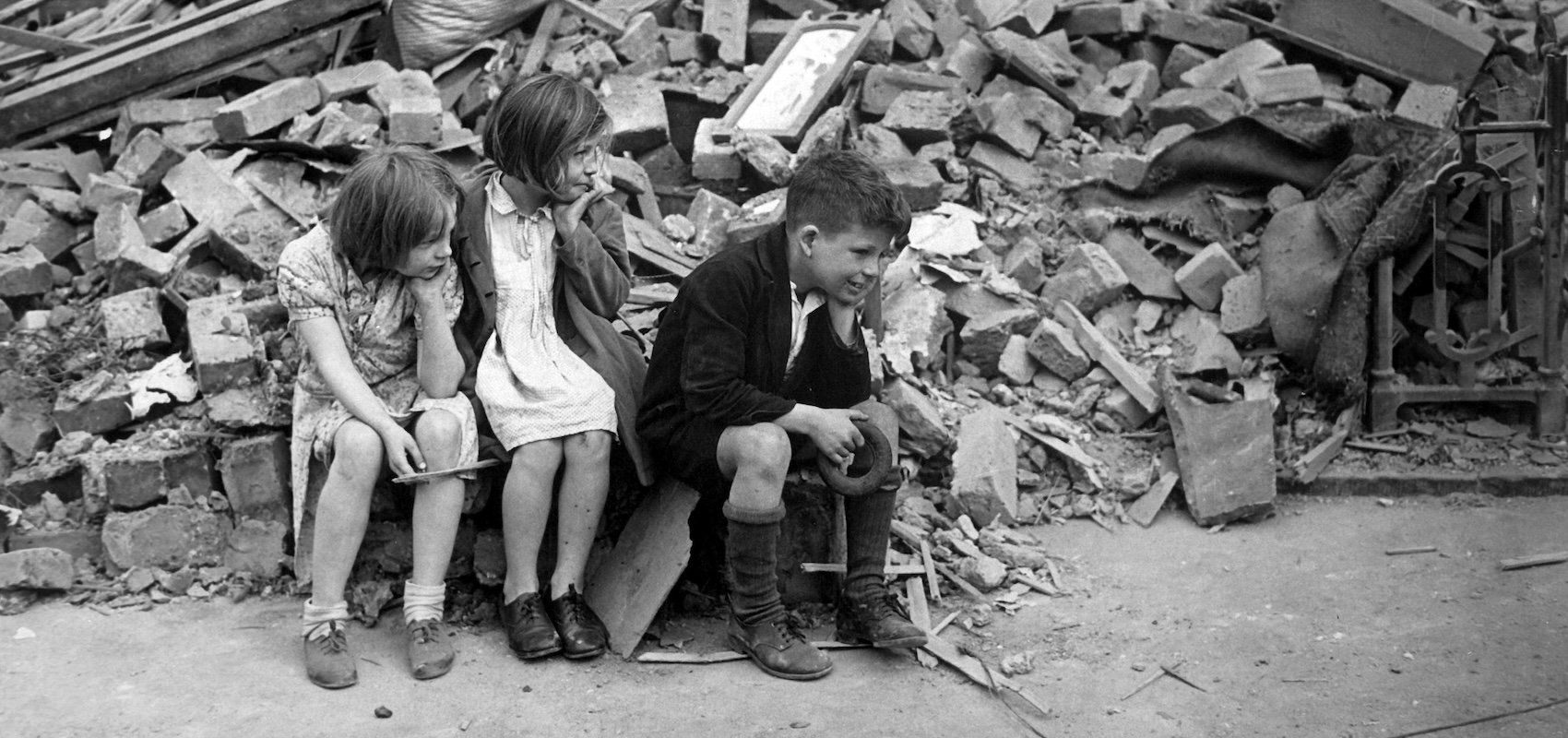
For centuries, cockneys were the archetype of urban poverty in the British imagination. As the working-class group most proximate to the intellectual elite of London, they inspired fear, pity, and sentimentalism. They also attracted idealists. In the second half of the nineteenth century, the East End became a focus for sociologists, and the research conducted there formed much of the thinking behind the creation of the post-war welfare state. Working-class areas experienced particular suffering during the Blitz, and London dockers made an outsized contribution to the war effort. Thus the arrival of the welfare state, and particularly the National Health Service, was popularly understood—by cockneys and non-cockneys alike—not as charity, but as recompense.
Charity was a touchy subject in the old East End. The year 1957 saw the publication of Michael Young and Peter Willmott’s highly influential Family and Kinship in East London, a sociological study of cockneys that sought to explain how these people had survived in the era before the welfare state. The East End solution to precarity, the authors observed, was a delicate system of longstanding reciprocal relationships among neighbors and kin, propped up by a doctrine of respectability. Cockneys could expect to receive support from one another only if they cultivated a good local reputation. Social capital could be accumulated through keeping a house clean and tidy, obeying local morality codes (which were not necessarily the same as those of outsiders), and offering aid to others within the network.
This moral system was particularly apparent in the allocation of social housing. At the beginning of the twentieth century, social reformers began clearing the London slums and replacing them with new dwellings that were managed by charities or local government, a process that accelerated following the destruction of so many old buildings during the Blitz. This subsidized social housing was intended for the upper working class, not the underclass, and would-be tenants were selected on the basis of their local reputations. Social housing was not regarded as a system of charity, but rather as a system of insurance: You paid in through your social capital and were rewarded with a comfortable new place to live. It was in keeping with the morality of the old East End.
The great turning point for cockney London came in 1977 with the Housing (Homeless Persons) Act, a well-intentioned piece of legislation that upended the old process of social housing allocation, forcing local governments to prioritize the most needy, rather than those who had “paid in” to the local community.
In the East End, this new law had a particularly dramatic effect on the fortunes of a small community of Bangladeshi men that had been established in the Tower Hamlets area since the end of the Second World War. Most of them were working in the textile and restaurant industries and living cheek-by-jowl in cramped private accommodation. As Michael Young and his colleagues Kate Gavron and Geoff Dench described in their 2006 book The New East End: Kinship, Race and Conflict, the 1977 Housing Act gave these men the opportunity to bypass the old system of local reputation and gain access to social housing for their wives and children, who promptly started arriving from Bangladesh to join their menfolk.
Some cockneys responded with hostility, even violence. But the economic pull factors were sufficiently strong that Bangladeshi families continued to come, despite local attempts to deter them. A process of white flight took effect, and by the end of the century just over one-third of the population of Tower Hamlets was categorized as “Asian” in census data. In 2021, that proportion had risen to almost half.
This little-known 1977 change in the allocation of social housing goes most of the way toward explaining the current socioeconomic and ethnic composition of London. A 2021 report from the Greater London Authority notes that 74 percent of households moving into “general needs” social housing “were headed by someone of Black, Asian or other minority ethnicity,” and that this disparity is a consequence of the fact that “social housing is allocated on the basis of need.” Ethnic minorities with high rates of unemployment, household overcrowding, single motherhood, and other kinds of dysfunction, along with those who have arrived in London as refugees, will always end up at the front of the queue for this heavily subsidized housing when prioritization is based on need. Cockneys, being comparatively high-functioning, just don’t cut it.
Mostly as a consequence of the Blitz, London contains an amazing amount of social housing—40 percent of units in Southwark, 33 percent in Camden, and 28 percent in Westminster—and nearly half of the households occupying this housing stock are now headed by someone who was born abroad. The remaining housing has become so expensive, following the property boom that began in the late 1990s, that working-class people without access to social housing cannot afford to live in the capital.
This is why London has seen such dramatic demographic change within my lifetime. When I was born in West London in 1992, the city was 71 percent white British; when my youngest son was born last year (in the very same hospital), that figure had fallen to 36.8 percent. “I can think of no other major city,” said Paul Collier, now professor of economics at the University of Oxford, in an interview with The Economist magazine, “[in which] the indigenous population has more than halved in half a century.”
There are two stories you’ll commonly hear about why so many cockneys left London. The first is a story of aspiration: Sick of their poky old houses and with new employment opportunities available to them, the cockneys opted for leafier and more spacious surrounds. The second narrative is more antagonistic: that the cockneys were forced out by a combination of mass immigration and hostile housing policy, all engineered by the governing class.
Both of these explanations are true. I don’t believe that British policymakers of the 1970s deliberately set out to remove the native working class from London. It’s more that they didn’t mind especially when they looked up and noticed that the cockneys were gone, largely thanks to their efforts. Centuries of fiction reveal that wealthy Londoners have tended to take either a condescending or a fearful attitude toward their poorer neighbors, and it still does not occur to most of them that a working-class culture rooted in the place that birthed it might be valuable in some intangible way. In fact, in a recent comment on the rapid ethnic transformation of London, Labour Party activist John McTernan—formerly Tony Blair’s political secretary—wrote simply: “A better London has been created.” Progressives like McTernan now regard the loss of cockney London as a good thing.
This longstanding antipathy toward cockneys is aggravated by the fact that the British elite likes to imagine that our history is more American than it really is. The phrase “a nation of immigrants,” borrowed from the United States, entered political discourse at the beginning of this century and has since become a popular cliche, even though Britain was in fact remarkably ethnically homogeneous right up until the 1950s. The idea of a centuries-old working-class subculture cannot be accommodated within this worldview because such cultures just don’t exist in most of America, a country in which nearly everyone has been affected by immigration—both newcomers from the Old World and indigenous peoples whose ways of life were violently interrupted.
When confronted with the reality of the cockney exodus, members of the British elite will claim that London has always been a “melting pot” (another American phrase), with vague references to the French Huguenots, who in 1700 formed 5 percent of the city’s population (and whose presence frequently contributed to rioting), as well as to London’s Jews, who at a peak in 1901 formed 2 percent of the population. If pre-war London was “built by migrants”—as Mayor Sadiq Khan likes to claim—they were overwhelmingly migrants from other parts of the British Isles. Of course, as an urban subculture, cockneys were never genetically or culturally isolated from the rest of the country, or the rest of the world. But that does not mean, as the “melting pot” narrative implies, that the existence of a distinctive cockney culture is a racist fairytale. This people really did exist, and they really were displaced.
Which is not to say that they have suffered materially. Poppy Coburn of London’s Telegraph newspaper, who comes from a long line of cockneys, tells me that they’re doing just fine in Essex, Kent, and the other counties that absorbed all these Londoners, most of whom are quite happy to be living lives far more luxurious than those of their grandparents. As sociolinguist Amanda Cole has pointed out, the cockney accent “hasn’t died—she’s just called ‘Essex’ now.” This is a story of cultural transplantation, not extinction.
But Coburn identifies a profound wariness among the ex-Londoners she grew up around. Newly cockney parts of the country take every opportunity to signal their opposition to further mass immigration, voting to leave the European Union in 2016 and now supporting Reform. The cockneys left London without much fuss, but now their backs are to the sea.
In July of this year, a hotel in the Essex town of Epping became the focus of a series of protests that turned violent. The catalytic event was the arrest and charge of an asylum seeker accused of sexual assault. Hadush Kebatu, from Ethiopia, has since been convicted of sexually assaulting a local fourteen-year-old girl and a woman, just a week after arriving in Britain illegally. Upon arrival, he had been housed in the seventy-nine-room Bell Hotel, alongside other male asylum seekers.
The protests quickly spread to hotels in Canary Wharf in London and Diss in Norfolk, where illegal migrants are also being housed. The crowds at all of these protests were full of cockney accents, which is not surprising given recent migration patterns: Epping is an affluent town full of ex-cockneys who still commute into the capital, many of them working in Canary Wharf, and the area around Diss is home to a large community of cockneys who moved out to Norfolk in the second half of the twentieth century.
The protests soon progressed to a new and richly symbolic form of civil disobedience that is being popularly referred to as “Operation Raise the Colours” or as “flagging”—that is, the adornment of lampposts and other street furniture with British and English flags, as well as occasional graffiti. Nowhere were the flagging efforts more energetic than in the East End, where groups of white men with cockney accents—often masked—defied the efforts of Tower Hamlets council to remove their flags. This council is held by Aspire, an independent party that has only ever fielded candidates of Bangladeshi heritage, and the rise of flagging in the East End must be understood as a (currently peaceful) territorial contest between two different ethnic groups. Former deputy Prime Minister Angela Rayner has warned that the country may well be facing more riots. Professor David Betz, professor of war studies at King’s College London, has warned that the country may well be on the brink of civil war. Conflict over the ownership of London risks tearing the country apart.
There’s a speech that’s often circulated by British nativists on social media, including those who cheered on this summer’s disorder. There are various edits of it available on YouTube, all with hundreds of thousands of views. The speech is taken, curiously enough, from a BBC drama first aired in 2001 and now impossible to get hold of. From what I can gather, the character who delivers it was written as a villain, the head of a shadowy far-right organization responsible for a string of violent crimes. Here is our old cockney villain again—a fictional character we all know so well.
It’s odd, then, that the speech is so poignant. The character—Laurence—describes his family tree, going back centuries in Bermondsey, an area of cockney London adjacent to the Thames. A family of Georges, Edwards, and Victorias, all based in the same area and working in the fish trade. “I stand here, in front of you, as a representative of all of them,” he says, speaking for a family
who understand well their own country. Who understand even better their own capital, London town, as we used to call her. As we strolled in her parks, as we marvelled at her palaces, as we did business in the city, went west for a dance, took a boat on the river. The pale ale and eel pie of old London. The London of my family for as many generations as I know.
Put these words in the mouth of any other indigenous character, and that character would immediately be understood by a BBC audience as tragic. A new audience of online nativists has chosen to read this piece of fiction against the grain, I think because George expresses their complaint with unusual clarity.
As the speech details, cockney animosity is mostly not directed at immigrants. These newcomers are understood as instruments of a class warfare waged by the British elites, a view that was frequently voiced by the cockneys interviewed in The New East End. Those cockneys spoke bitterly of the “middle-class do-gooders” who had provoked communal tensions by favoring immigrants over natives and then labelling as racist anyone who resisted the new regime. The crowds in Epping, Canary Wharf, and Diss keep telling journalists much the same thing.
One could respond to this interpretation by pointing out that cockneys are materially better off now than they were in the past, which is surely true. One could also point out that modernity itself is at odds with any project of cultural preservation: People move, things change, “all that is solid melts into air.” Should we care if cockney culture melts away, too?
I say that we should. Fourteen miles from the center of London, in the town of Epsom, eighty-seven-year-old George Major has built The Cockney Museum in a large outbuilding behind a residential street. “This is his life’s work,” his daughter told me when I visited the museum this summer. Major has filled every foot of wall space with photographs, captions, and artifacts that foreground not just the suffering of London’s cockneys, but also their creativity and resilience. “All the cockneys have moved out of London,” Major told the BBC, when asked why he hadn’t built the museum there. Intentionally or not, the place feels elegiac.
As I walked around George Major’s museum, I thought of my cockney great-grandfather, who spent much of his childhood living in the pub that his family ran, roughly a mile from Bow Bells. Like so many Britons of the twentieth century, he immigrated to Australia as a young adult but held on to the culture of his youth. (My mother remembers him singing music hall songs to her.)
Australian culture may have absorbed many cockney elements—not least the pronunciation of certain vowels—but my great-grandfather’s descendants are not cockneys. Although my brother and I ended up back in London, by the time we returned to the city the process of cultural transmission had been disrupted. That’s what migration does, and my great-grandfather must have realized that when he made the choice to leave.
When they immigrated to Australia, my ancestors (perhaps unwittingly) contributed to the displacement of the people indigenous to that country. After two centuries of violence and disease brought to them by Europeans, the indigenous population is now actually slightly larger than it was at the time of first contact, with longer life expectancies and access to the various comforts and delights offered by Western technology. But it is absurd to say that, since they are now materially better off, there was no wrong done to indigenous Australians. Of course they were wronged, and grievously.
The United Nations Declaration on the Rights of Indigenous Peoples recognizes that violence is not the only way in which such peoples can be harmed. It affirms—among much else—“the right of all peoples to be different, to consider themselves different, and to be respected as such.” In other words, the UN insists that cultural particularity is valuable in and of itself, and that governments should not try to erase it.
The British government has belatedly recognized that harm was done to the people subjected to its colonial adventures. Even if in the long term they were made richer, or healthier, or better educated, the anti-colonial position is that indigenous peoples should not have their lands taken from them. It is provocative to use the word “indigenous” to describe cockneys, because doing so suggests that the British government has not yet shaken off its disregard for “the right of all peoples to be different.” I have chosen to use the word because that is exactly what I am suggesting: that the colonial instinct has turned inward and has been directed in particular at working-class people who were never much liked by the people who governed them. Many cockneys realize what has been done to them and is still being done to them. They realize that many people in government believe that London has been (in John McTernan’s words) made “better” by the absence of the people who built it. They realize, too, that this colonial instinct is still trained on them and has no qualms about permanently destroying what remains of cockney culture in places like Essex and Kent. They realize that this is just the latest iteration of the same class war that has been waged for centuries on these islands against people like them. And they are not at all happy about it.