
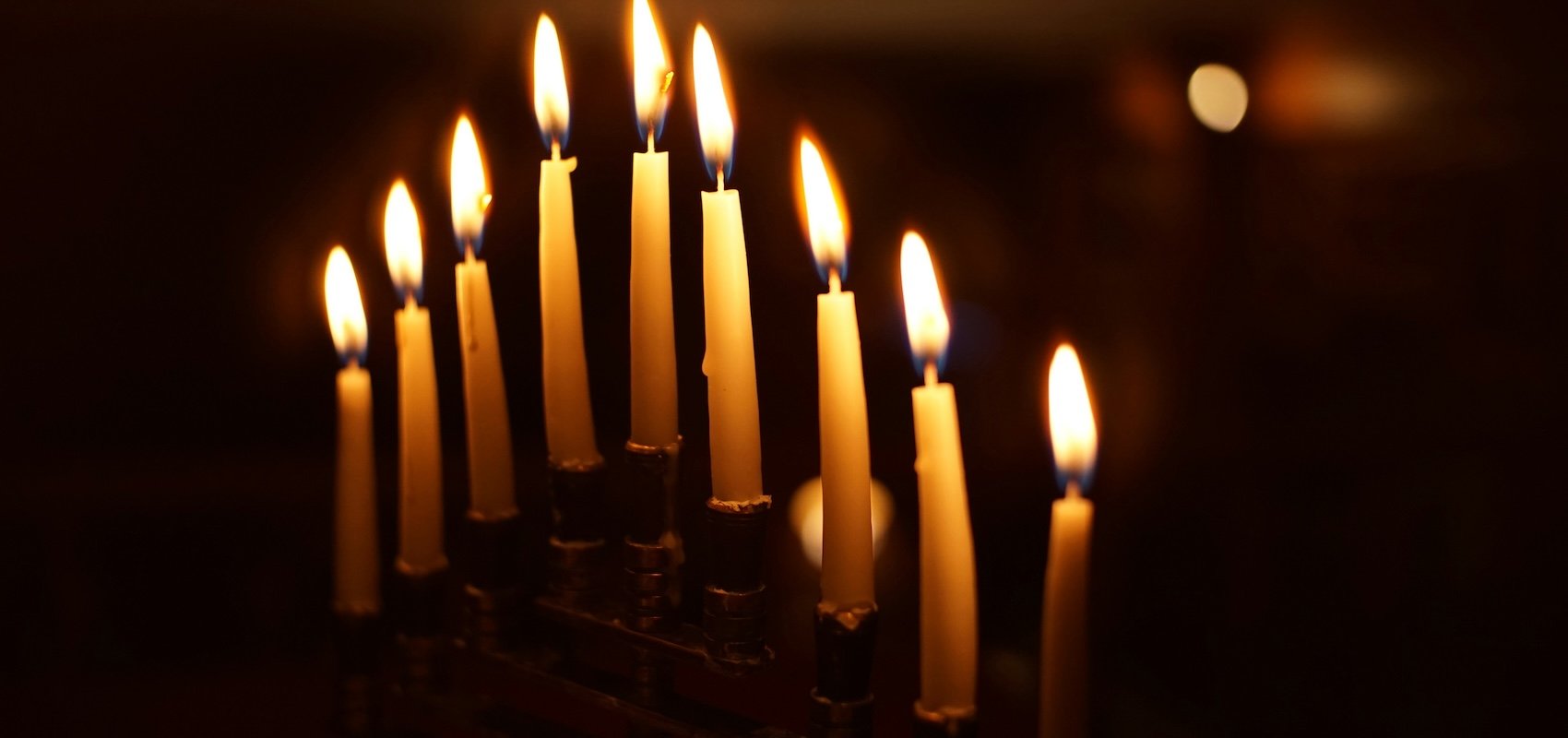
Before the Hamas war against Israel, the election of Zohran Mamdani as mayor of New York City, and yesterday’s shooting attack in Australia, I associated Hanukkah with triumph rather than despair. The eight-day festival, which began at sundown on December 14, was an opportunity to recognize Jewish perseverance and share Jewish light.
This year is different. While menorahs are ordinarily displayed outdoors in celebration, during times of danger the Talmud suggests kindling Hanukkah lights discreetly. Even without overt peril, mounting hostility toward Jews draws me inward and homeward. I prefer to stay indoors with my family, where the somber hymn of my childhood will echo more poignantly than the cheerful holiday prayer.
Like other winter holidays, Hanukkah occurs when daylight is lacking and darkness evokes faith. More than a solstice observance, however, Hanukkah is a celebration of Jewish distinctiveness and daring. In the second century B.C., enlightened Greeks sought to extinguish Jewish singularity, and the rebellious Maccabees prevailed. Afterward, oil in the Temple menorah burned for more nights than it should have.
While Hanukkah has long inspired Jewish exiles, today I am not feeling heartened. From household windows and public squares, menorahs will burn brightly in shows of strength and solidarity, but I will be kindling mine privately. In the sanctuary of home, I will spend eight quiet nights with family, recalling less exhausting times.
This year we will celebrate Hanukkah in a new apartment, with unfamiliar doorways and windows that frame changed views. While negotiating these new spaces, the menorah will cast a familiar light, calling to mind shadows of our previous Jerusalem residence and the slow hours between sunset and bedtime in my childhood home in New York.
Toward sunset in Queens, curtains were drawn open, revealing a concrete landscape outside. Father’s silver menorah stood guard at the porch window, awaiting his return from another day at the office. In less conspicuous spaces, multicolored candles stood like soldiers at attention. We anticipated Father’s arrival eagerly but unhurriedly. On those nights, the ceremony happened not at a set hour but at an accidental moment, when the Long Island Rail Road transported Father from Manhattan to where he preferred to be.
Just as Mr. Rogers changed into a cardigan and sneakers to send a message, Father dressed in holiday finery on Hanukkah to make a point. This lesser festival does not require special attire, but dressing up demonstrated Hanukkah’s importance to us more effectively than dressing down. Stooping before his oil lamp in a black frock, Father rolled uneven wicks from cotton, and Mother recalled how her father, Louie, did the same.
My grandfather Louie was an immigrant to Brooklyn who had witnessed the rise of anti-Semitism in Eastern Europe before the Holocaust. Louie sang with a pathos born from Jewish displacement and suffering. As a child, Louie’s demeanor intrigued me, though I could not relate to his generation’s sorrow. As anti-Semitism surges again, I am less naive about Jewish security worldwide.
After kindling the oil, Father would stare at the lights thoughtfully before leading us in song. Some renditions were more melodious than others and some nights we danced. I would peer into the flames and notice how light pirouetted gracefully around each wick. Father shared anecdotes and prompted questions. Mother prepared hors d’oeuvres and radiated contentment. Hanukkah was about being more than doing. A perfect winter evening needed little more than flickering lights.
In our family, the festival of lights also celebrated engagement and creativity. Father and Mother cherished menorahs and dreidels we fashioned of wood and clay and put them to good use. With humor and specialty chocolate coins, Father involved us directly in his rituals. Age-appropriate dialogue was fostered, and questions valued as much as answers. Instead of a formal dinner, we relished appetizers in the family room on a squat table made of tempered glass. Mother shared melodies she learned from Louie. Oil-fueled lights glowed mysteriously, and slender wax candles burned too fast.
By staging an enchanting ritual, my parents were preserving a religious tradition and not merely orchestrating a comforting winter activity. In the holiday’s central prayer, we praised the Almighty for delivering the impure into the hands of the pure, and the wicked into the hands of the righteous. The holiday is a sacred occasion comprising hallowed ambitions and responsibilities. Jews are meant to be pure and righteous, our parents encouraged us, and to shine divine light into the world.
That was then.
This Hanukkah in Jerusalem, I will be at home with my children and grandchildren. The prominent silver menorah will be my own. I will not have arrived by railroad, nor will I roll candle wicks like misshapen cigarettes. Cold rain may make the family room contrastingly cozy. From a cracking analog recording, Louie’s rendition of the holiday hymn will solemnly sound. Like years past, hors d’oeuvres may include cured salmon, crème fraîche, and a local Riesling, aromatic and round with hints of apricot and golden apple. Crispy latkes and doughnuts will arrive in my wife’s reliable hands.
My thoughts this season are with tormented hostages and fallen heroes, with the Bondi Beach victims, with a traumatized Israel and fearful Jewish communities worldwide. As a fragile ceasefire holds in Gaza and Jews are menaced globally, I will sing along with my grandfather to the hymn’s somber strains, its mournful melody resonating with my despair.

YOU MIGHT ALSO LIKE
Turned Away on Palm Sunday
In politics, diplomacy, war, or pretty much any field of human interaction, one must contend not only…
The Scandal of Judaism
Christianity has been marked by hostility toward Jews. I won’t rehearse the history. I’ll simply propose a…
Introducing The Jew From Nowhere
Longtime readers of First Things will probably be able to guess the third in this sequence: Catholic,…
