
As expected, the head of the SSPX, Fr. Davide Pagliarani, has sent a letter to Cardinal Fernández formally rejecting the offer of further dialogue over doctrinal matters. “While I certainly rejoice at a new opening of dialogue,” he wrote, “I cannot accept the perspective and objectives in the name of which the Dicastery [for the Doctrine of the Faith] offers to resume dialogue in the present situation.” The tone and tenor of the letter are formally polite but with an undercurrent of combative resistance to Rome’s insistence on certain doctrinal non-negotiables as the key determinant for formal regularization of the Society. Apparently, for Fr. Pagliarani, such insistence on faithfulness to the contemporary magisterium as the central demand for any hope of reconciliation is just a bridge too far.
Fr. Pagliarani’s stance makes it clear that further discussions will be as pointless as a defibrillator in a morgue. The conversation is dead, and the corpse of ongoing “dialogue” cannot be resuscitated. If the SSPX proceeds with its plans to consecrate new bishops without papal approval in July, its excommunication seems all but guaranteed.
The SSPX’s denunciations of Vatican II as containing “heretical” doctrines, its demonization of the papally approved Novus Ordo as “dangerous to souls,” and its vigorous criticisms of all post-conciliar papacies as riddled with “modernism” have now reached a point of theological incoherence. The rationale given by the SSPX for the “need” to ordain new bishops is that the broader Church now lacks the means to provide souls with salvific grace. The implication is that the Church is so consumed with the metastasized cancer of Vatican II that it has forfeited all authority and sacramental integrity.
The theological logic of the SSPX is at this point indistinguishable from the sedevacantist splinter groups that have broken away from the Society, who view it as too eager to seek reconciliation with the false magisterium currently in Rome. The many traditionalist sympathizers with the SSPX who have been quick to rush to its defense insist that sedevacantism is not the “official” position of the SSPX, but at this point, given the various theological claims of the Society, it is a distinction without a difference.
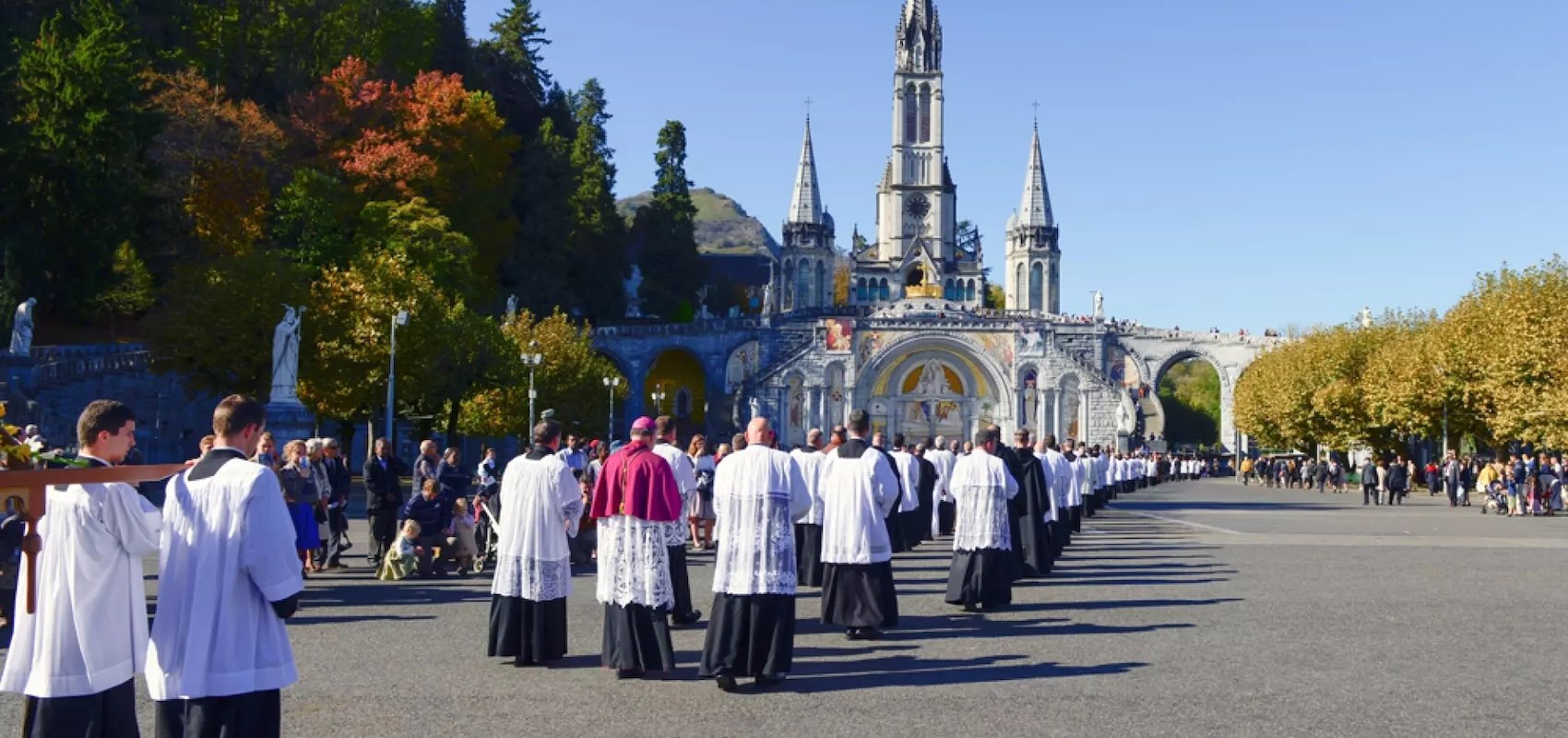
Perhaps, as the signature song of Andrea Bocelli states, “It is time to say goodbye.” And if the Society is at peace with the prospect of perpetual excommunication, then one wonders just how “traditional” it really is. Its outright rejection of the modern Church—to the point of establishing its own parallel Church—is not traditional at all, despite the fussbudget accoutrement it adorns itself with. My ninety-year-old mother can put on a pair of army boots, but that does not make her a marine. Likewise, no amount of lace and Latin makes the Society “traditional” in any meaningful sense so long as it persists in its rejection of the authority of the modern magisterium. Ironically, the Society has swung so far to the right that it now finds itself on the same precarious plank as the dissident left.
The SSPX’s idea that the Church has no right to “alter” the “Mass of the Ages” is another nontraditional point of view, since even the Mass of Pius V underwent post-Tridentine revisions, and the 1955 revisions to Holy Week from Pius XII were very extensive indeed.
I understand the Society’s love for the old Mass. I love it too and have said so in my many public comments urging for greater access to it from the Church. I further understand the frustration that what the Vatican gives (Summorum Pontificum) it can just as easily take away (Traditionis Custodes). Therefore, the Society does seem motivated in great measure to establish its own episcopacy independent of Rome in order to guarantee the ongoing presence of the Tridentine Mass.
But that is not how this “Catholic thing” works in any traditional sense. Even the mad-as-a-hatter Germans seem to know that. And to go into schism in order to preserve one form of the liturgy is to raise that liturgy above the Church herself in a manner that borders on idolatry.
Somewhere, Pius X is not smiling.

YOU MIGHT ALSO LIKE
Turned Away on Palm Sunday
In politics, diplomacy, war, or pretty much any field of human interaction, one must contend not only…
Via Crucis, 2026
The Way of the Cross—and the third, seventh, and ninth stations in particular—has been an especially appropriate…
A Medieval Pilgrimage in Modern Assisi
When you go to the hilltop town of Assisi, you’re immediately struck by how medieval it is:…
