Everyone assures us that we enjoy the blessings of progress: Capitalism has produced great material wealth, modern technoscience has provided countless benefits. But the development that is pressed upon us with the greatest urgency is moral and spiritual. Today, we are told, the common man forges his own destiny. Toleration of dissent and experimentation has brought us a richer, more honest, more truthful way of living.
The story of liberation is told in religious as well as in political contexts. Modern churches present themselves as communities of believers rather than hierarchies. Everyone has a voice now. We honor personal experiences and individual circumstances. The Church’s approach is pastoral, not dogmatic. The message, though rarely explicit, is that true Christianity is being practiced today for the first time.
When I attended Catholic school in the early nineties, Church history was taught in such a way that you would think there had been no true Catholicism until Vatican II, which was held up as delivering us from a narrow, cruel, fundamentally un-Christian past. Pastors tended to regard the piety of their ancestors as obedient but shallow. In these enlightened times, they presumed, people understood what they believed, instead of learning the Catechism by rote. The fact that those attending church couldn’t cite a dogma, let alone explain their faith without relying on platitudes, was lost on the clergy of my youth.
The local church retained its parishioners only through inertia. Habit kept them coming to Mass. To my young eyes, pastoral work seemed like a desperate effort to plug the leaks in a sinking ship, as the clergy had no answer to secularization, nor the confidence to counter the secular dogmas of modernity. The zeal was missing, and in its place were soft-spoken clichés and conflict aversion.
But there’s more to the story. In recent decades, a quiet renaissance has taken hold in the Church. Congregations, though often smaller than they were, are animated by the desire for a vibrant faith. The new principal of my old Catholic school has remade everything from the ground up in order to form the new generation with a faith-filled education. Similar revolutions are happening in Protestant circles, with traditional and orthodox congregations growing as the progressive denominations wither away.
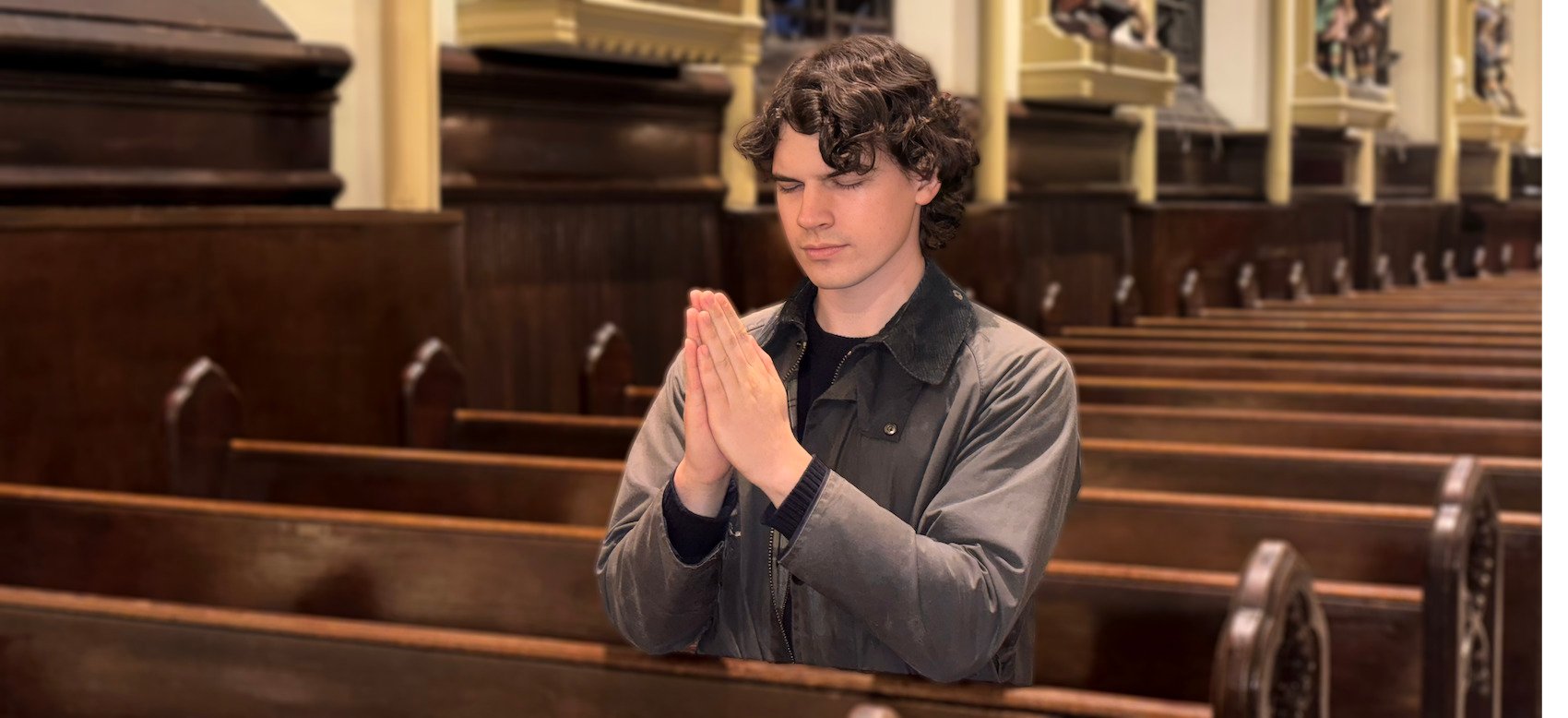
Though the scope of this revival is unclear, there’s little doubt that an unexpected trend is underway. Some polling indicates that the younger generations are becoming more religious, and not just more religious, but more likely than their elders to adhere to historical orthodoxy. Even the secular press has taken note. The growing popularity of the Catholic Tridentine Mass is well known. But the yearning for tradition is found as well in Orthodox churches, which are seeing a surge in converts, largely young men. The New York Post reports, “A survey of Orthodox churches around the country found that parishes saw a 78% increase in converts in 2022, compared with pre-pandemic levels in 2019. And while historically men and women converted in equal numbers, vastly more men have joined the church since 2020.” Among the political commentariat, many are disquieted by the new breed of zealous, truculent men. New York magazine lamented the rise of traditional views, noting “the possibility that many young men are attracted to Christianity precisely because they feel it gives divine sanction to their craving for power and status.” Whether the trend cheers or appalls, the descent into secularism seems to be stalling. We may be witnessing the beginnings of a religious renaissance in America.
For a bishop or pastor, this increase in ardor should be good news. Most church leaders have lived their entire lives in a time of decline. Indeed, the decline has gone on so long, it’s come to seem normal. Now there are signs of new life, stirrings of religious fervor. One would think that church leaders would pore over the data to discern what is driving young people to church, what those young people are seeking, and how they are being integrated into congregations. One would think that church leaders would hope to accelerate the youthful return to a transcendent and demanding faith, just as an earlier generation devoted itself to figuring out how to get with the times. One would think that church leaders would develop a restructuring operation to react to these promising developments.
One would think.
Too many church leaders preach platitudes about listening to the sheep and meeting people where they are—and then pen edicts, with the wrath of a medieval inquisitor, to crush factions they dislike. As Latin Masses increase in popularity, a large part of the Catholic hierarchy moves in lockstep to contain it. As families turn to homeschooling and lay Catholics found new schools committed to rigorous religious education, church leaders ignore them—at best. Sadly, they often seek to stifle them. In 2024, Catholic homeschooling parents in San Diego were barred from using parish facilities as venues for cooperative ventures. Cardinal McElroy, then the local bishop, said that the Church did not endorse “a parallel educational model,” and he noted that homeschooling had “become a source of tension within the diocese.” You can try to pass on our faith to your children in a hostile culture. But keep quiet about it, and don’t ask for help.
The problem of unwanted ardor (“a source of tension”) is not confined to Catholicism. Writing on Substack, the Australian Protestant Stephen McAlpine provides some insight into the strange situation in which churches find themselves when Gen Z comes through the doors:
Our evangelical churches, especially in our big cities, are more unsure about what to do with a Jordan Peterson reading/Charlie Kirk socials-watching young bloke turning up, than they are about a gender-fluid university student with all the progressive boxes ticked, turning up.
We are well-trained with the tactics required to engage with the progressive, suspicious young person; what their . . . beliefs are, and how to get to the “sin behind the sin”—in this case radical sexual practices.
McAlpine is describing a widespread phenomenon. Church leaders, Catholic and Protestant, progressive and putatively conservative, think they are getting the “wrong” kind of Gen-Z converts—a cohort of Zoomers seen as too “political” and “rigid,” too “mean-spirited” and “divisive.” Perhaps they are. New converts are sometimes a little over the top. That said, the disparagement of young people with strong convictions, the more or less open regret that they should be coming to church, is an insane response for anyone interested in saving souls and making our culture less disordered and more Christian.
Why don’t religious leaders welcome those who are likely to become the most faithful adherents? Why are their harshest edicts directed against those who are trying to live the faith? Are they in bed with the enemy? Perhaps some are. But surely most are trying to do what they think is best. The problem is that they have been socialized into the role of “religious middle managers.”
Everyone has worked with the guy who is brilliant but a loose cannon. Some of his colleagues admire his ambition; others fault him for not being a “team player.” He causes problems for the middle manager, who has to deal with complaints and tense meetings. Human resources might get involved. The middle manager must not acquire a reputation for sowing conflict and division, the cardinal sin in our therapeutic age. So what does he do? He breaks down the high-flying employee until he becomes docile like the rest, or leaves. Either outcome is acceptable.
If your task is institutional maintenance, you will favor milquetoast personnel. This mentality shapes pastoral practice. It’s easy to explain to a progressive that, though you don’t support gay marriage, gays are people and worthy of love. Then you can stress that Jesus loves everyone and encourage the progressive to attend church. It’s a pleasant enterprise with little fuss. The convert might not believe much of what the church teaches, but there’s a progressive sitting in the pews, and that’s a victory.
The pastoral conversation is much harder when a young man walks in and tells you of his disgust at his sister for getting an abortion, or of his fury that a commentator he followed online was murdered. Righteous anger and fervor are more difficult to manage than the now familiar problem of progressive dissent. One recent convert told me that he began his conversion process through the study of sacred music. As a new Catholic, he wondered about using traditional settings at Mass. He found a parish where this was possible, but it was an oasis among the contemporary offerings, dogged by the distinct worry that even this niche might run afoul of the hierarchy. I personally know a priest who was removed from his parish for introducing ad orientem, incense, and some Latin chants for a single Mass. He became a “problem,” a rigid cleric who wanted to “turn back the clock.” The bishop made it clear that he would not tolerate “disruption” of this sort.
When a religious middle manager sees a zealous young man unafraid of the controversial aspects of the faith and willing to fight for them, he doesn’t see a new Christian to cultivate. He sees a firebrand. He is likely to call to mind terms such as “fundamentalist,” “Pharisaical,” or “unwelcoming.” He sees a headache and a potential long-term threat to the organization. Whereas the zealot sees parish closings and dwindling seminarians as a call to action, for the middle manager decline is just something that happens, like the weather.
In my experience, the management ethos, which dominates all our major institutions, goes a long way toward explaining the hostility that greets Gen-Z men who are ardent and outspoken. The Church has allowed itself to become one node in a global network of governments, NGOs, and media conglomerates. Though some nodes are permitted to give cursory resistance to some tenets of the order, such as abortion, whenever a node deviates too much from accepted dogma, the others swarm. Dissent is disciplined through a multifaceted pressure campaign, using cultural, legal, and financial means. The social media landscape of the last decade has made these tactics clear. An organization that defies the secular norms of openness, equality, and tolerance is met with hit pieces, debanking, and lawsuits. When the firebrands in a parish gain traction, the status of the parish becomes precarious. This is why subversives are tolerated only in one direction.
The incentives dictate expanding the tent, easing the costs of membership, and eliminating distinctions among groups. The religious middle manager is quick to participate in interreligious dialogue and work in coalition with secular leaders. There is no direct loyalty test, but the religious middle manager knows that being too much at odds with progressive ideals will put him in the crosshairs. He makes concessions to the architects of progress, and as a result he must fend off conservative factions that insist upon standards. He’s confident that he can do so, because he knows the ardent parishioners will accept his authority.
For decades, many assumed that Christianity would accommodate itself to secularism in order to maintain relevance and retain members. But to a striking degree, new converts are not seeking churches that match their secular sensibilities. They yearn for virtue, discipline, rootedness, struggle, and a profound interior life. The ardent Gen-Z Christians see that modernity has exhausted itself and left their generation listless, if not nihilistic. Instead of being resigned to a long retreat, they see unoccupied territory, there for the taking. They see the opportunity for Christianity to be a cultural force again. Their desires and aspirations terrify the middle managers, who just want to keep the system running.
Not all priests and pastors have the ethos of middle managers. In the Diocese of Grand Rapids, a young priest privately notified a powerful lesbian judge in his parish that she could not receive communion. There was a media storm. The diocese stood by the priest. A few parishioners left; there was further outcry, but then the incident was forgotten. The Church need not kowtow to the secular leviathan, especially in its current weakened state. But defending the faith requires resolve.
Lay leaders are taking things into their own hands. Much to the chagrin of many diocesan administrators, newly founded classical Catholic schools are popping up to challenge the parochial schools. Hostility toward zealous traditionalism has created an underground Church within the Church, evident in the phenomenon of faithful Catholics who drive an hour to find a sympathetic priest in the hinterlands. Frustration mounts and the faithful turn to online Catholic sources, which, unfortunately, often feature uncharitable muckraking. The cycle becomes self-reinforcing. Hostility to rigor and traditionalism pushes Gen Z out of the mainstream, evoking official censure, which Gen Z interprets as further proof that the institutional Church is untrustworthy.
What is happening in the churches is happening at many levels of society. Young men are noticing that the narrative of progress has exhausted itself. Most of these young men are dispirited and docile. But a few—their number is growing—see that all is not lost. We are not at the end of history. Something new is happening. The old powers have become insular and weak. Their armies of middle managers are uncertain and demoralized. Their propagandists are fat and lethargic. The old king is dying.
In the coming years, countless pastors will pretend the throne has not fallen. They will insist upon the moral and political dogmas of yesterday, eager to revive the old king, desperate to keep the familiar settlement intact. They will tell young men that the true Christian path is not to wear the crown, but to be quiet and humble and not to cause a stir. They will call those who pick up the crown, those who dare to imagine a different vision of the future, one in which Christ is King and the Church is militant, “illiberal” or tools of the devil, which in the present system amount to the same thing.
We live in a strange world. Those who would restore respect for authority must ignore authority, and those who would live in a world based on tradition must ignore our appointed custodians of tradition, at least for a time. As many of our religious leaders persevere in their determination to remain palatable to secular culture, the leaders of the new age will come from the outside: the outcasts, the dreamers, the ones who will make the old new again.