
In a second Trump term,” said former national security advisor John Bolton to the Washington Post almost exactly four years ago, “I think he may well have withdrawn from NATO.” The commentariat and their directorate had a field day with the observation—future MSNBC eminence Jen Psaki declared it “another reason the American people are grateful” the president was no longer in office—and it reinforced the narrative that Donald J. Trump was in fact intent upon abandoning the world’s most powerful military alliance and therefore the European continent.
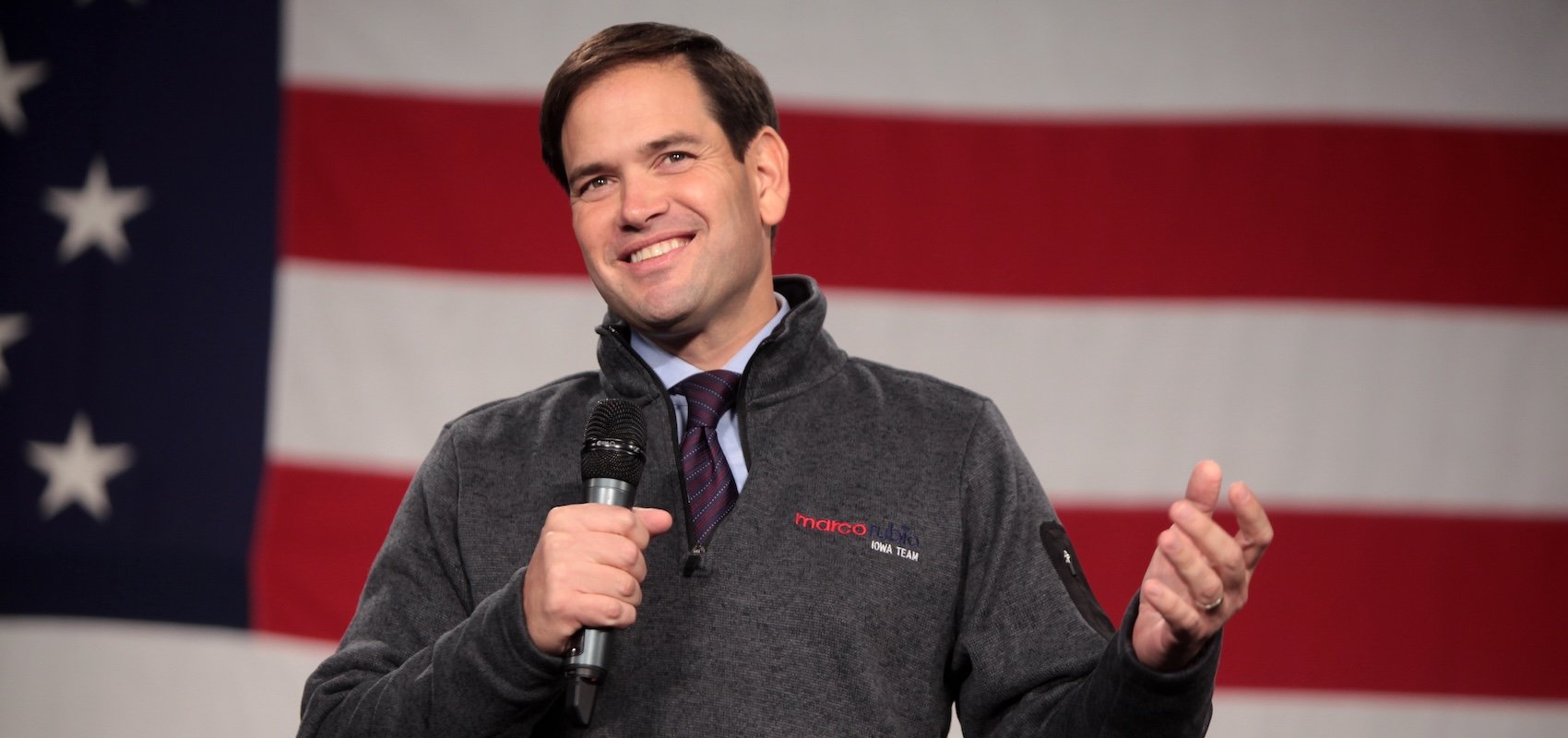
Yet here we are, deep into a second Trump term, and not only has the United States not fulfilled that prophecy, it has doubled down on what is arguably the most consequential defense of Europe in generations. Secretary of State Marco Rubio’s defining address to the Munich Security Conference on February 14 struck at the heart of America’s commitment, declaring that the United States and Europe “are part of one civilization . . . forged by centuries of shared history, Christian faith, culture, heritage, language, ancestry, and the sacrifices our forefathers made together for the common civilization to which we have fallen heir.” The speech echoes Churchill in June 1940, as he warned the besieged Britons that “[u]pon this battle depends the survival of Christian civilization. . . . [I]f we fail, then the whole world, including the United States, including all that we have known and cared for, will sink into the abyss of a new Dark Age.”
The idea that Europe, America, and the West share a common civilizational fate is no longer mere rhetoric but a cornerstone of U.S. policy. There was plenty of forewarning, especially in the November 2025 release of the National Security Strategy (NSS), which declared that “Europe remains strategically and culturally vital to the United States.” The subsequent State Department Agency Strategic Plan, released mere days ago, stated plainly that America is “bound to Europe through shared traditions, cultural heritage, political values, and familial ties,” and must foster a “civilizational alliance” with the Continent. Now, with the secretary of state himself emphasizing this point before European leadership at Munich, any doubt about the Trump administration’s understanding of the ties between America and Europe—and the consequent American interest in Europe—has been dispelled.
What matters to America is not NATO as such, but the nations within it. Those nations are not necessarily concurrent with their states, which are in several cases busying themselves with various forms of what both the NSS and Rubio call “civilizational erasure.” That erasure takes many forms, but can be synopsized into two major phenomena. One is the diminishment of the inheritance of ordered liberty that arose, uniquely, in Europe, as a product of the Continent’s religion and its specific experience. When Europeans are denied freedom of speech and conscience, when they are jailed for social media posts, and when the further diminishment of rights is a real consideration—as with the current British government’s efforts to cancel both jury trials and local elections—this erasure is underway.
The other phenomenon is, of course, the admission and importation of non-Europeans into Europe in numbers meaningful enough to dilute or even end the European character of the areas in which they settle. Islamists marching in support of Hamas in English cities attest to the outcomes there, as do beheaded French teachers and bollards protecting German Christmas markets from the now-routine vehicular attacks upon holidaymakers.
It is now policy that this erasure is unacceptable to the United States, both on grounds of sentiment, but more compellingly, on grounds of interest.
Woven into the Rubio critique at Munich, and throughout administration messaging on Europe, is an understanding that mirrors Churchill’s: As participants in a singular grand culture, we all rise or fall together. Bad policy in Europe becomes bad policy in America, and vice versa. For example, the patterns of European secularization and the collapse of religious adherence—with all the consequences attendant to that, from plummeting birth rates to the devaluation of human life—presage the American experience. And as Rubio noted, a Europe incapable of defending itself is by its nature a threat to American security.
One might argue, as German chancellor Friedrich Merz did in his own Munich address (much echoed by other European eminences), that this implicates America in the internal affairs of states and societies, and consequently in the adjudication of values. True enough, but the critique misunderstands the American endeavor. What Rubio expressed was nothing less than a setting-aside of the Westphalian settlement, durable as it has been since 1648. The Americans are reversing the nineteenth-century conflation of state and nation, and deemphasizing the seventeenth-century prioritization of the state above the nation. The nation, defined by Aristotle as the community possessing both philia and telos, is what gives the state its meaning and purpose—and when the state turns against it in the European context, the United States as the inheritor and creation of those nations will act accordingly. This is more than an expression of ideological preference: It is a strategic reordering on a level so fundamental, and so far-reaching, as to have been missed by nearly every proximate observer.
The consequences, both in Europe and America, will unfold across generations. America, so often accused of seeking the Americanization of other lands, now seeks what Europe’s own leadership will not in the defense and preservation of Europe as Europe. As Churchill put it: “[T]he New World, with all its power and might, steps forth to the rescue and the liberation of the old.”
Image by Gage Skidmore, licensed via Creative Commons. Image cropped.

YOU MIGHT ALSO LIKE
Timothée Chalamet Is Right About Art (ft. Suzy Weiss)
In this episode, co-founder and reporter for the Free Press, Suzy Weiss, joins Virginia and Germán to…
Trump’s Civilizational Project
Secretary of State Marco Rubio spoke at the recent Munich Security Conference. Last year, Vice President JD…
The Real JD Vance (ft. Frank DeVito)
In the latest installment of the ongoing interview series with contributing editor Mark Bauerlein, Frank DeVito joins…

