
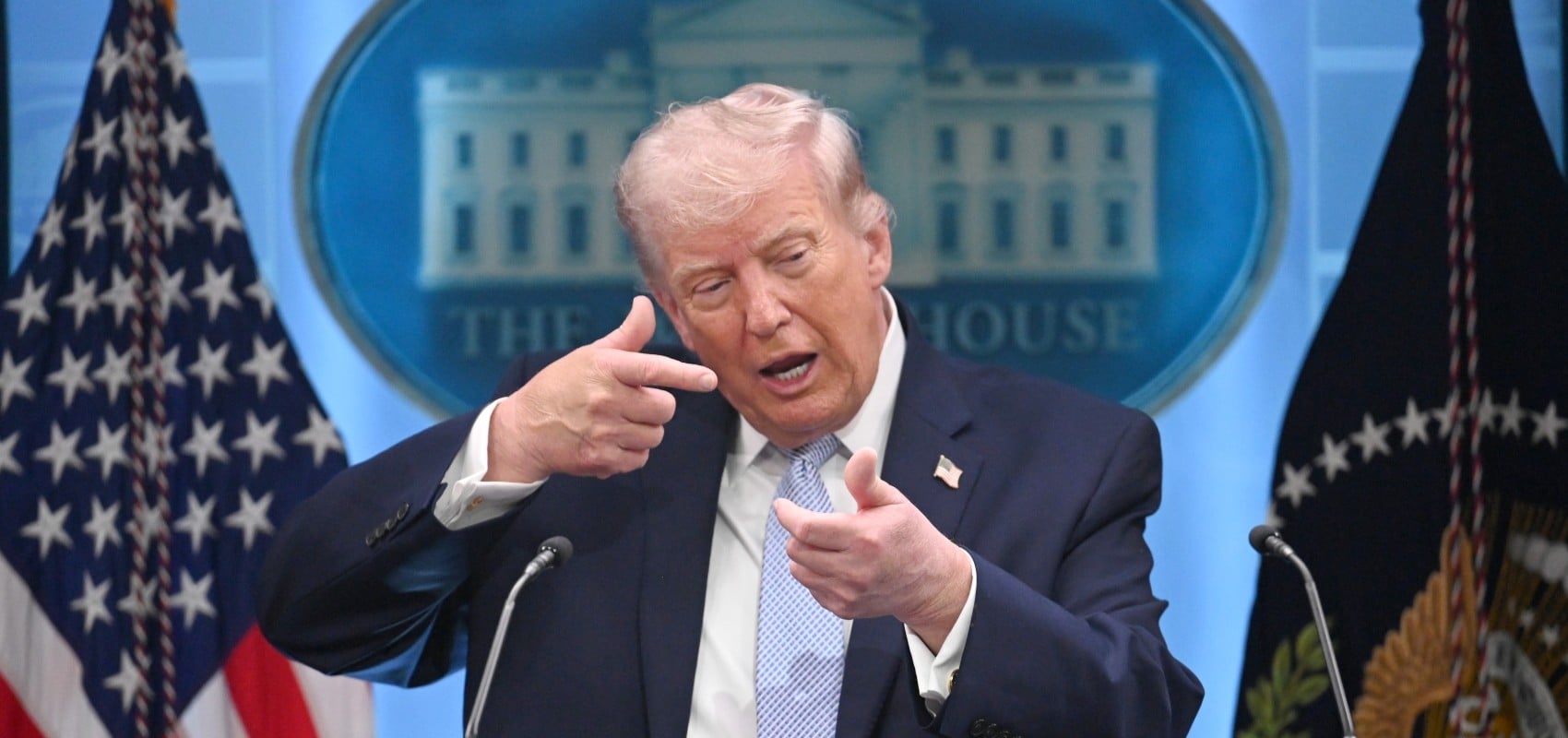
What we say matters. And the way we say it matters. This is especially true in times of war, when the moral stakes are high. Which is why I’m troubled by the annihilationist rhetoric coming from the White House. It numbs our souls and corrodes our moral sensibilities.
On Easter Sunday, as an often-extended deadline for Iranian acceptance of American terms was approaching, Donald Trump issued a statement on social media threatening the destruction of civilian infrastructure, should their leaders fail to comply. At a press conference on Monday, he amped up the threat: “The entire country can be taken out in one night, and that night might be tomorrow night.” The next day, Trump turned the dial up to eleven: “A whole civilization will die tonight, never to be brought back again.”
Some anxiously speculate that talk of annihilation means that the White House is seriously entertaining the use of nuclear weapons. I doubt that this is true. But talk of annihilation is wrong, even if meant as hyperbole designed to intimidate opponents.
The Ninth Commandment reads: “Thou shalt not bear false witness against thy neighbor.” This prohibition forbids lying, perjury, and misrepresentation that aims to harm others. The Christian and Jewish traditions read the commandment in a positive sense as well. We have a duty to be truthful, to speak honestly and without guile.
As is so often the case, the moral standards in our relations to others have a difficult time surviving the realities of public life. A candidate for office is often silent about many matters, because polling shows that his true beliefs are not popular. Or he exaggerates, pledging to lower taxes or deliver some other benefit to voters, when he knows full well that the promises are unlikely to be fulfilled, given political realities. Moreover, electoral politics is a “contact sport,” as they say. In the battle for electoral victory, candidates often make crude and distorting claims about their adversaries’ campaign platforms and personal qualities.
From the moment he came down the escalator in 2015, Trump has pushed the boundaries of political speech. To some degree, his crude and hyperbolic derogations of his adversaries manifested the paradoxical quality of electoral honesty. For decades, national politicians have relied on media proxies to circulate scurrilous accusations. Political figures themselves freely hurled character-assassinating labels such as “racist” and “fascist” against Trump, who fought back with equally blunt and incendiary rhetoric.
I agree with those who argue that heated political rhetoric (now common on the left and right) encourages unsteady souls to consider recourse to political violence. Those few whose moral sense is already dulled are further degraded. And all of us are soiled. Our civic imaginations are polluted; our standards are lowered.
In times of war, the dangers of undisciplined and exaggerated rhetoric are far more grave. As patriots, we should hope for the United States to emerge from the Iranian war in an advantageous position, capable of securing peace in the region and taming Iran. But it damages our collective moral sense if we are tempted to entertain immoral means toward that end.
Political leaders must serve the interests of those they govern. That often requires a serpent-like wisdom, which Jesus does not dismiss. I do not want those leading us into war to be like Uriah the Hittite, unwisely trusting and aboveboard, when circumstances require guile. In times of war, it is morally licit for governments to engage in deception. It is even permissible to deceive one’s own people, as is often done to keep up morale.
But political leadership has an educational dimension. Leaders have a duty to encourage virtue and restrain vice. In a democratic culture, this duty is severely tempered, if not overridden at times, by the imperative of representation. As many political thinkers have recognized, because leaders must win votes, democracy tends toward accommodation of that which is mediocre, even base.
Times of war are different. Lives are at stake. As the temperature of conflict rises, we are prone to bloodlust. Our moral vision can too easily narrow. In our technological age, the machines of war have become extraordinarily destructive. We don’t need to raise the specter of nuclear weapons. Nearly 100,000 people were killed over a two-day period when American warplanes firebombed Tokyo in March 1945.
From the outset of the war against Iran, the Trump administration has indulged in extreme and sanguinary rhetoric. Its officials imagine that they are intimidating America’s enemies and inspiring the American people. They’re wrong. Their war rhetoric, especially egregious statements about wiping entire civilizations off the face of the earth, degrades the American people and dulls our consciences.
Trump and his colleagues need to put an end to their exaggerated and irresponsible rhetoric.
Photo by Chen Mengtong/China News Service/VCG via AP


YOU MIGHT ALSO LIKE
How the State Failed Noelia Castillo
On March 26, Noelia Castillo, a twenty-five-year-old Spanish woman, was killed by her doctors at her own…
The Mind’s Profane and Sacred Loves
The teachers you have make all the difference in your life. That they happened to come into…
History’s Pro Tips on Iran
Nothing in human experience compares to the wars of the last 120 years. Their scope has grown…
