
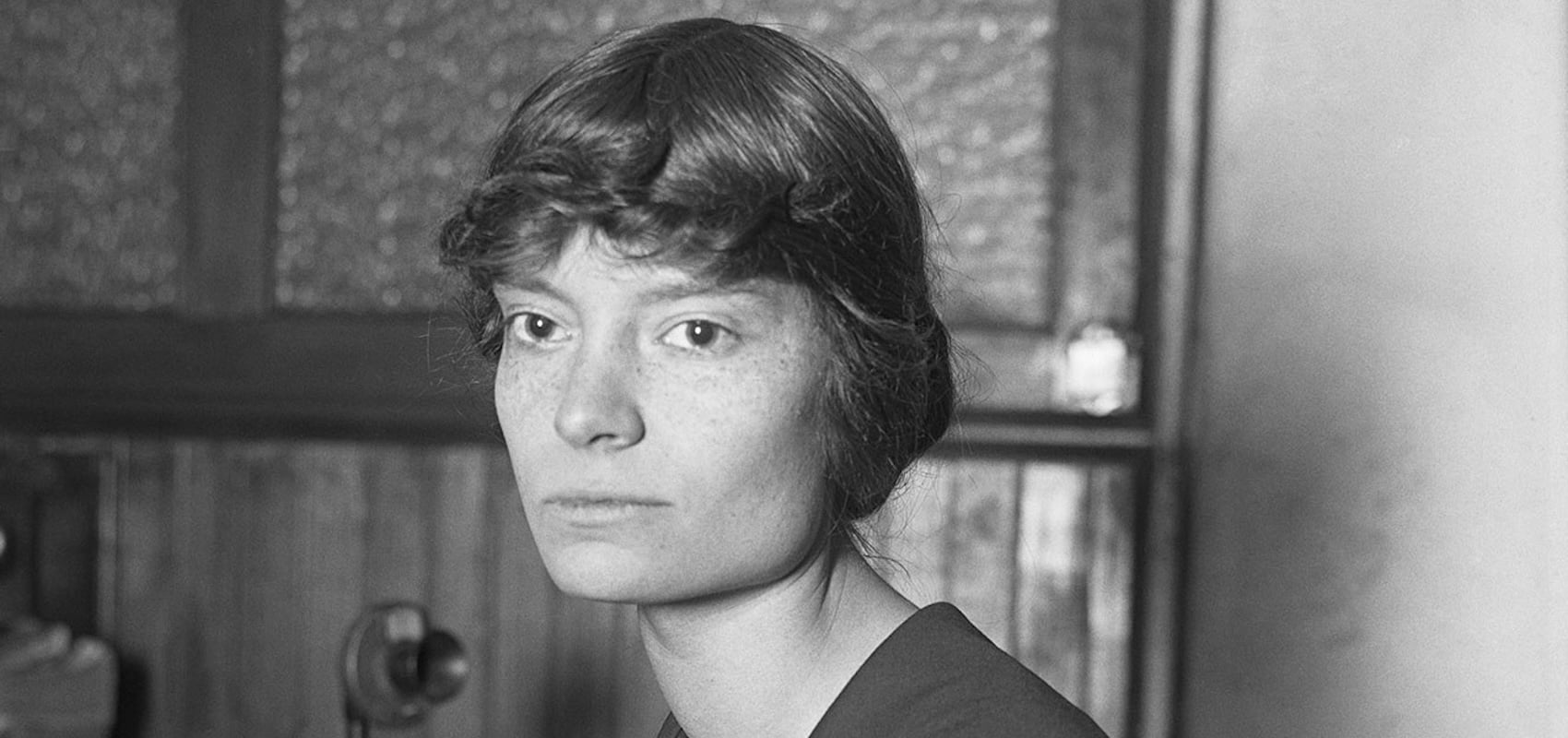
Twenty-six years ago, John Cardinal O’Connor launched Dorothy Day’s candidacy for sainthood: “It has long been my contention that Dorothy Day is a saint—not a ‘gingerbread’ saint or a ‘holy card’ saint, but a modern day devoted daughter of the Church, a daughter who shunned personal aggrandizement and wished that her work . . . might be the hallmark of her life rather than her own self.” Cardinal O’Connor’s petition was met with support, and Day was declared a servant of God by the Vatican. In 2012, the U.S. Conference of Catholic Bishops unanimously recommended opening a cause for her canonization, which Pope Benedict XVI endorsed. There matters have rested.
Slow roads to canonization are not uncommon in the Catholic Church. The multi-step process is characterized by painstaking investigation. However, there arguably has never been a case as complicated or extreme as Dorothy Day’s. Her extraordinary life inspires comments like Cardinal O’Connor’s. At the same time, no saint has ever presented the radical opposition to the state or its right of self-defense as Day did. Day wrote, spoke, and acted like a prophet. She sought radical changes in society, and it is unclear whether these activities were even close to aligning with longstanding magisterial teachings. It is in these details that the biggest questions for the Vatican reside, a point hinted at by the fact that throughout the Catholic world many respect what Dorothy Day did but few listen to what she preached.
Some understanding of the Church’s pathway to sainthood is essential to considering Day’s case. Papal acceptance of a cause completes the first step. Honored as a servant of God, Day is recognized as having lived a life of “heroic virtue.” The next step is to be declared venerable. Those originating a cause must provide voluminous documentation to the Vatican’s Dicastery for the Causes of Saints. That office painstakingly examines the record, searching for a life lived in accord with Catholic faith and morals and for doctrinal orthodoxy in what the person wrote, taught, and did. After venerable, the next stages, blessed and saint, are only tests of one and then two miracles. For Day’s cause, the venerable stage’s examination of magisterial fidelity will be the crucial test.
The foundation of Day’s cause is her life of heroic virtue; this the Church defines as consistent and extraordinary efforts to live the gospel. Day’s efforts were extraordinary. Following her 1927 conversion to Catholicism, she focused on living the “corporal works of mercy.” These embody the instructions Jesus specified in the Sermon on the Mount. Beginning in 1933, Day’s Catholic Worker Movement (CWM) put those works into practice. Opening “houses of hospitality,” they fed hundreds of the destitute daily. The workers collected clothes for redistribution to the needy. Those with no place to stay could find shelter at CWM houses and farms. Day’s example inspired others to found similar facilities across the country. During desperate economic times, the CWM provided proof that charity and concern for the poor were not extinguished. This work continued through World War II and into the postwar period.
Many who were helped stayed for years. More than a few behaved disruptively. At times these trials tested Day severely. An instructive example is found in Loaves and Fishes, her account of the Catholic Worker Movement. Day shares a longish tale of one Maurice O’Connell, a rough Irishman who stayed for ten years at one of the farms. O’Connell was a former soldier who “had no truck with Negroes or Jews,” and who described his fellow workers as “thieves, drunkards and loafers, the lot of them.” He stole food and tools and clothes and complained that the community never gave him anything. His behavior caused Day to wonder out loud, “Where does the folly of the Cross begin or end?”
Day provided a more extensive account of such trials in a 1942 article in her paper, The Catholic Worker:
Let those who talk of . . . sentimentality, come to live with us in the cold, unheated houses in the slums. Let them come to live with the criminal, the unbalanced, the drunken, the degraded, the pervert. (It is not the decent poor . . . the decent sinner who was the recipient of Christ’s love.) . . . Let their flesh be mortified by cold, by dirt, by vermin; let their eyes be mortified by the sight of bodily excretions, diseased limbs, eyes, noses, mouths. . . . Let their ears be mortified by harsh and screaming voices. . . . Love in practice is a harsh and dreadful thing compared to love in dreams.
This graphic account illuminates why Dorothy Day inspires thoughts of sainthood. Most prefer working with the “deserving poor” or dealing with the poor through intermediary charities. Day disciplined herself to consider the real conditions of the poor as a school for divine love. In doing so, she cut through the safeguards that shield one from what’s really involved in loving the poor.
So, the case for Dorothy Day’s heroic virtue is strong. What is the other side of the ledger?
Day’s early life was scandalous. She lived unmarried with men, had a child out of wedlock, and had an abortion. However, following her conversion, Day sincerely repented of these actions. Throughout the remainder of her life, Day lived fully obedient to Church moral teachings. Day didn’t question Church dogmas like the Immaculate Conception. She also became a forceful opponent of abortion. She called it the greatest tragedy of her life. There are ample precedents of the Church finding early missteps to be no barrier to sainthood. Honest repentance and subsequent proper living are the standards. St. Augustine is perhaps the best known but certainly not the only example of such a canonization. Day’s early life and subsequent repentance are well aligned with these Church standards.
As for the activist side of the ledger, Day’s political progression moved from communism to anarchism to Catholicism. Though a strict Catholic in many ways, how Day taught, wrote, and behaved was in acute conflict with key Church teachings. By doing so, Day’s actions and advocacy sought to nullify some of the longest standing Catholic doctrines. This conduct should be the key obstacle in the tests of her fidelity to Church teachings.
The doctrines in question are state sovereignty and the Church’s just war theory. Both date from the early days of the Church. Both have been continuously reaffirmed. Both are rooted in Scripture and recited clearly in the Catechism. Scripture treats the state as ordered by God for the pursuit of the common good, the preservation of order, and the protection of all, especially the most vulnerable (Rom. 13:1–7; I Peter 2:13–17). This stance has been repeated down to the present in papal encyclicals (Mater et Magistra) and at Vatican II (Gaudium et Spes).
Just war theory’s articulation goes back to St. Augustine and was formulated in detail by St. Thomas Aquinas. The Catechism emphasizes that recourse to arms is justified when necessary to defeat grave moral evil: “The defense of the common good requires that an unjust aggressor be rendered unable to cause harm. . . . The use of force must be proportional. . . . Legitimate defense can be not only a right but a grave duty for one who is responsible for the lives of others.” Pope Francis, while expressing concerns about how the doctrine may be misused, repeatedly affirmed the right of self-defense, most recently in Fratelli Tutti.
Church doctrines are not infallible teachings; they represent “prudential judgments” that can develop as conditions change. However, the longstanding nature of just war theory and state sovereignty and their continuous support through councils and papacies suggests they are as close to permanent teaching as a doctrine can be.
Dorothy Day did not believe in state sovereignty or just war theory.
Day’s attitudes toward the state remained rooted in their anarchist origins. She felt the state and the market economy inevitably served the interests of the wealthy and powerful, and she rejected them totally as a means for societal progress. A flavor of these attitudes is contained in this quote from 1954: “We need to change the system . . . this rotten, decadent, putrid industrial capitalist system which breeds such suffering in the whited sepulcher of New York.” Most important, Day backed up these sentiments with citizenship-defying actions. She never voted. She refused to pay taxes.
Day’s rejections of just war doctrine and the right of self-defense were even more dramatic. This came into sharp relief following the Japanese attack on Pearl Harbor. Shortly thereafter, Day editorialized: “We must make a start. We must renounce war as an instrument of policy. . . . Even as I speak to you, I may be guilty of what some men call treason. But we must reject war. . . . You young men should refuse to take up arms. Young women tear down the patriotic posters. And all of you—young and old—put away your flags.”
This call for non-cooperation was followed by Day actively promoting the widest possible conscientious objection as a response to WWII conscription. This position continued through the Korean conflict and especially during the Vietnam War, when Day publicly praised those burning their draft cards.
The curious thing about Day’s pacifist stance was its insensitivity to the grave moral evil invited by giving up the right of self-defense. Day never seemed to care about who or what was on the other side of an existential conflict. If widely adopted, Day’s stance of non-resistance to Nazis, Japanese imperialists, and Soviet communism would likely have resulted in the Nazification of Europe, the complete extermination of Jews on that continent, the subjection of much of Asia, and the later extension of totalitarian rule to Western Europe. Nuclear deterrence would have been discarded as a national security policy. Day’s willingness to surrender the right of self-defense reached its epitome in an April 1948 editorial when she wrote: “It is better that the United States be liquidated than that she survive by war.”
The starkness of Day’s pacifist position, and its conflict with the centuries-long Church doctrines, should pose the gravest obstacle to her sainthood cause. Day’s combination of extreme advocacy, its persistence across decades, and her acting to cause others to refuse national service amounts to a practical nullification of the Catechism teachings quoted earlier. How is this orthodoxy and obedience to the magisterium?
Herein lies the dilemma of Dorothy Day and whether her cause will extend the recent trend of relaxing standards for sainthood. After the death of Pope John Paul II, the Dicastery for the Causes of Saints, responding to courtyard calls of “Santo subito,” quickly canonized the deceased pontiff. Shortly thereafter, Pope John XXIII and Pope Paul VI were also declared saints. In doing so, the dicastery waived several longstanding guidelines. Typically, there is a five-year waiting period after the person’s death before a cause for sainthood can be opened. This was waived in Pope John Paul II’s case. Two confirmed miracles are also required to advance from blessed to saint. This was waived in Pope John XXIII’s case. As for Pope Paul VI, while these specific criteria were met, his life of heroic virtue was less obvious than those of either his predecessor or his successor.
These are the complications surrounding Dorothy Day’s cause for sainthood. They are compounded by the enormous and authentic nature of her heroic practice of the corporate works of mercy. This side of Day is easy to admire. Still, it is hard to see how she meets the standard of doctrinal orthodoxy. Saints are supposed to be models for veneration and imitation. Does the Church want, through a Day canonization, to endorse adoption of a defenseless posture in the face of grave moral evil?
Perhaps the best solution would be to leave Day as a servant of God, honor her extraordinary service to the poor, and respect her own wishes. Day was once quoted as saying: “Don’t call me a saint. I don’t want to be dismissed that easily.” Letting the debates about Dorothy Day rage on will help ensure that she, and her life of heroic virtue, aren’t dismissed.

YOU MIGHT ALSO LIKE
What the Wall Street Journal Didn’t Print
On March 21, the Wall Street Journal published a lengthy profile of the pope as its “Saturday…
Looking for the Real Catholic Church in New York City
Young Catholics are on the rise in New York City, according to the Washington Post, the New…
Pitch for a Catholic Novel
Imagine a middle-aged white man in good clothes waiting for a morning train at a station of…
