
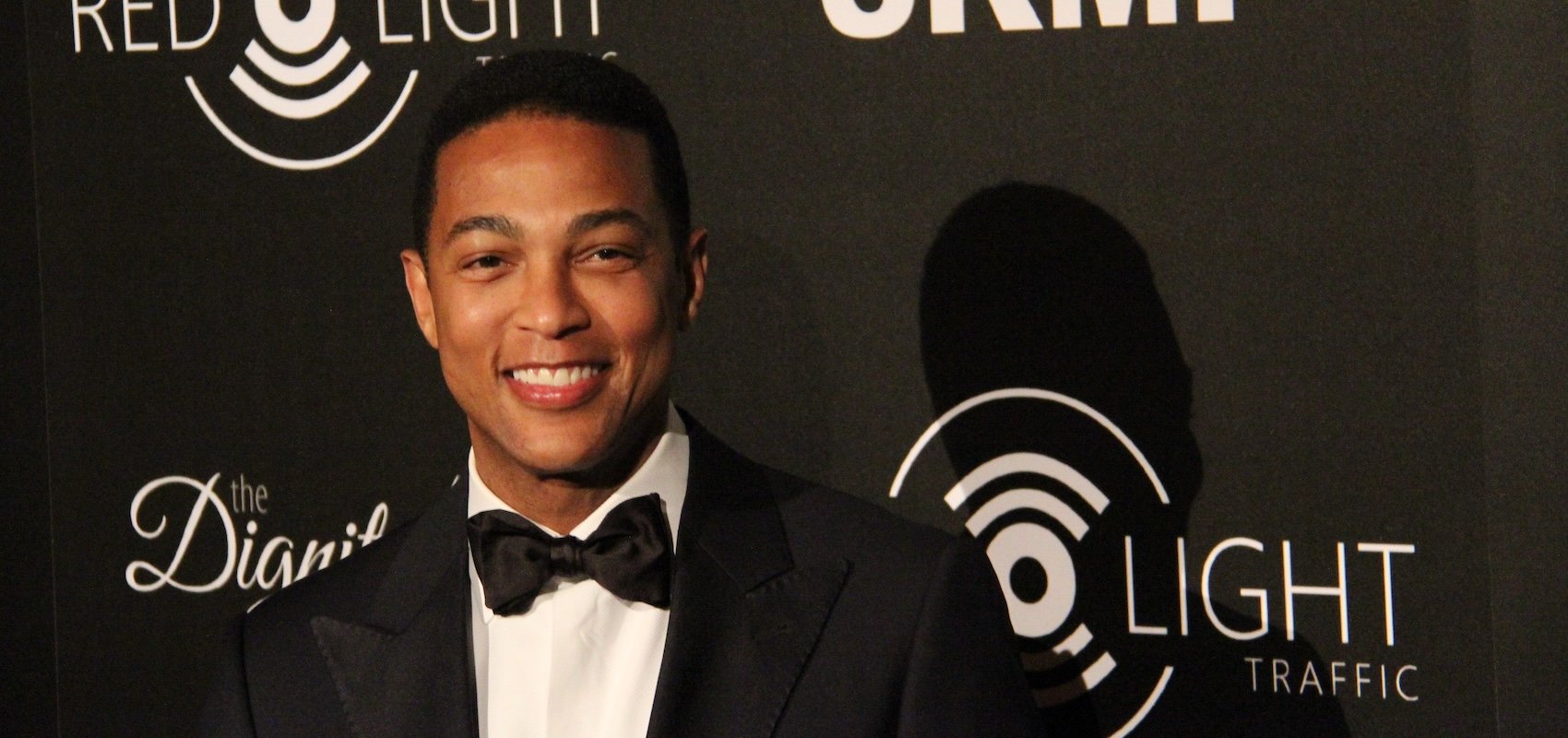
Don Lemon was arrested last week and charged with conspiracy against religious freedom. On January 18, an anti-ICE mob disrupted the Sunday service at a Minnesota church because the pastor, David Easterwood, also heads the local ICE field office. Lemon followed directly on the tails of the horde and pushed a microphone into the minister’s face. When the minister expressed rightful indignation at the breach, Lemon lectured him about the “Constitution” and the “First Amendment.”
But what are the rights of the First Amendment? And where does the left’s sense of moralistic entitlement come from? The amendment protects five rights: freedom of religion, speech, the press, assembly, and petition. Liberals, however, have tended to treat the First Amendment as a grab bag of uncoordinated, potentially conflicting rights. That relativist leveling of rights usually leads people to push their own preferences.
The most egregious example of that vision of uncoordinated rights is how the left has generally pitted the amendment’s non-establishment clause and free exercise clause against each other. As a result, the governing principle of religious freedom jurisprudence has, in practice, become: “Who can cobble together five Supreme Court justices to make a majority?”
As Richard Neuhaus noted in The Naked Public Square, however, the Founders arguably protected freedom of religion and treated non-establishment as a means of assuring freedom of religion, not a self-standing criterion to make social life free from religion and its influence. They also arguably created a hierarchy of rights, in which religious freedom came (and is enumerated) first. The human right to worship God is a pre-political right, not one generously conceded even by the Constitution. And God trumps the state, so that freedom of religion precedes freedom of speech and its instantiation in the press.
Interfering, then, with religious worship is not freedom of protest assembly. Nor is covering such encroachment on a worship service freedom of the press.
Behind this clever attempt to hide behind a “freedom of the press” fig leaf is the general leftist conceit that secularism is the national ethos. On that “naked public square,” a religious service has no special or inherent status except to its participants. That status is merely an “interest” competing with the “interests” of reporters to report and protestors to protest. At best, the courts have to referee the competition among rights.
That vision is arguably not what the framers of the First Amendment intended. Buying into Lemon’s argument is to concede the general misrepresentation of the First Amendment as a gaggle of rights whose prioritization is largely a matter of momentary power.
The relativism behind the precedence of rights in the First Amendment actually masks a deeper orthodoxy: the conviction of moral superiority on the part of the protestors. Members of the swarm that invaded the church and were subsequently interviewed justified their actions by claiming the minister could not be a good pastor if he worked for ICE. If the congregation was unaware of that affiliation, they were just dispelling its ignorance. If the congregation was aware of the affiliation, then the protestors were exposing its complicity in ICE’s alleged “evil.” The morally woke, often more “spiritual” than “religious,” readily establish themselves as arbiters of what is (and isn’t) “real Christianity.” Christians seem to be the one group denied the right to self-identify.
Minnesota’s slow-motion insurrection against ICE was not unique in its church criticism. The same rhetoric was thrown in the faces of Christians who did not acquiesce in primarily blue state shutdowns of religious worship during COVID.
The paradox is that the government eventually sought to hold Lemon accountable under the FACE Act, a federal law that—paradoxically—defines and regulates what is and isn’t a protest in front of abortion clinics, as well as houses of worship. The behavior of the “protestors” does not correspond with what is allowed and not allowed according to a law written by the left to protect the clinical tabernacles of what Gloria Steinem called the “sacrament” of abortion. The FACE Act is explicit about allowing protests only outside the protected facility; the facility itself is inviolate. The left can hardly claim the norms are a “vast right-wing conspiracy” given that the FACE Act was a priority of the left in the first Clinton administration.
Lemon’s attempt to sanitize the intrusion by posing as a reporter should fool no one. Covering illegal activity is not simple “news.” It could arguably be conspiracy. At the very least, it broaches questions about a so-called journalist’s duties of restraint. Confusion about the priority of rights in the First Amendment should not be used to cloak it.
Image by Neon Tommy, licensed by Creative Commons. Image cropped.

YOU MIGHT ALSO LIKE
Timothée Chalamet Is Right About Art (ft. Suzy Weiss)
In this episode, co-founder and reporter for the Free Press, Suzy Weiss, joins Virginia and Germán to…
Trump’s Civilizational Project
Secretary of State Marco Rubio spoke at the recent Munich Security Conference. Last year, Vice President JD…
The Real JD Vance (ft. Frank DeVito)
In the latest installment of the ongoing interview series with contributing editor Mark Bauerlein, Frank DeVito joins…
