
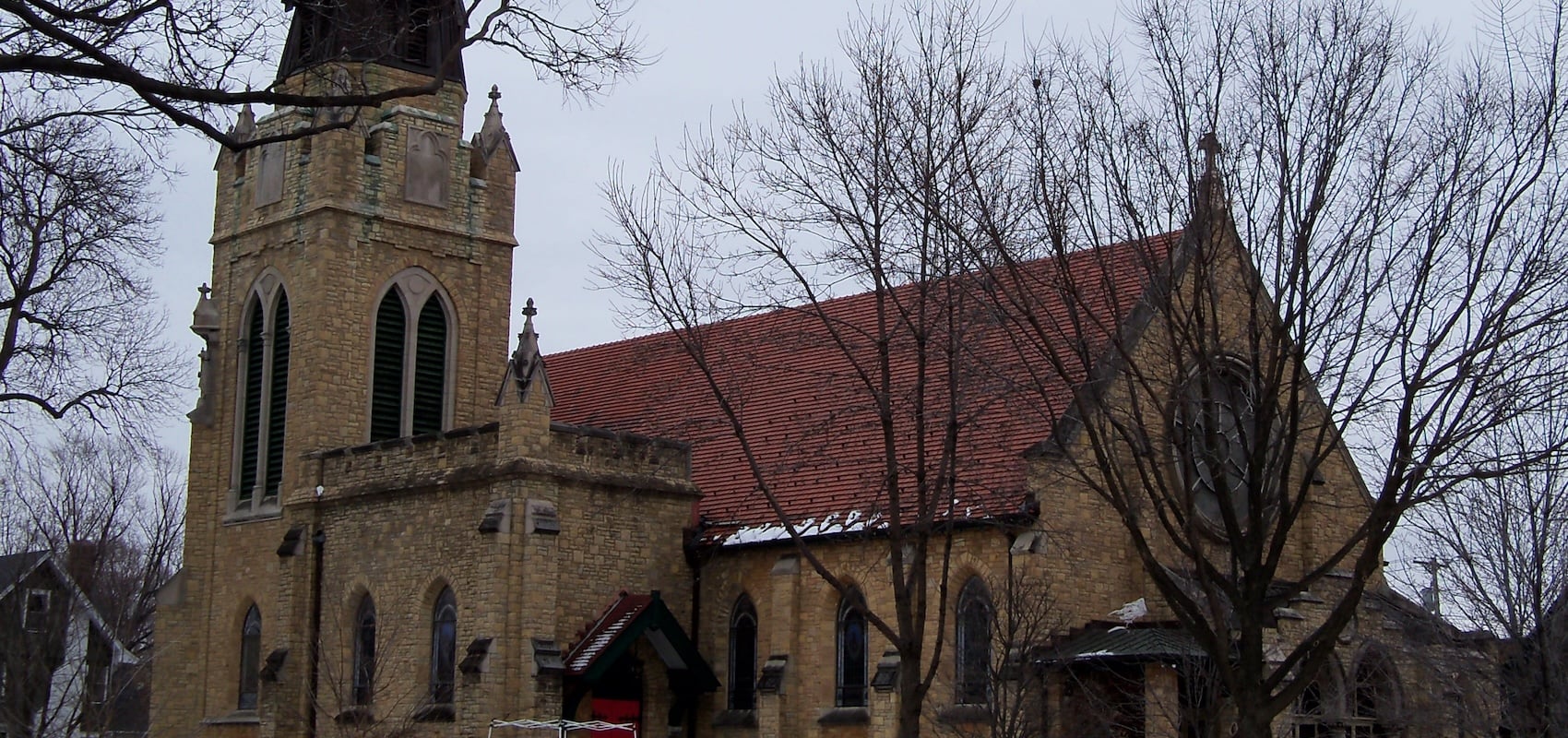
The recent disruption of a church service in St. Paul, Minnesota, by anti-ICE protesters has prompted familiar legal arguments. Commentators invoke the FACE Act, which prohibits interference with an individual’s right to worship. They appeal to Paul’s exercise of Roman citizenship. And they protest the intrusion into a “private” space. These arguments have their place. But they begin in the wrong posture—at least theologically. To defend worship as a matter of privacy is already to concede a central liberal assumption: that Christian worship is a private affair. To adopt this frame is to neutralize the church’s public character. It is, as Peter Leithart puts it, to embrace liberalism’s “heretical ecclesiology.”
The early church offers a very different model. As Leithart observes, early Christians could have claimed protection under Roman law by presenting themselves as a cultus privatus, a voluntary association devoted to personal spirituality. They did not. True to their Old Testament inheritance, they insisted that worship is public, that the church’s common life is public, and that the gathering of God’s people cannot be confined to the private sphere.
The church’s self-description makes this clear. Koinonia—used by Paul to describe the church’s shared life—is the term Aristotle uses in Politics to describe the basic form of political association. Even more striking is the use of ekklesia. In the Septuagint, ekklesia names Israel’s public assemblies: covenant-making at Sinai, dedication of the temple, public repentance, and the reconstitution of the people after exile (Exod. 19; 1 Kings 8; Neh. 5–7; Deut. 23:1). In Greek usage more broadly, ekklesia denoted the governing assembly of the polis. When Christians took this name, they were not positioning themselves as one sect among others under Rome. They were claiming continuity with the covenant people of God and presenting themselves as the visible enactment of God’s kingdom. Worship belongs to this public reality. It proclaims Christ’s comprehensive rule and embodies an alternative politics.
Augustine provides the deepest account of why such worship matters for public life. Throughout The City of God, he assumes the political significance of true worship. Pagan religion, Augustine argues, mirrors the ambitions of the earthly city: pride, honor, domination. It can motivate civic virtue only superficially and cannot reform the heart. True worship, by contrast, is a genuine public good. It unifies a people by directing them to God as the common good; it orders loves by freeing citizens from idolatry; it forms virtue through participation in Christ’s sacrifice; and it humbles a people by rooting them in grace rather than glory.
For Augustine, worship neither sanctifies the state nor withdraws from it. It relativizes politics by denying it ultimacy. Earthly peace is real but provisional. The church already tastes a higher peace and so undermines political idolatry simply by being itself. In this sense, the church is the first and primary polis—the visible form of the city of God on pilgrimage.
We can combine these ecclesiological correctives with classical Reformed conceptions of civil rule and its relation to true religion. Magistrates are not called to coerce belief, but to remove obstacles, maintain order, and enable the church to live and worship in peace. This is the Reformed doctrine of “nursing fathers” and their circa sacra duties. Calvin describes the magistrate as supplying what is necessary for the church’s flourishing: peace, protection, and space. The Jus Divinum Regiminis Ecclesiastici, an authoritative exposition of the Westminster Assembly’s political and ecclesiological teachings, affirms that rulers are to remove all external impediments to true religion, to see that the church is protected, and to regard it as an honor to do so. Even the 1788 American edition of the Westminster Standards retains the language of the magistrate as “nursing father” and enjoins prayer that the church be “countenanced and maintained by the civil magistrate.” Francis Turretin and later Reformed theologians insist that magistrates restrain opposition to Christian worship and provide all necessary external conditions for the church to thrive. William Symington captures the logic with clarity: A nation enlightened by revelation is morally bound not merely to tolerate the true religion, but actively to favor and support it. Desecration of the Lord’s Day is a legitimate concern of civil authority, harmful to both church and commonwealth, and highly displeasing to God.
A desecration has occurred. Scripture consistently treats such acts as grave. The prophets judge nations and rulers—even pagan ones—for desecrating sacred space. Conversely, Scripture commends rulers who protect worship, including not only reforming kings in Israel but even foreign rulers such as Cyrus and Nebuchadnezzar, who serve as instruments of God’s providence.
This concern extends into the New Testament. In 1 Timothy 2, Paul commands prayer for “all in authority, that we may lead a peaceful and quiet life in all godliness and dignity.” Classical Protestant interpreters rightly understood this prayer as bound up with the magistrate’s nursing-father role: to provide the conditions under which the church may gather, worship, and live faithfully. Prayer for rulers is not concerned only with their salvation, but with their fulfillment of God-given responsibilities toward the church’s public vocation.
This insight resonates across Protestant political theology. Karl Barth insists that the state, though fallen, belongs to Christ and must maintain outward justice and peace so the church may act according to its calling. Dietrich Bonhoeffer emphasizes that government exists to establish external righteousness and provide the conditions for free worship. Oliver O’Donovan provocatively argues that, after Christ’s resurrection, secular authorities exist provisionally to serve his kingdom by providing the social space the church’s mission requires. In each case, the state’s task is not to dominate the church, but to externally facilitate its vocation as a public assembly under Christ.
The church’s worship is public.
Christians are called to endure disruption with patience and hope (1 Peter 2–4). But they may also appeal to rulers to fulfill their divinely entrusted duties. Such appeals are not demands for privilege or instruments of coercion. They are invitations to act as nursing fathers, ensuring that public worship—the enactment of Christ’s kingdom—is possible. Worship is public. The church is public. Liberalism’s attempt to privatize worship is an ecclesiological error that neutralizes the church’s witness.
The stakes are theological, social, and political. In worship, the King of kings is acclaimed, the new humanity is made visible, and the church anticipates the eternal polis of God. Civil authorities exist provisionally to serve this mission. Minnesota is not an anomaly. It is a reminder that the church remains a public community under Christ—and that rulers are called, as Paul instructs in 1 Timothy 2, to ensure that she may worship in peace.
Image by AlexiusHoratius, licensed via Creative Commons. Image cropped.

YOU MIGHT ALSO LIKE
Turned Away on Palm Sunday
In politics, diplomacy, war, or pretty much any field of human interaction, one must contend not only…
Timothée Chalamet Is Right About Art (ft. Suzy Weiss)
In this episode, co-founder and reporter for the Free Press, Suzy Weiss, joins Virginia and Germán to…
Via Crucis, 2026
The Way of the Cross—and the third, seventh, and ninth stations in particular—has been an especially appropriate…
