
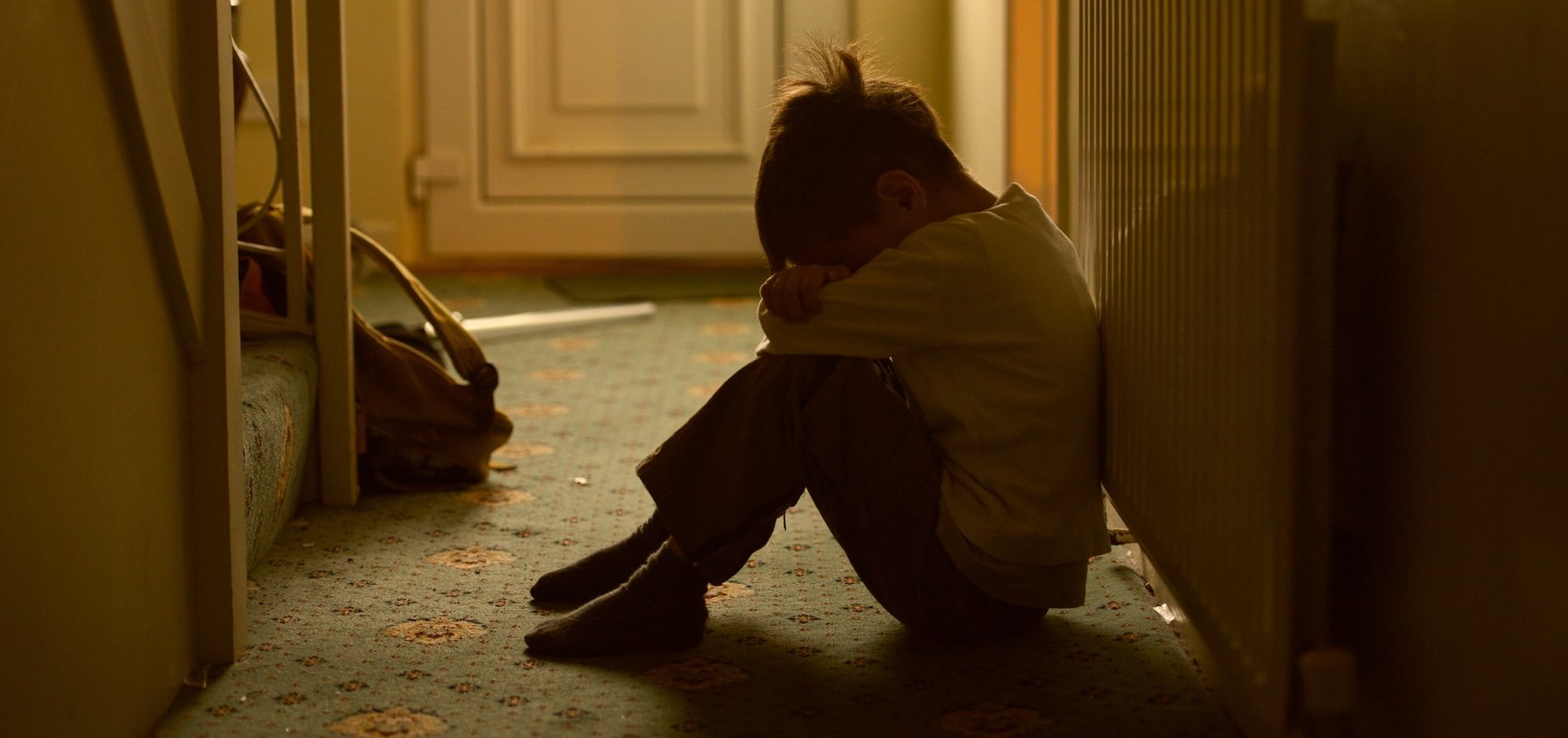
Gay marriage did not merely redefine an institution. It created child victims. After ten years, a coalition of Catholic and Protestant leaders has come together to say: no more. The Greater Than campaign is dedicated to defending the rights of children by urging the Supreme Court to overturn Obergefell v. Hodges.
The debate that preceded Obergefell, which imposed same-sex marriage on all fifty states, was relentlessly adult-centric. Proponents argued that gay adults would be harmed—emotionally, socially, and legally—if the definition of marriage were not upended. Opponents generally responded in kind, warning that religious adults would be harmed if it were. Both sides framed marriage as a contest between adult interests and adult liberties. Both sidelined the true victims of marriage redefinition: children.
For gay marriage supporters, that omission was not accidental. It was essential. Children pose an inconvenient problem for any attempt to redefine marriage around adult desire rather than natural reality. Marriage exists because children exist, because they are conceived through the union of a man and a woman, and because they need the protection, stability, and care of a father and mother over time. To acknowledge children honestly would have required conceding that marriage is not merely a vehicle for adult fulfillment, but a child-protecting institution ordered toward permanence, exclusivity, and sexual complementarity. So children were largely written out of the story.
Why did only a handful of gay marriage opponents directly focus on the impact to children, while many others decided that it was bakers and photographers who would be the primary victims of gay marriage? I can’t answer that. But the latter’s argument failed to sway either the culture or the courts.
Ten years later, children have paid the price for being cut out of the conversation.
Parenthood statutes have been stripped of sexed terms, regarding mothers and fathers as interchangeable “parents”; infertility has been reclassified so that same-sex couples can deliberately produce motherless or fatherless children with the help of insurance subsidies; birth certificates have been altered to legally exclude a child’s biological parent; new parentage pathways have been created that bypass both biological and adoptive safeguards. The impact of Obergefell was quite simply the reduction of children to legal accessories to be acquired by any and every adult.
As I explained in First Things last fall, the problem with gay marriage is not confined to the children who are intentionally made motherless or fatherless through same-sex unions, surrogacy, or donor conception. The problem is broader—and far more dangerous. Same-sex marriage requires the state to downgrade, and often eliminate, the importance of biology in the parent-child relationship. If the state can assign parentage to a non-adoptive genetic stranger based solely on adult intent, it can more easily unassign parentage from a biological mother or father. Turns out, the answer to the question, “How does my gay marriage affect you?” is: in the worst way possible.
The definition of marriage is a matter of justice to children. After ten years of child victimization at the hands of adult “equality,” the Greater Than campaign intends to fight back on behalf of the only class of people who never consented to this social experiment. We seek to influence three areas:
- The Law—We will unapologetically advance new laws and defend existing laws that prioritize the natural family and children’s needs for their own mother and father. The Court will eventually be forced to choose: adult desires or child welfare. We will present them with the data, stories, and legal framing so that when the time comes, they will side with the kids.
- The Culture—We are changing the national conversation. With the help of conservative influencers and organizations, we will help our countrymen understand the direct line between gay marriage and child victimization. This isn’t about whether two adults love each other. It’s about what children need to thrive, and what the adults should be doing for them.
- The Church—The Church has a rich heritage of being the greatest protectors of children. We have tapped church leaders to build resources to train Christians to reclaim that role.
In assembling this coalition, I was clear about who needed to be at the table. I wanted both Robert George and Albert Mohler; Allie Beth Stuckey and Lila Rose; Word on Fire and the Colson Center. We need high-profile Catholic and evangelical leaders not because our traditions are identical, but because our responsibility is shared. Too often, Christians fall into the habit of critiquing the failures of the other camp and damage the power we have to move as one body. As a Bible-thumping wife of a Baptist pastor, I say: enough is enough. When protecting the most vulnerable, unity is not optional.
Christians cannot stand quietly by while children’s rights to their mother and father are systematically deconstructed, regardless of whether the destruction is labeled a civil right, a constitutional mandate, or as being on “the right side of history.” You’re never on the right side of history when promoting child victimization.
Throughout the ages, Christians have confronted cultural forces that treated children as expendable, be it infanticide, abortion, abandonment, or exploitation. They did not win those battles by retreating into pseudo-biblical evasions like, “I don’t want to be political; I just want to preach the gospel.” Christians prevailed by insisting, again and again, that the weak must never be sacrificed for the strong—and by refusing to remain silent while that sacrifice was normalized, legalized, and enforced. For two thousand years, Catholics and Protestants alike have responded to threats against children in the same way: by telling the truth, even when it infuriates the adults who benefit from the lie. The Greater Than campaign hopes to join that great cloud of witnesses.
Ten years ago, children were ignored in the marriage debate. Today, headline after headline after headline makes them impossible to ignore. The question is no longer whether marriage redefinition has consequences for children. The question is whether we will have the moral courage to do something about it.

YOU MIGHT ALSO LIKE
Deliver Us from Evil
In a recent New York Times article entitled “Freedom With a Side of Guilt: How Food Delivery…
Natural Law Needs Revelation
Natural law theory teaches that God embedded a teleological moral order in the world, such that things…
Letters
Glenn C. Loury makes several points with which I can’t possibly disagree (“Tucker and the Right,” January…
