
Georg Friedrich Philipp von Hardenberg, better known by his pen name Novalis, died at the age of twenty-eight. During his short life, he was prolific enough to cement his legacy as one of Germany’s greatest Romantic poets. Aside from publishing several books in his lifetime, a vast trove of his philosophy and poetry has emerged since his death in 1801. His most famous work, the prose poem Hymns to the Night, speaks in an eternal and universal tongue: faith despite grief, hope despite death, Christ despite crisis.
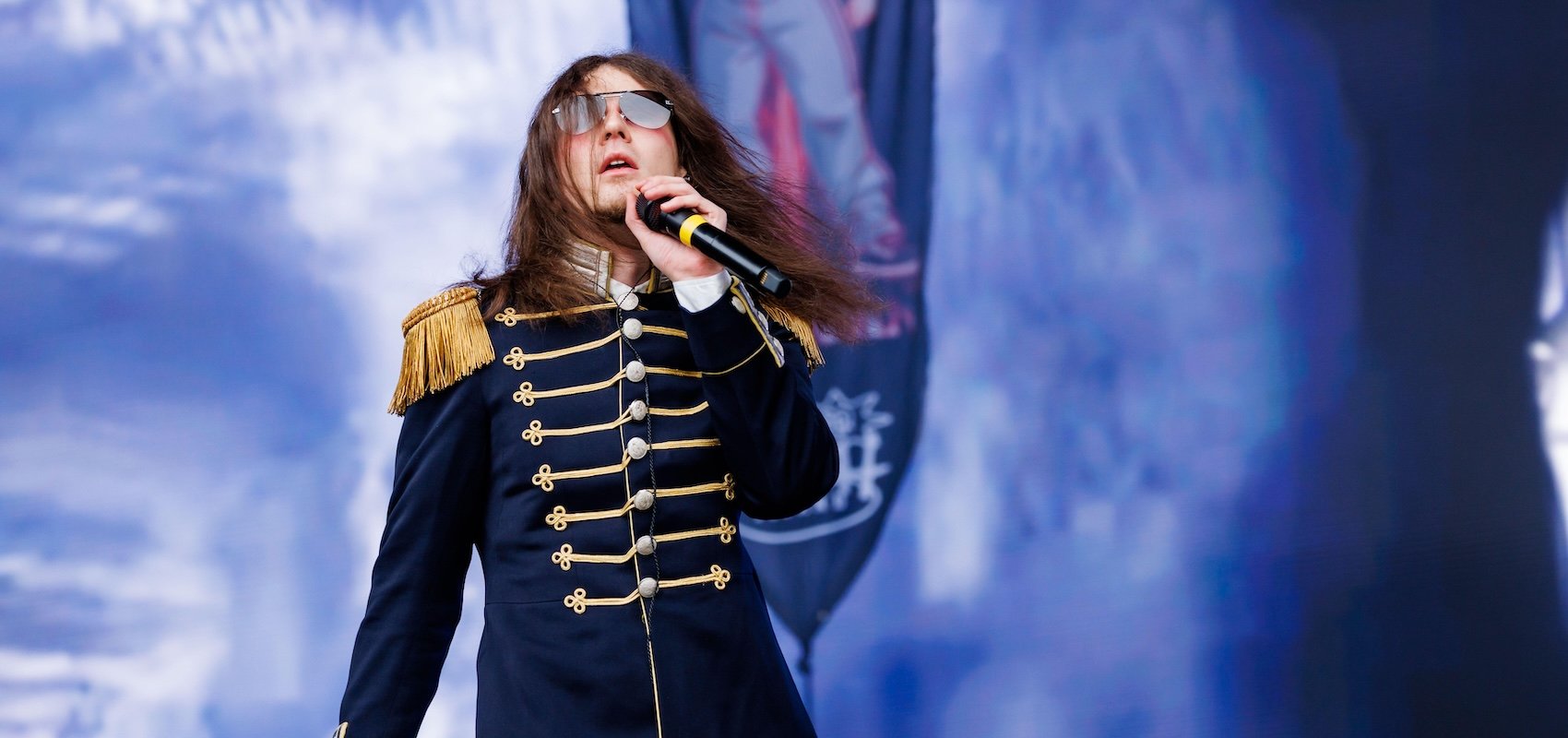
Swedish artist Benjamin Reichwald, better known by his stage name Bladee, is an unlikely successor to Novalis. After starting out in the underground rap community on SoundCloud alongside his friend and fellow rapper Jonatan Leandoer (Yung Lean), Reichwald rose to prominence in the world of hyperpop, a genre that blends electronic dance music with rap and experimental production.
The music is not for everyone. The sound can be abrasive and the lyrics offensive. Bladee has taken the genre in his own direction, however, infusing the music with a prophetic voice that sets him apart from his peers. During his world tour last year, he sold out stadiums while performing songs with titles like “ONLY GOD IS MADE PERFECT” and “St. George the Martyr.” And while it may seem ridiculous to compare Reichwald with Novalis, Bladee challenges fans of the Western Canon to rethink what it means to be part of that tradition.
Reichwald’s early work featured much of what you’d expect from adolescent, low-budget SoundCloud rap: love, betrayal, drugs, partying, and self-loathing. When he was twenty-two, he released one of his more popular albums, Eversince. The album weaves a juvenile melancholy with drill beats and emo vocals. In his albums released between 2015 and 2019, Reichwald kept an element of mystery in the lyrics while playing with different symbols and styles.
In 2019, after being struck by lightning in Thailand, Reichwald’s perspective shifted. Starting with his 2020 album, 333, religious imagery and themes became more common in his songs. On The Fool (2021), Reichwald’s new spiritual angle took center stage. The album’s main themes are: entering a relationship with God, repentance, setting divine love above earthly love, and finding peace in divine providence. The intro track begins with the words “Confess your sins” and a prayer to St. George. The album reads from the point of view of a holy fool, ignorant of the world’s ways, but keyed into divine mysteries: “I tried to tell them about the night, they didn’t understand / I tried to show ’em that there’s beauty and there’s magic in the air,” Bladee raps on “egobaby.” For modern readers, the image of the fool may suggest something clownish, but Reichwald is doing something else. The album shares a lot in common with Wagner’s Parsifal, right down to the name: Wagner believed that “Parsifal” was of Arabic origin, meaning “pure fool.” Reichwald, like Wagner, plays with the idea that the only way to the highest form of love is renunciation without pessimism.
Bladee’s most recent full-length album, Cold Visions, is stylistically similar to the darker Eversince. He uses swearwords for the first time in years and he again raps about drugs. The production is gothic, morbid, at times ecclesiastical. Rather than a mere reversal into his early style, Reichwald brings struggles with addiction into conversation with his mystical worldview. In “DONT DO DRUGZ,” he raps about the condition of the addict yearning for recovery: “Feel hate as soon as you awake / Each day is ruined every day / Might as well do it anyway.” Is there any hope? For Reichwald, “you must have a higher aim / You should forgive yourself again.” Recovery requires adopting a spiritual attitude, mindful that both the highs and lows of life are part of a divine plan, and that, at the lowest point, you can only go up.
It could be said that his medium limits his message. Reichwald is also not an orthodox Christian. In an interview with Pitchfork, he mentions that his reading includes several books on mysticism and alchemy. It’s hard to call this disqualifying, however. Where would T. S. Eliot be without his interest in Hinduism? Where would W. B. Yeats be without his fascination with the occult? (In heaven, probably.) The challenge Reichwald faces is that hyperpop as a genre is essentially low culture. To an uninitiated, conservative listener, Bladee’s music will seem to share more in common with the decadence of modern rap than with anything that could be enduring.
Bladee reminds us that the best way to speak to a culture might just be to do so in its native language. Dante certainly thought so, as did Chaucer and Shakespeare. Novalis, too, blended the high and low. His Hymns to the Night brings together lofty metaphysics with the direct and approachable tone of a love lament. An idea key to his project was the re-enchantment of the world through poetry and folklore. Bladee, like Novalis, offers mythmaking as an antidote. In a world gone cold, the best way through is to recognize divinity through poetry. Novalis, in the fifth section of the Hymns, wrote of worldwide redemption:
The love is given freely,
And Separation is no more.
The whole life heaves and surges
Like a sea without a shore.
Just one night of bliss—
One everlasting poem—
And the sun we all share
Is the face of God.
Reichwald’s parting words on Cold Visions turn the same sentiment into an invitation. We should take it with us as a guide toward re-enchantment.
Let’s wish for something
Let’s skip assumptions
Let’s think, let’s sing
Won’t you let the love in?
God is love
is my love.

YOU MIGHT ALSO LIKE
Redemptor Hominis: More Important than Ever
Forty-seven years ago, Pope John Paul II issued his first encyclical, Redemptor Hominis (The Redeemer of Man).…
Providence After the Death of God
Modern Christians confront a paradox that has shaped the last two centuries: The very idea that history…
Smooth Sailing
I regularly fume as I am caught in the chain of red lights that mark my rides…
