Mafia: A Global History
by ryan gingeras
avid reader, 416 pages, $35
England’s best-groomed town is Darlington, Yorkshire. Data from Britain’s Office of National Statistics show that in 2024, Darlington (pop. 110,562) had 125 barber shops and beauty salons. The national average is one for every 1,352 people. Darlington has one for every 884. The Darlington & Stockton Times told the clean-eared, freshly waxed locals that twenty-five new premises had opened in the previous five years. Since 2019, the number of Britain’s barber shops and beauty parlors had increased by 12.3 percent to 50,353.
Feel like a smoke? The neighboring county of Lancashire is England’s vaping capital. Blackburn has 119,707 people and twenty-seven vape retailers, or 22.56 per 100,000 residents. Lancashire’s capital, Manchester, and its satellites Bolton and Salford, are also top-five locations. The Yorkshire towns of Middlesborough and Doncaster are in the top ten. But Oxford has 163,967 people and only one vape shop.
The barber shops advertise themselves as “Turkish barbers,” but the barbers are not Turkish. Many are Kurds from northern Iraq. Some are Iranians and Syrians. If their tax returns are to be believed, these pseudo-Anatolians are not doing much barbering, either. North of London in heavily Muslim Luton, there are 145 barbers. In 2024, they employed 362 people and generated a combined turnover of only £12,252 (about $17,000), which is little more than the basic state pension for one person.
Anomalous concentrations and economic improbabilities abound on Britain’s high streets. Just as Minnesota is the childcare state, the land of 10,000 Somali daycare centers, and Boston the city of cash-only Brazilian cleaners, so the sleepy Suffolk town of Ipswich is England’s phone-repair capital. Luton—once dubbed “England’s toilet,” according to the Mirror newspaper—is the national epicenter of “chicken shops.”
In 2025, Reform U.K. leader Nigel Farage called the barber shops a “racket.” Farage, whose party leads the polls, claimed that they usually take only cash, can’t cut hair, and have “a Lamborghini out the back.” Miatta Fanhbulleh, Labour’s Liberian-born Undersecretary for Housing, Communities, and Local Government, accused Farage of inciting the “politics of division” against “people of difference.” Asked if she thought Farage’s remarks were racist, Fanhbulleh affirmed that Farage was attacking “the color of the skin of the people running our high streets.”
Meanwhile, Britain’s National Crime Agency (NCA) continued Operation Machinize, a nationwide campaign against high-street fronts for serious crimes including human trafficking, money laundering, drug dealing, and child sexual exploitation. The month-long Machinize 2, launched in October 2025, raided 2,734 premises, arrested 924 individuals, and seized more than £10.7 million ($14.6 million) in cash and £2.7 million ($3.68 million) in “criminal commodities” such as drugs and smuggled tobacco. The NCA estimates the annual value of the “criminal cash” generated in Britain and “smuggled out of the country or integrated into financial systems” at £12 billion, or $16.4 billion—more than the GDP of the Bahamas.
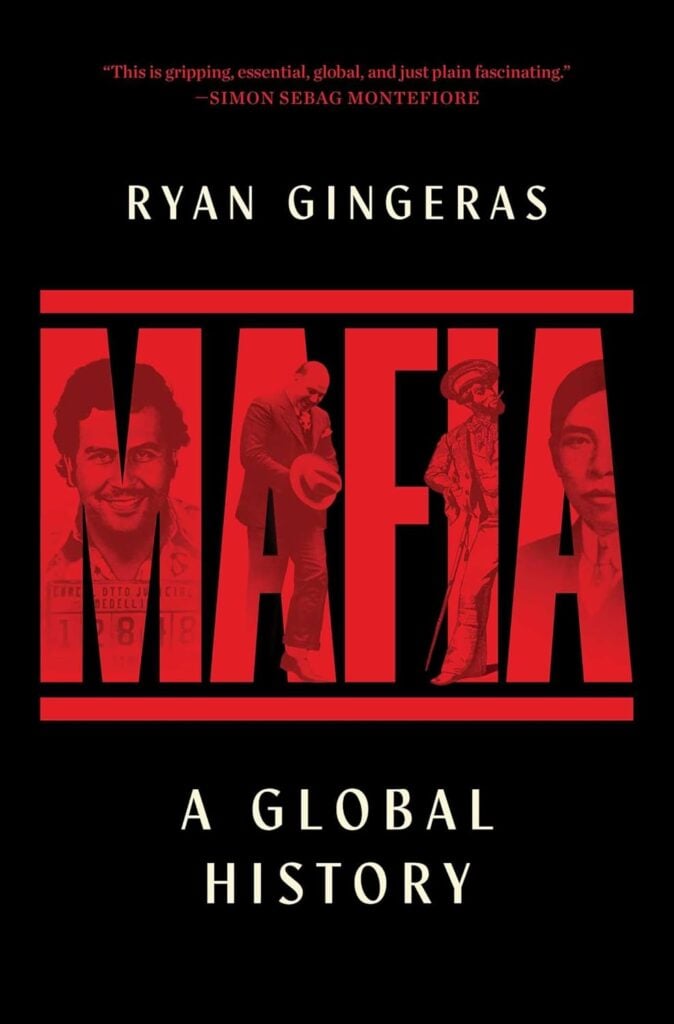
Mafias are not ancient,” Ryan Gingeras writes in Mafia: A Global History. The name and concept originate in Sicily “no earlier than the early 1800s.” Today’s criminal gangs are, Gingeras argues, “late descendants of bandits and brigands.” They, too, are seen and feared as “avatars for peoples, regions, and nations.” They, too, attract “a certain amount of romance or nostalgia” and a consequent slackening of the moral apparatus. They, too, both exploit the weakness of the state and exploit the state’s attempts to assert its monopolies.
Organized crime is a business, the shadow and partner of legitimate business. If you have a globalized economy, Gingeras writes, you get “transnational organized crime groups.” Ranging from Japanese yakuza to Chinese triads to post-Soviet oligarchies, he shows that the shift from “bandit” to “mafia” is not just semantic. It describes a scaling-up from local networks to national and international ones, and the kind of professionalization that, as in all emerging sectors, creates the kind of persistent, diversifying, and generationally transferable interests that require and create political influence. Gingeras, a historian of modern Turkey who teaches at the Naval Postgraduate Schools’s Department of National Security Affairs, has the receipts.
That is more than can be said for his subjects. The origins of their businesses are necessarily opaque, and so are their current operations. Gingeras divides the history of organized crime into three phases. The long prehistory of local brigandage and piracy—the Robin Hood years—declined rapidly after the advent of modern state structures in the nineteenth century. The European empires, and Britain in particular, played a key role in stimulating the emergence of formal networks. The European empires established borders and laws, accelerated transnational exchanges, and proscribed drugs, prostitution, and, notably, slavery. In the twentieth century, the United States inherited and extended Britain’s role as moral policeman—globally through international conventions but also internally through Prohibition and, eventually, judicial campaigns against organized crime.
The third and current phase is our anything-goes idyll. It began around 1990 and seems to have survived the derailing of the second age of globalization since 2008. New markets in postcommunist Eastern Europe, China, and the ever-collapsing postcolonial states of Africa created new incentives that fused legitimate and illegitimate businesses. Though American-led anti-terrorism campaigns tightened up some areas of regulation, they failed to close down the unregulated patches of the map. American intervention in the Middle East stimulated new fields of gangster endeavor. The same criminal networks carry drugs and people westward, along with Afghan rapists, Syrian jihadists, and Kurdish barbers.
Meanwhile, the globalized economy has reduced the power of small states and loosened America’s grip on the world system. Organized crime is as ubiquitous as vape shops in Blackburn, yet it remains opaque. This is not just because the rackets are protected by discreet partnerships with legitimate frontmen, such as politicians and business owners. It is because we prefer to think of organized crime as being like the Godfather movies.
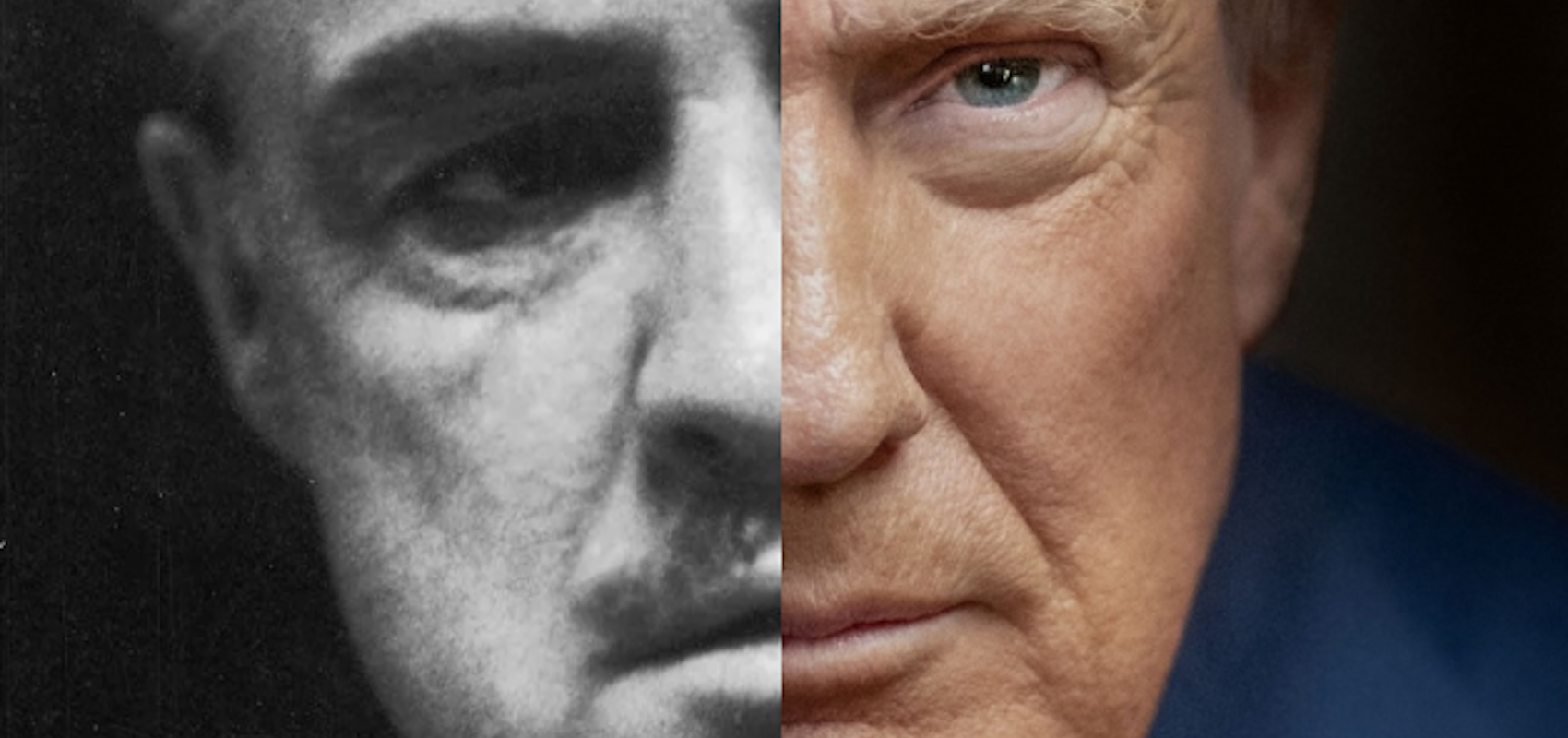
Francis Ford Coppola made the American public an offer it couldn’t refuse. Robert Evans, who pushed The Godfather through Paramount Pictures, was staggered to learn that Coppola intended to turn Mario Puzo’s gangster novel into a movie that was “not about organized crime,” but a “family chronicle” and a “metaphor about capitalism.” Skim off The Godfather’s sentimentality and sepia, and you see the woozy convictions of the 1960s California campus serving the shifty self-exculpations of the professional crook. Capitalism corrupts everyone. The real villains are the senators and corporations who hide their vice behind legal niceties. If everyone is a bad actor—and by the third Godfather movie, everyone literally is—then Don Corleone and his fellow hoods are no worse than the legit world. They are the last honest villains: the honored society.
Don Corleone is a Robin Hood brigand. He avenges himself honorably on the man who killed his father, then gets his big break in America by running illicit booze during Prohibition. Somehow, he becomes a kingpin without doing what actual interwar mobsters routinely did. We never see Corleone pimping young girls, dealing in heroin, torturing his rivals, and beating up immigrant shopkeepers for small change—just like the scumbag vape vendors of contemporary England.
The Godfather films are what psychoanalysts call a “screen memory,” the tolerable recollection that masks the stuff of nightmares. The movies are as much a projection as the Italian-American Civil Rights League set up by the Colombo family boss Joseph R. Colombo in 1970, shortly after his son Joseph Jr. was charged with melting down coins for resale as silver ingots. Mimicking the moral authority of civil rights, the league claimed to protect the reputation of a patriotic minority maligned by Hollywood liberals. Really, it served to mask Colombo’s ongoing criminality at a time when more than a decade of federal enquiries and the RICO Act threatened to pull the rug from under the family business.
Gingeras describes how a French critic attributed the “occult power” of the first Godfather to the popular conviction that “the true princes who govern us are hidden masters.” The word “mafia” appears nowhere in the film—the result of Joe Colombo’s strong-arming Coppola’s team. A 1971 New York Times article by Nicholas Pileggi, the future coauthor of Henry Hill’s autobiography Wiseguy and the resulting Goodfellas screenplay, records that Godfather producer Albert S. Ruddy “sat in Midtown restaurants” with Colombo’s son Anthony and “worked out a tentative accord.” Ruddy agreed to delete “Mafia,” “Cosa Nostra,” and other Italian words. He let the league “review the script” and change anything that seemed “damaging to the Italian-American image.” The wiseguys even got him to agree to donate the proceeds from the New York premiere to the league’s hospital fund.
Everyone needs a godfather. On February 25, 1971, Ruddy had a sit-down with Joe Colombo Sr. and about 1,500 delegates of the League at the Park Sheraton Hotel in Manhattan. Ruddy pleaded that The Godfather would really be “a movie about a corrupt society . . . about America today” and how it discriminated against “poor immigrants.” When Ruddy argued that not all the bad guys were played by actors of Italian stock, Colombo raised the issue of casting by pointing to various delegates. Ruddy nodded along, Pileggi wrote, and “the crowd began to cheer as bit players and extras were chosen.” The Godfather became a metaphor for the Mob’s self-image.
America was still the future then. American movies dominated the global market. When the Godfather films became internationally popular, long-standing local networks refashioned themselves in its image and adopted Don Corleone’s soubriquet and patina of honor. The Turkish mob boss became a baba and his Mexican equivalent a patrón. But the American Mafia was already on the slide. And there was nothing unique about it.
Americans call the classic form of political-criminal collaboration “Chicago-style” or “Tammany Hall” machine politics. Democracy is the pinkie ring whose dazzle distracts from the real business at hand. But organized crime can partner with any political system. In Turkey, Sedat Peker began with extortion and fixing soccer games, then “cultivated close ties with state officials and allegedly served as a gun-for-hire by the Turkish clandestine service,” before openly backing Recep Tayyip Erdogan’s election campaign of 2015. The Chinese triads call it guanxi (clientism) and work with the Chinese state to beat up dissidents in Hong Kong and chase down dissidents overseas. In Russia’s “spook–gangster” nexus, elements of the underworld “actively contribute to espionage and other covert Russian actions abroad.”
The paradox Gingeras wrestles with is that organized crime always prospers when the state is weak, and the state often prospers by using organized crime in its pseudo-corporate, pin-striped form. OG banditry of the kind that Lord Byron found in Albania still exists on the margins. In 2004, the death of the Indian bandit Koose Munisamy Veerappan in a shoot-out with police made global headlines. Veerappan operated from the jungle not far from Bangalore, the heart of India’s burgeoning tech industry, and had support from the Pattali Makkal Katchi party, composed of his fellow members’ Tamil Vanniyar caste. But the real action is when crime wears a failing state like a well-tailored skinsuit. Lebanon’s banking sector is a laundry for Hezbollah’s drug money. Post-2021 Afghanistan is the world’s second-largest meth lab. Cocaine cartels penetrate every level of government in many Latin American states.
Gingeras concludes that law enforcement can only suppress the symptoms. A cure would require a “complete reassessment of laws and norms that engender organized criminal industries,” but there is no sign of a “new global consensus on narcotics, let alone other proscribed commodities”—beyond, that is, shrugging off the rusty legacies of Anglo moralism and getting back to what, historically speaking, is business as usual: exploiting and shadowing the state, maximizing gains by using the cracks in borders and treaties, only supercharged by modern information and financial systems.
It’s good to be in something from the ground floor,” Tony Soprano told his therapist in The Sopranos. “I came too late for that, I know. But lately, I’m getting the feeling I might be in at the end.” Soprano mistook ethnic content for commercial form. The latest action, Gingeras says, is “digital trading” and “internet commerce.” America’s first family on this new frontier is the First Family, led by the president whose friends call him “The Don.”
In his 2024 campaign, Donald Trump promised to make the United States the “crypto capital of the world.” That year, Trump and his family took a major stake in World Liberty Financial, which sells Bitcoin, the world’s largest cryptocurrency. In April, the Senate approved Trump’s nominee, crypto-friendly Paul Atkins.
Crypto was now a classic Mafia product. It was valuable, fungible, and easily manipulated by criminals; terrorists, drug-dealers, and human traffickers use it to stay ahead of the law. It was outside the state, and even a potential threat to the hegemony of the U.S. dollar, but now the state was starting to regulate it. This created new opportunities for private-public business, conducted under cover of legitimate financial systems.
In January 2025, days before Trump returned to office, an investment firm controlled by Sheikh Tahnoon bin Zayed Al Nahyan, a high-ranking member of the United Arab Emirates’ royal family, secretly signed a deal to buy a 49-percent stake in World Liberty Financial for $500 million. The Wall Street Journal reported that the deal was signed by Trump’s son Eric, and that $187 million would go to “Trump family entities, with a further $31 million going to entities affiliated with the family of World Liberty co-founder Steve Witkoff.”
In May 2025, the administration committed to giving the UAE access to about 500,000 microprocessors earmarked for AI development—enough, the Wall Street Journal reported, to “build one of the world’s biggest data centers.” The small investors who piled in drove Bitcoin to a peak of $126,000 in October 2025, but by early February 2026, Bitcoin was trading lower than it had on Election Day. Still, the Wall Street Journal estimates, members of the Trump family now hold an estimated $1 billion worth of World Liberty’s Bitcoins, with paper holdings of another $3 billion.
Once made explicit by Godfather nostalgia, organized crime is again becoming opaque and disappearing into the system. If the mafia was once a metaphor for capitalism, capitalism has become a metaphor for the mafia: the partially visible workings of the hidden hand. No wonder the undertaker Bonasera tells Don Corleone: “I believe in America.”