
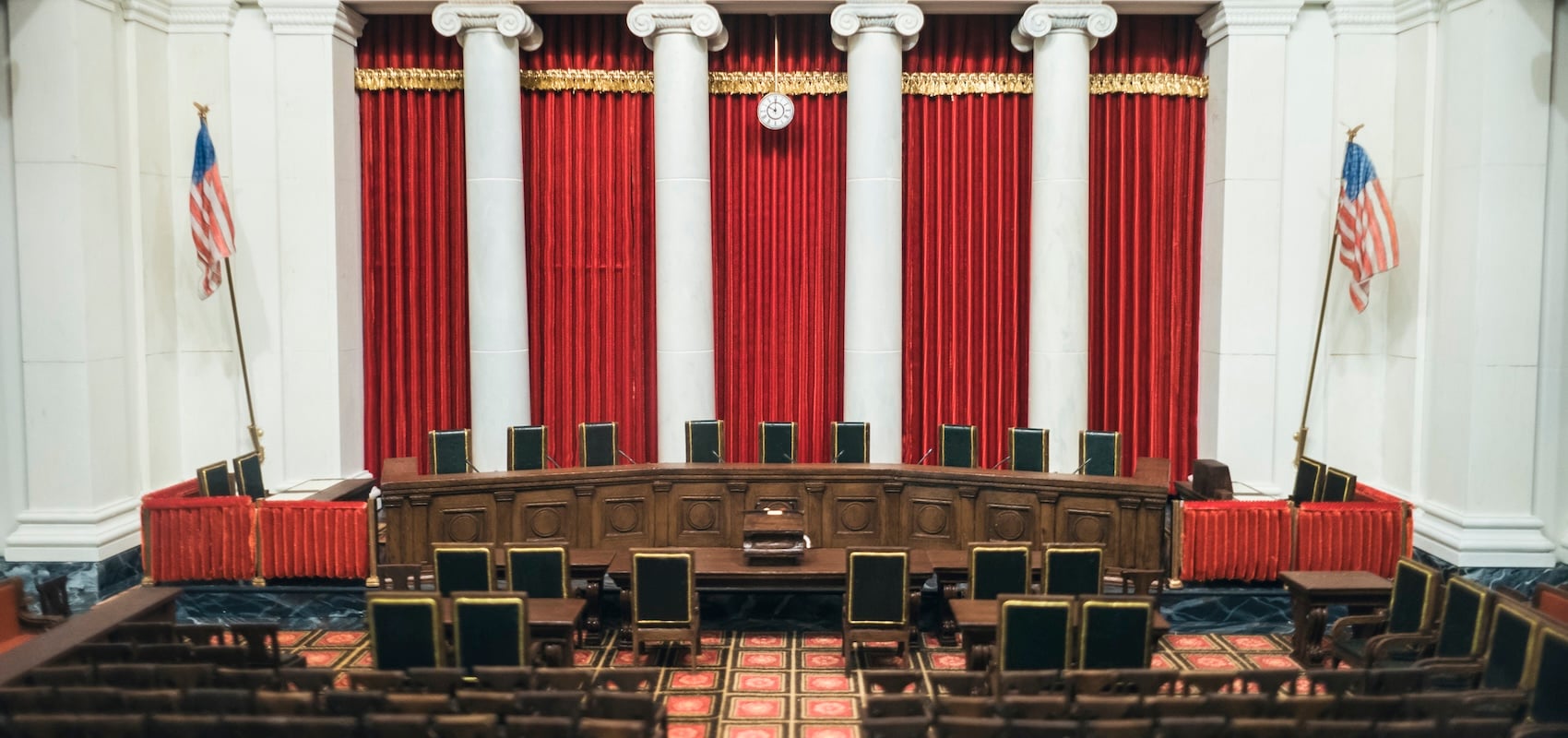
In a resounding victory for religious liberty on Tuesday, the U.S. Supreme Court ruled 8–1 in Chiles v. Salazar in favor of a Christian counselor and against Colorado’s “conversion therapy” ban. “Colorado may regard its policy as essential to public health and safety,” Justice Neil Gorsuch wrote for the majority. “But the First Amendment stands as a shield against any effort to enforce orthodoxy in thought or speech in this country.” Liberal justices Sonia Sotomayor and Elena Kagan sided with the majority.
In 2022, Kaley Chiles, an evangelical Christian and licensed professional therapist, sued the state on the grounds that it prohibited her from working with young people who sought help to live in accordance with their faith and “to reduce or eliminate unwanted sexual attractions.” Chiles was represented by a legal team with Alliance Defending Freedom, which argued that Colorado’s law is unconstitutional.
“Every American possesses an inalienable right to think and speak freely, and a faith in the free marketplace of ideas as the best means for discovering truth,” Justice Gorsuch wrote. “However well-intentioned, any law that suppresses speech based on viewpoint represents an ‘egregious’ assault on both of those commitments.” Justice Kagan added separately: “Because the state has suppressed one side of a debate, while aiding the other, the constitutional issue is straightforward.”
Predictably, the mainstream press is filling their coverage with dire warnings about the potentially deadly consequences of the ruling. It is important to note that they are lying. The phrase “conversion therapy” conjures up grim visions of young people subjected to coercive and even brutal practices such as electroshock therapy and other quackery; this association is deliberately and deceitfully invoked by LGBTQ activists.
Colorado’s 2019 “Minor Conversion Therapy Law” defined “conversion therapy” as “attempts or purports to change an individual’s sexual orientation or gender identity, including efforts to change behaviors or gender expressions or to eliminate or reduce sexual or romantic attraction or feelings toward individuals of the same sex.” It banned treatments, including talk therapy or counseling, that could help minors resolve their gender dysphoria and align their identity with their biological sex.
These laws have been sold by conflating coercive practices with helping gender-confused children—many of whom will have been deliberately confused by LGBTQ public school curricula—become comfortable with their own bodies. Colorado’s law essentially sought to lock children into the path toward “transition”—a staggering Orwellian irony, since “transition” is itself just another form of “conversion.” This is precisely why LGBTQ activists shifted from using the phrase “gender transition” to “gender-affirming therapy”: to enable them to claim that there was not actually a “conversion” from one gender to another being perpetrated.
Thus, according to LGBTQ activists and their political allies, to oppose the attempt to convert someone from one gender to another through social transition, puberty blockers, cross-sex hormones, and sex change surgeries is “conversion therapy.” In order to clear up any confusion that this inversion might cause, Colorado’s law specifically listed an exception to its “conversion therapy” ban: “Assistance to a person undergoing gender transition.” A child could be counseled into gender transition, but it was illegal to counsel a child out of gender transition.
Nonetheless, California Governor Gavin Newsom declared angrily on X: “Conversion therapy is discredited junk science that inflicts harm on LGBTQ youth.” Based on a growing body of research, it is clear that Newsom’s statement could be applied, without amendment, to “gender-affirming care.” It appears that sex changes for children is the hill that many Democrats are determined to die on.
Chiles v. Salazar will offer protection to Christian counselors in twenty-three other states and the District of Columbia with similar laws on the books. It is also the latest in more than a dozen Supreme Court rulings in favor of religious liberty. Mahmoud v. Taylor (2025) ruled in favor of parents seeking to opt their children out of public school instruction on sexuality and gender that conflicts with their religious beliefs. In 303 Creative LLC v. Elenis (2023), the court ruled that a website designer (and thus Christian professionals) could not be coerced to create content celebrating same-sex weddings.
The Supreme Court has proven to be a bulwark against the forces of LGBTQ activists and their political allies. Only Justice Ketanji Brown Jackson dissented from the majority, and she was vigorously rebutted in an aside by her fellow liberal justice Kagan. Alliance Defending Freedom has also proven, once again, to be the tip of the spear in the fight to preserve religious liberty, having directly represented parties in seventeen victories at the Supreme Court.
“When my young clients come to me for counsel, they often want to discuss issues of gender and sexuality,” Chiles said in response to the ruling. “I look forward to being able to help them when they choose the goal of growing comfortable with their bodies. Counselors walking alongside these young people shouldn’t be limited to promoting state-approved goals like gender transition, which often leads to harmful drugs and surgeries. The Supreme Court’s ruling is a victory for counselors and, more importantly, kids and families everywhere.”
