
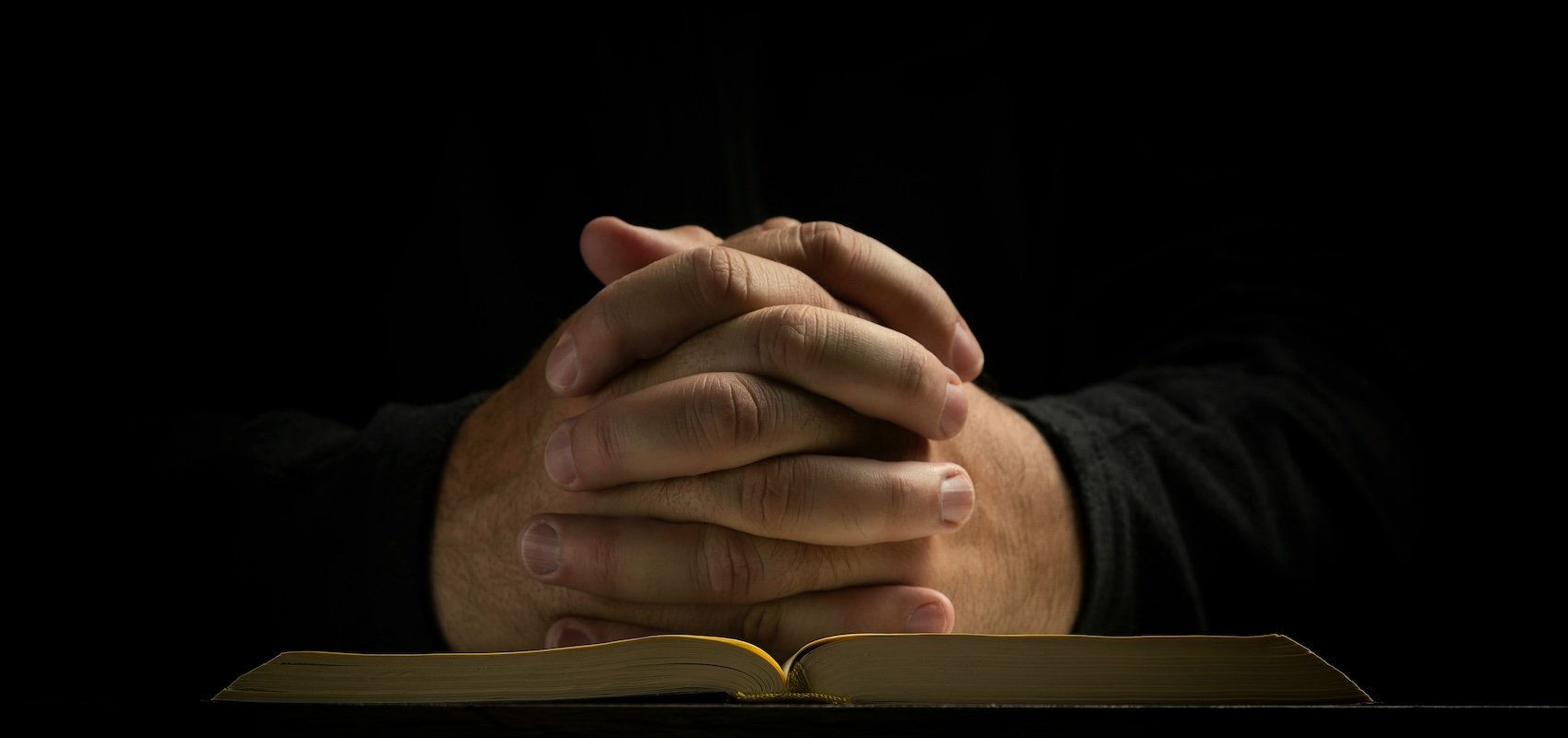
Who knows, God may yet repent and turn from his fierce anger, so that we perish not” (Jon. 3:9). These words, spoken by the king of Nineveh, are often read at the opening of Lent: Will God be merciful? Maybe. It’s an odd assertion, when you ponder it. It might mean that repentance is always worth a try, reflecting a “what have I got to lose” attitude when losing is the more likely outcome. Or it may mean that God, after all, is a terrifyingly arbitrary master, who reaps where he does not sow and gathers where he does not winnow (Matt. 25:24). Either interpretation is not very comforting. On deeper reflection, however, I think the thought that God “may yet repent” signals a great, if dizzying, faith. The “maybe” of repentance is, I daresay, thrilling, literally so, like a great ride down the chutes and raging waters of God’s cosmic torrents. Who knows?
There are many kinds of “maybes.” “Maybe St. Paul didn’t write Ephesians” is one kind, presuming a theory about how the world is put together. “Maybe God will have mercy” is another kind, the opening chapter in the story of grace. The first “maybe” is a human conjecture, reflecting our tendency to project our own fallibility, our misattribution or deception, onto the world. The second “maybe” is a prayer to the real maker, the maker even of the theorists, whose actual blueprint for the world is clothed in the vast and abyssal oceans of the inscrutable and unsearchable depths of God (Rom. 11:33).
So, to the first “maybe.” I go to lots of academic and religious conferences. People give papers, often with pointed claims that are aimed at countering common opinions. With appropriate scholarly modesty, many of these claims are couched in “maybe.” Maybe St. Paul didn’t write Ephesians—that’s an old conjecture. Along with “maybe Moses is a fictional justification for racial bias.” And “maybe Jesus didn’t really say divorce was adultery,” and “maybe he never thought he was the Christ.” Maybe, because we can’t really say for sure, the scholar notes soberly. But no one is fooled by this tone of caution. The scholar is saying what he really thinks. It’s a challenge, an ensign planted in the ground of institutional opinion. A willful wish.
This highlights a major aspect of “maybe”: It reflects our inner desires. Our spouse is sick: Though it looks bad, maybe she will recover! Maybe I will get the job! Maybe you will forgive me. But the hedging is also a mirror to our fears, our angers. Conspiracy theories trade on these: Maybe these bad people have done some very bad things.
“Beyond reasonable doubt” limits the sovereignty of “maybe” in law courts. In the academy, reasonable doubts are hardly obstacles to committed claims and strong assertions. In the Church, “maybe” is mitigated by the Creed, tradition, scriptural dogma. But “maybe” will always swirl in the human soul, the ever-seeking, hoping, and even deformed “spirit of man” (Ps. 42:1–2; Jer. 17:9). Here, reason and doubt struggle in a silent and tangled match of confused will. Maybes abound.
But what of God? We can look at some examples. David explains his prayers and fasting for the baby conceived through his adulterous and murderous affair with Bathsheba: “While the child was still alive, I fasted and wept; for I said, ‘Who knows whether the Lord will be gracious to me, that the child may live?’” (2 Sam. 12:22). Later, fleeing Jerusalem in the wake of his son Absalom’s rebellion, David is cursed by Saul’s relative Shimei. Instead of retaliating, David spares him: “It may be that the Lord will look upon my affliction, and that the Lord will repay me with good for this cursing of me today” (2 Sam. 16:12). Joel proclaims the destructive judgment of God upon Israel and exhorts his people to a change of heart: “Who knows whether he will not turn and repent, and leave a blessing behind him” (Joel 2:14). St. Paul urges Christian teachers to instruct (rather than simply condemn) their opponents, for “God may perhaps grant that they will repent and come to know the truth” (2 Tim. 2:25). According to all these celebrated persons of faith, God himself seems like a character marked by the grandest of maybes.
Note, though, that David’s “maybes” with respect to God do not finally lay hold of his own desires: The baby dies, Shimei is executed. Indeed, in the long run, few of these human desires work out as hoped—Joel’s, the king of Nineveh’s, perhaps even Paul’s and Timothy’s. Divine judgment comes eventually; mollified hearts turn hard again; heresies and schisms proliferate over the centuries. So much happens. Yet in all these cases, God’s “maybe,” as uttered in the prayers of those who beseech him, is not couched in assertions, but conveys readied openness: Here am I, with whatever hopes I have, and I present myself to the one who will do what he will do, knowing only that he who does what he does is the one who is my God, the maker of heaven and earth. All humility, from the bottom up. All grace, from the top down.
I realize that there is something unsettling here for the forgiven sinner, in whom there is no place for “maybe.” Luther pressed the point, and it was developed into the evangelical “doctrine of assurance.” Newman, however, rightly asserted that we may trust God while we distrust ourselves. Our own “maybes” are always fraught with our vacillating desires, even in their most positive aspects. They can point, nonetheless, to the fact that God does not wander in “maybe.” God is all-merciful; and in the simplicity of his being, God is also all-pure, all-righteous, all-judging, all-giving, all-taking. Exodus 34:6–7 captures this, if not exactly “nicely” then at least vividly, as does the Book of Job: God forgives, God punishes. It is the same God, not in the sense of acting at different moments or possessing different moods, but as the one who is revealed in a fully integrated self-offering. At their best, our “maybes,” uttered with an artless receptivity, can prove an entrance into the depths of God’s life, not the prospect of a fearful choice between options, let alone contraries. God is one; the desires of man are a mess of pottage. “Let God be true, and every man a liar” (Rom. 3:4). And so it is.
Repentance, in this light, is not a religious supplement in a regime of spiritual health. No, it marks who we actually are before God: sinners in his hands. Nor is repentance a number bought in the grand lottery of God’s favor. For God’s crafting of our lives and beings is not marked by favor or indifference, but by some kind of incomprehensible love in the making of us in the first place.
When we repent before God, uttering who we are in fact and imploring forgiveness—“maybe” under the great sky of God’s unfathomed Spirit—our sense of hovering possibility allows a space for God’s creation of our times: I am ready to be made by you, we cry. And all our possibilities are, when made real, thereby received as God’s gifts. In repentance, as in all our petitions, we give our maybes over to the certainty of God’s being and act. “I am this,” we say; “Do this for me!” we pray. In return, we are told, “Here is what I give you! This is how it is!” Our “maybes” are taken over by God’s grace, and they become a doorway into the receipt of God’s miracles—where Something is given in the face of nothing. Where “maybe”—the full range of God’s making—is asserted in the face of “never,” the promise of our own confused, maybe-saturated wants. We are swept away, not into the fog of our desires, but into the rapids of what is real.
“Maybe” is not about uncertainty, something that Jesus understands: “I believe, help my unbelief!” (Mark 9:24). “Maybe” might be the story of a person, certain or not, simply standing alone with the dregs of his wishes. Or “maybe” is the story of the person whose joyful repentance opens his life to God’s unpredictable refashioning. The last story is by far the best, for it contains all the others.


YOU MIGHT ALSO LIKE
Via Crucis, 2026
The Way of the Cross—and the third, seventh, and ninth stations in particular—has been an especially appropriate…
Trump’s Civilizational Project
Secretary of State Marco Rubio spoke at the recent Munich Security Conference. Last year, Vice President JD…
How to Bring Back School Prayer
Though it was overshadowed by the reversal of Roe v. Wade the Friday before, the Supreme Court’s…
